 The Fairway Wire
Editorial
When the Horn Blows, Our Day Is Just Getting Weird
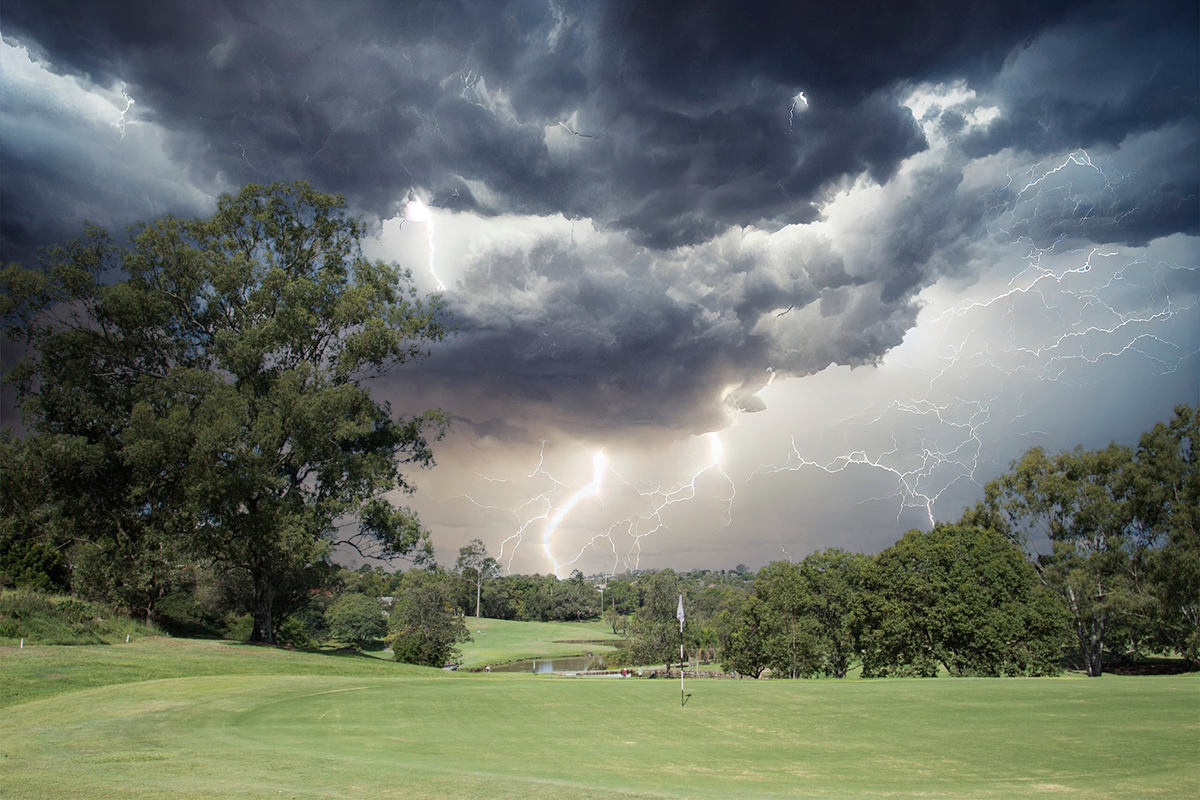
When lightning clears a Florida course, golfers see a delay and crews see a second shift. From bunker washouts to greens that can cook under standing water, a greens keeper explains the hidden work that happens between the horn and the restart, and why every storm is information.
In Florida, you learn to read the sky before you read the pin sheet. By ten the air already feels like a wet towel, the clouds over the marsh stack up tall and dark, and every man on my crew is doing the same quiet math. How much can we get done before it blows? Because here, in summer and half the fall, it is not if the weather comes. It is when, and how hard it parks itself over the course when it gets here.
When that horn blows for lightning, most golfers hear a pause. I hear a starting gun for a different kind of work.
First, we get people safe, and that part is not a debate and never will be. You can argue with me about a mower line or a bunker edge all day long. You do not argue with lightning in Florida. A golf club in your hand on an open fairway makes you the tallest thing for a hundred yards, and the sky does not care what you paid for the tee time or how well you were playing the front nine. We clear the course, we count heads the way we were taught, and we wait for the all-clear the way you are supposed to wait — with everybody under cover, not one hero sneaking in three more putts because the rain has not started yet. The storm that has not rained on you can still reach you. That is the part folks forget.
While the gallery is buying ponchos and the clubhouse fills up with wet shoes, the crew side of a suspension is strangely busy. We check radios. We move equipment off low ground before the low ground remembers it is low. We watch which bunker faces wash first, because they always do, in almost the same order. I keep a mental map of this course in the rain that no architect ever drew: which path puddles at the bend, which green sheds water clean and which one holds it in the corner, which drain burps and which one just gives up. You only learn that map by standing in it, season after season.
Then comes the part nobody films. A hard Florida downpour can drop an inch before your coffee cools, and it does not fall politely. It moves sand out of bunkers and onto faces. It floats mulch into fairways in lines that tell you exactly how the water ran. It knocks limbs down in places you cleared at daylight. On the greens, we watch for standing water, because a green can take a soaking and still be fine, but a green with water sitting on it while the sun cracks back out can cook in a hurry. Heat on wet turf is its own trouble, and it does not wait for the restart time on anybody's phone.
When the all-clear comes, the golfers want one answer: how soon? I understand it. I have been the golfer, too. But the honest answer is always, as soon as it is right, and right has a checklist. Squeegees on the greens that need them. Bunkers pumped and raked back in shape — not just presentable for the first group through, but playable for the last one. Debris off the lines of play. Cart paths checked, because a washed-out edge does not announce itself until a tire finds it. And somebody has to walk it, not just drive it and wave. That gap between the horn and the restart is where a good crew earns its money and nobody ever sees it.
Here is what I wish more golfers knew. A weather delay is not lost time to us. It is information. Every storm tells you where your course is strong and where it is lying to you on pretty mornings. The drain that failed in July will fail again in September if you only pumped it. The bunker that washed three times is not unlucky. It is asking, loudly, for a different answer. We write it down wet and tired, because that is when the truth is easiest to see.
So next time the horn blows and you are under the awning watching it pour, spare a thought for the fellows in rain gear who are not hiding from the weather at all. We are taking notes in it. When you go back out and the greens roll true and the bunkers play fair, that did not happen by itself while you were waiting. It happened because a crew treated the delay the way we treat everything else in this job: as part of the round, not an interruption of it.