 The Fairway Wire
Editorial
When the Horn Blows, I Have Already Been Watching That Cloud for Twenty Minutes
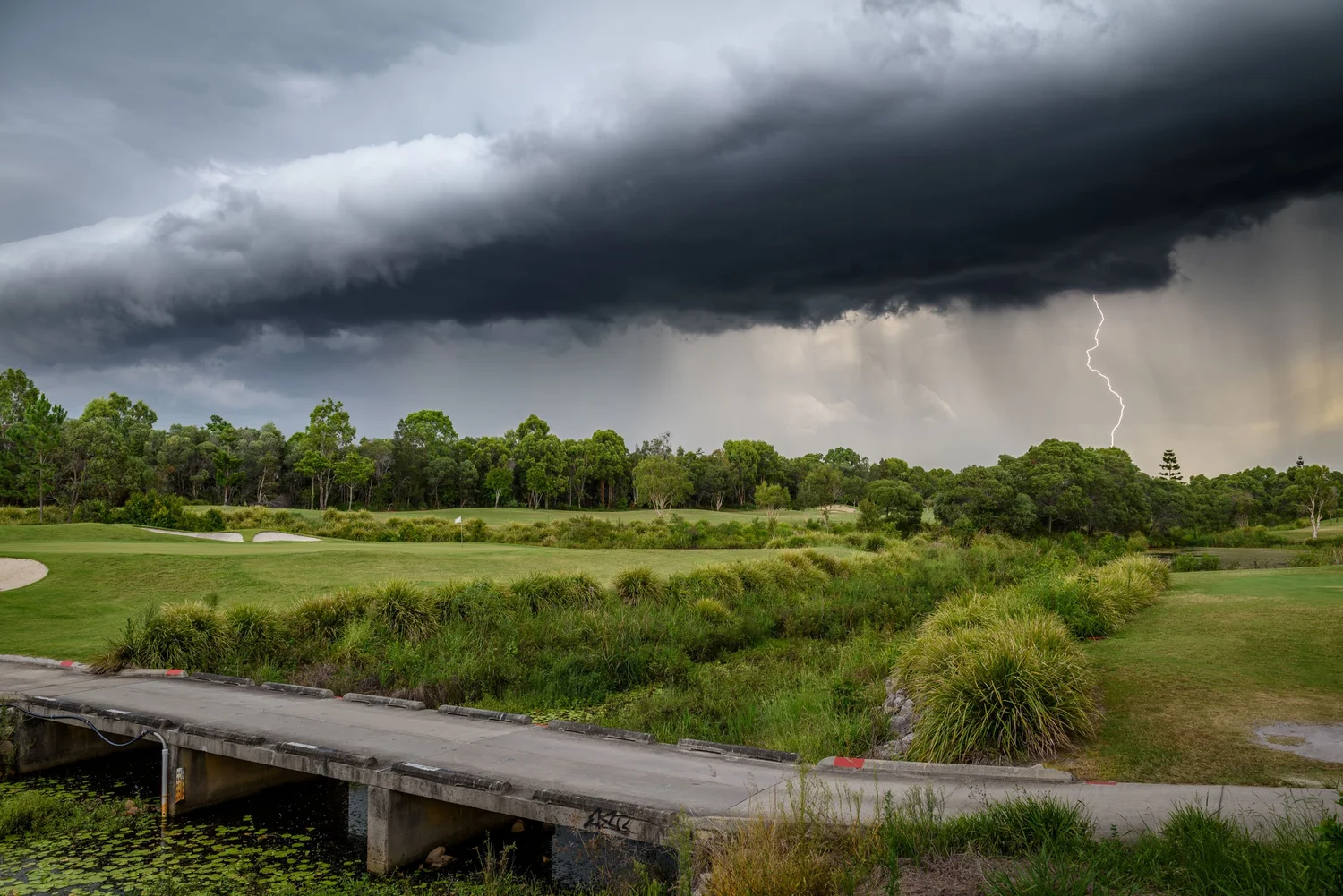
In Florida, the horn is never the start of the decision — it is the end of one. A Ponte Vedra greens keeper on watching a cell build for twenty minutes before anyone looks up, clearing forty acres of golfers and crew holding metal tools, and why the thirty-minute clock never bends for a good scorecard.
Florida teaches you to read the sky the way a good putter reads a green. Not the whole thing at once. The edges first. That dark line building over the tree line at two in the afternoon, the wind going quiet for just a second too long, the air getting that heavy, warm smell like a wet towel left in a truck. By the time most golfers look up from their ball and say, "Think that's coming this way?" — I have already been watching that cloud for twenty minutes.
I am a working greens keeper in Ponte Vedra, and in the summer, part of my job is being the nervous man so nobody else has to be. Lightning does not care about your tee time, your career round, or the fact that you are finally one under through twelve. It does not care that you drove an hour to get here. It especially does not care that you paid good money. My job is to care before it gets close enough to argue about.
People think the horn is the start of the decision. It is not. The horn is the end of one. Long before that blast, somebody is watching a radar loop that looks like a bruise spreading across the county, counting the seconds between a flash nobody else noticed and a rumble that sounds like a cart rolling over a wooden bridge far away. Thirty seconds is six miles, give or take. Twenty seconds is closer than I like. Ten seconds and we are not having a debate on the fairway about whether you can squeeze in one more hole. There is no one more hole with lightning. That is the whole rule, and it does not bend for a good scorecard.
I have had golfers mad at me for a clear sky. That is the hardest call of all. The sun is out over our heads, everybody is dry, and off to the west a cell is building tall and dark and mean, anvil spreading out on top like it owns the afternoon. From the tee it looks like somebody else's weather. From where I stand, with a detector reading strikes inside ten miles and the wind starting to push cool air ahead of the storm, it is our weather in about fifteen minutes. So the horn goes, and I get the looks. I would rather get the looks on a sunny fairway than explain the other kind of afternoon to anybody's family. Every time. No contest.
Clearing a golf course is not like clearing a swimming pool. You cannot just whistle everybody to one gate. I have got a foursome on a hole that is a half mile from the clubhouse, an older gentleman who walks because he says the cart makes his back stiff, two kids in a junior clinic by the range, and my own crew scattered across forty acres holding metal tools. Metal. On purpose. Rakes, shovels, a cup cutter, trimmer shafts. The first radio call is not to the golfers, if I am honest. It is to my own people. Get off the high ground. Put the metal down. Get to a building, a real building with plumbing and wiring, not the little rain shelter with the open sides that makes people feel better and does almost nothing against a strike. Those shelters are for rain. Lightning is a different animal, and I tell every new hire that on day one.
Then comes the waiting, which is its own kind of work. Thirty minutes from the last strike, the last thunder. Not twenty-nine because the sky looks friendlier. Not fifteen because the parking lot is backing up and the grille wants to know about dinner reservations. Thirty. And the clock restarts every time the sky pops again, which in a Florida summer can turn a forty-minute delay into a washed-out day in a hurry. I stand by the window with the rest of them then, watching rain come sideways across the range, watching the bunkers fill, already making tomorrow morning's list in my head. Pumps, washouts, branches down, a green that will need squeegees before it needs mowers. The storm is an interruption for the golfers. For the crew, it is just the first shift of the cleanup.
What I wish every golfer knew is this: when we finally send you back out, that call got the same care as the one that pulled you in. Somebody checked that the cell actually moved off and did not leave a second one trailing behind it like a little brother. Somebody drove the low holes to see what is standing water and what is just wet. Somebody thought about wet cart paths on hills, and about a flagstick going back into a cup on a green that is still humming with a charged afternoon. We are not holding you in the clubhouse to sell you another sandwich. We are holding you because coming back too early is the one mistake you cannot take back.
So if you hear that horn on my course, come in. Come in grumbling if you need to — I have grumbled myself, standing in good spikes on a day I wanted to finish. Bring your ball, mark your spot if the round matters, and let the sky do what it is going to do without an audience holding graphite shafts up into it. The cloud will pass. In Florida it almost always does, usually in time for the light to turn gold and the course to smell like wet pine straw and fresh rain, the best smell in golf. We will get you back out there. I would just like everybody who teed off that morning to be around to argue about their score when we do.