 The Fairway Wire
Editorial
When Florida Gets Cold, We Tuck the Greens In for the Night
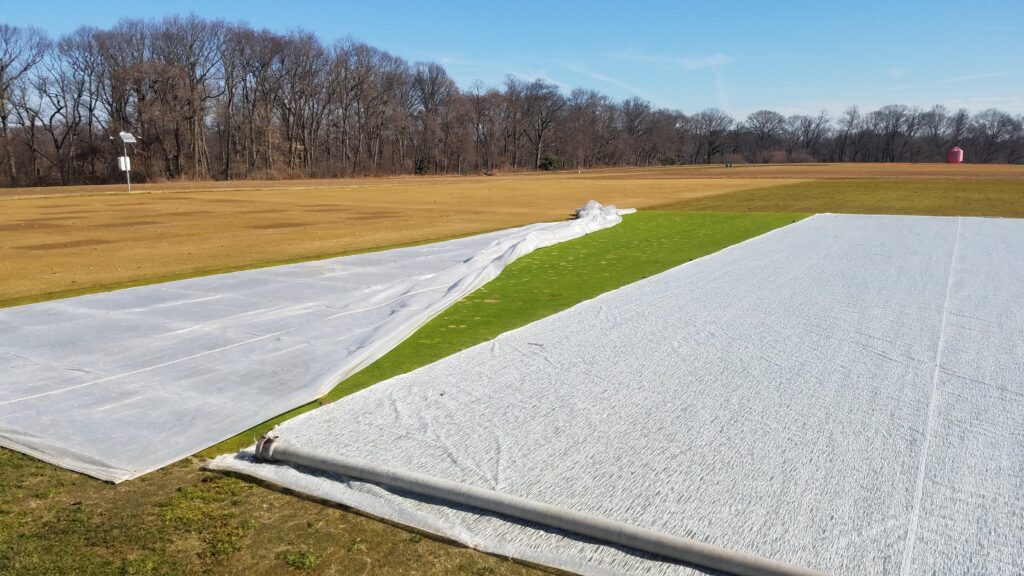
Most Florida golfers never see the coldest work of the year: the nights the crew drags heavy covers across all eighteen greens to protect ultradwarf bermuda from a hard freeze, then races back before sunrise to peel them off. A few degrees held overnight can be the difference between a smooth green in March and a hurt one that follows you all spring.
People move to Florida to get away from winter, and then January reminds everybody we just rent mild weather most of the year. One clear, calm night, the temperature falls out of the forties, through the thirties, and keeps going, and the most expensive grass we own is sitting in the open with nowhere to hide. That's when you find out a Florida greens keeper owns blankets — not for himself, though I've wanted one at 4 a.m. — but for eighteen greens.
They're called covers: big sheets of woven fabric, about as glamorous as a tarp, that we drag across a putting surface before a hard cold night and pin down so the wind doesn't sail them into the next county. A good cover can hold a few precious degrees against the grass overnight. That doesn't sound like much until you understand the grass. Our greens are ultradwarf bermuda, bred to be cut short, roll pure, and take summer heat like a champ. Cold is its one real weakness. When temperatures crash night after night, that little plant can get hurt deep — not just browned off on top like the fairways, but damaged in the crown, the part it grows back from. Brown fairways in winter are a look. Hurt greens in spring follow you for months.
So we watch the forecast constantly and with suspicion. One says thirty-four and fine. Another says twenty-nine and trouble. Wind matters as much as the number — a breezy night mixes the air and can save you, while a still, clear night lets the cold settle right on the surface. The call to cover is not a small one: covering eighteen greens is hours of work for the whole crew, and uncovering them is the same hours again next morning, racing to get them off and stored before the first groups putt. You call it only when the risk of losing grass is worse than exhausting your people.
The work is a choreography you learn cold and half-awake. Two men to a cover, walking it out without scuffing the surface — we wear soft shoes and take care, because a cover dragged carelessly does its own damage. Sod staples and sandbags along the edges, because a northeast Florida wind will find any loose corner, and a flapping cover beats the grass under it all night. Then you stand back in the dark, headlamps sweeping a course that looks tucked in by a very large, very tired parent, and you go home hoping the forecast was wrong in your favor.
Morning is the other half of the bargain. If the sun comes up strong, you get those covers off promptly — leave them on under a bright Florida sun and you have built eighteen little greenhouses, cooking the very grass you stayed late to protect. So the day after a cover night starts even earlier than usual, peeling back sheets stiff with frost, shaking off ice, folding acres of fabric with numb hands while the frost-delay crowd gathers at the practice green wondering why we're not in a hurry. We are in a hurry. We're just hurrying in an order that keeps the course alive: covers off, greens checked, mowers behind us, pins set, and only then golfers.
And I'll be honest, the golfers' reaction is my favorite part. A man will look at a covered green at dawn and say, "Y'all really put blankets on the grass?" Yes, sir, we really did. Same as you covered your pipes, brought in your potted plants, and put a coat on a dog that has its own fur. Everything alive in Florida is built for the heat and a little bit betrayed by the cold — including, I'd argue, most of the people who retired here. The difference is the greens can't come inside, so we bring the inside to them, one heavy, awkward, frost-stiff sheet at a time.
Most winters we only do it a handful of nights. Some winters, thankfully, the covers never leave the barn. But they sit there ready, folded and waiting, because a greens keeper's whole job is being prepared for the one night everybody else sleeps through. If you play a good green in March in Ponte Vedra — smooth, tight, alive — there's a decent chance it survived January because a crew stayed late in the cold, tucked it in like it mattered, and came back before sunrise to wake it up gentle.