 The Fairway Wire
Editorial
We Tore Up a Good Tee Box on Purpose, Because Your Feet Could Tell It Was Crooked
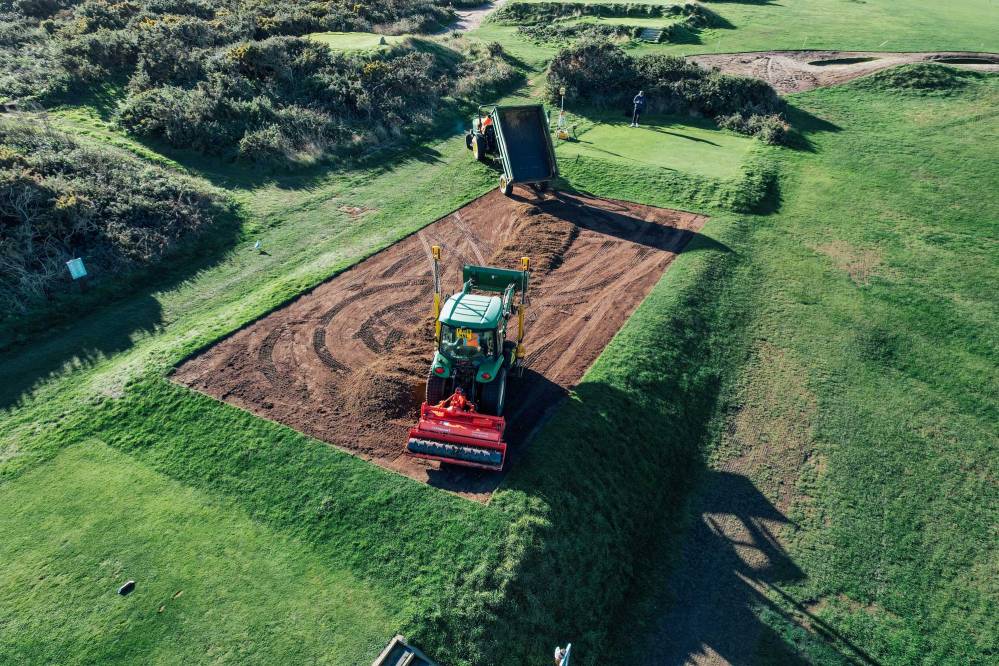
A tee can tilt a fraction at a time until your stance leans before you swing. I walk through stripping good grass, laser-leveling the dirt, flood-testing the mistakes, and laying fresh sod — and why nobody noticing the finished tee is the whole point.
If you stood on that tee last month, you probably could not have told me what was wrong in words. You would have teed your ball up, taken your stance, and felt a little uneasy, like one foot was hunting for level ground that was not quite there. Golfers feel a crooked tee in their ankles before they ever see it with their eyes. This week we tore that tee up on purpose, good grass and all, because a tee box that tilts is not a small flaw. It is the first lie of the hole, and it is told before you even swing.
A tee settles the way an old house settles, only faster and with more help. Years of divots from the same favorite spots, mowers turning in the same arc, rain softening the low corner, cart tires kissing the edge — it all adds up in fractions of an inch. One corner drops. The middle humps where the fill held firm. Pretty soon the box that looked flat in a photograph is a quiet funhouse under your spikes, and every drive starts with your weight leaning somewhere you did not choose.
So we stripped it. That is the part that makes members wince, and I understand it, because on Monday morning that tee was green and by Monday noon it was bare dirt. A sod cutter walked the edges, we rolled the old turf up like carpet, and what was underneath told the whole story: thin spots worn to the roots, a soft pocket where water had been sitting, and a crown in the middle you could suddenly see plain as day once the grass was gone. Good grass can hide bad ground for a long time. Stripping it is not waste. It is an honest look.
Then comes the slow work nobody photographs. We bring in a sandy mix, spread it, and drag it, then set up a laser on a tripod and let that little red eye tell us the truth a bubble level argues about. High spots get cut, low spots get filled, and a man with a rake walks it backward, pulling material a quarter inch at a time. A quarter inch sounds like nothing until you are moving it across forty feet of tee, checking, raking, checking again. We compact it, flood it lightly to watch where puddles gather, and fix those spots. Water never lies about level. It finds every mistake and sits right on top of it, shining.
While the dirt work happens, the tee goes on vacation. We move the markers to a spare area, shorten the hole a touch, and somebody will tell me we ruined his favorite drive for a week. He is not wrong that the hole plays different. He is missing that it was already playing different, one tilted stance at a time. A week of teeing it up twenty yards forward is a fair trade for years of standing flat.
New sod goes down last, seams tight, edges tucked, rolled firm so roots meet soil with no air pockets underneath. For the first days we water it like it is on our payroll, because it kind of is — that grass has a job to do and no root system yet to do it with. The markers stay off it longer than anybody wants. Fresh sod played too early slides under a stance like a rug on a wood floor, and then we have not fixed a tee, we have just scheduled the same job twice.
Here is what I wish every golfer knew standing on a rebuilt tee a month from now, when it is green again and flat as a kitchen table: nobody will notice. That is the reward. A level tee does not draw compliments, does not get photographed, does not end up in anybody's story about the round. It just disappears under your feet and lets the hole start fair. Most of my best work is like that — invisible on purpose, measured in fractions of an inch, and torn up in public for a week so it can be forgotten for years. When you tee it up there next month and feel nothing at all under your feet, that nothing took a crew, a laser, a flood test, and a pile of good grass we were willing to throw away. That nothing is exactly what we were building.