 The Fairway Wire
Editorial
We Stopped Mowing That Patch on Purpose, and the Bees Moved In by Friday
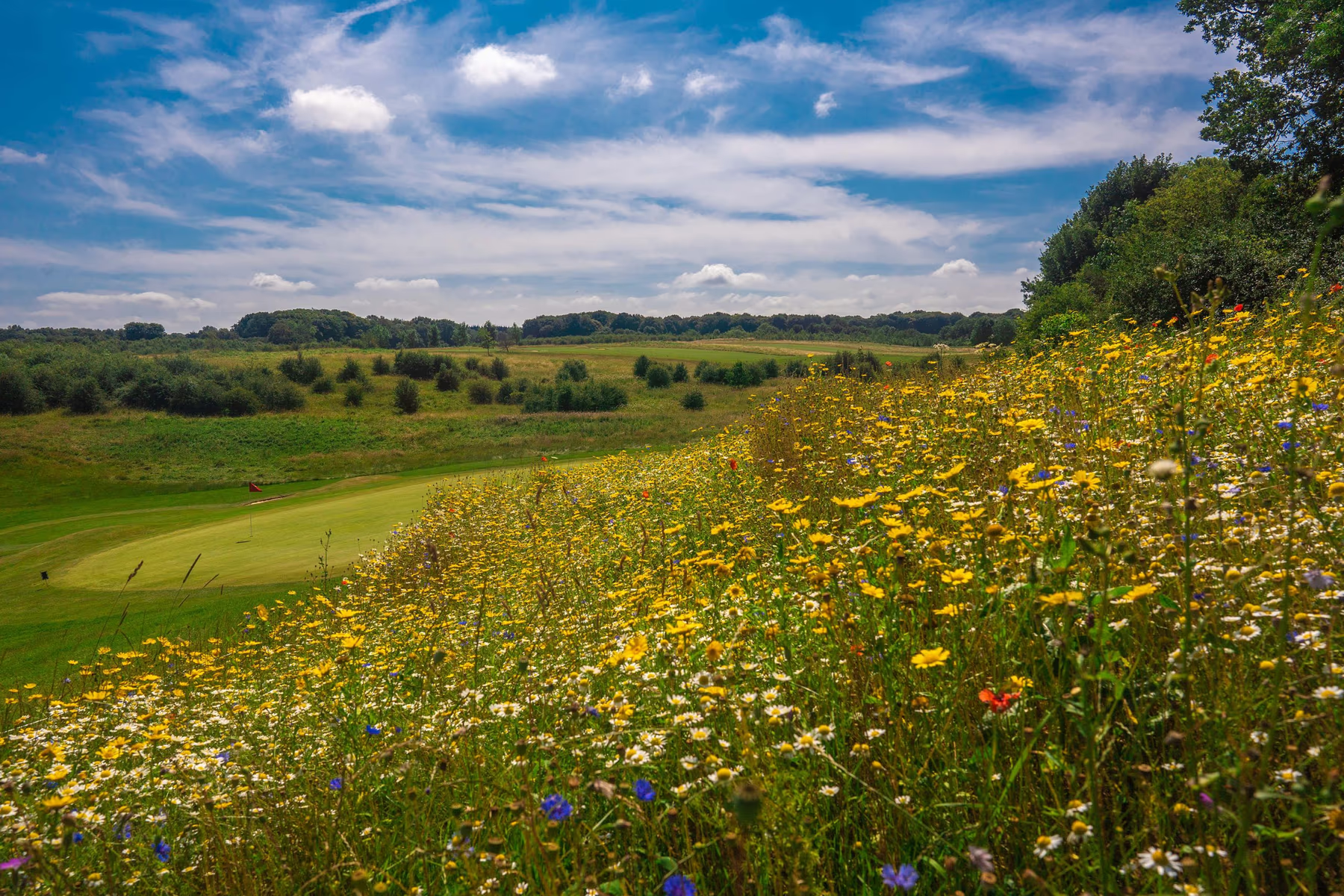
We quit mowing one steep pond bank on purpose — and native grasses, Florida wildflowers, and a working crew of bees, butterflies, and dragonflies moved in. A no-mow patch is not neglect with a nice name: it is hand-weeding, one clean trimmed edge, deep roots holding the bank through storm season, and the cheapest insurance on the course.
Every course has one patch that makes a new golfer slow his cart down and point. Ours sits on a pond bank, past the rough, where the grass grows tall and shaggy and the flowers do whatever they want. It looks, if I'm being honest, like the one spot on the whole property where the crew just gave up. I have been asked about it at the water cooler, in the parking lot, and once through a car window. Did the mower break down over there? Did somebody forget that corner?
Nobody forgot it. We stopped mowing that patch on purpose, and it might be the hardest-working piece of ground I don't touch.
It started as a problem, the way most good ideas out here do. That bank is steep, it stays wet after every rain, and a mower on it was a bad marriage. We scalped it in the dry weeks, rutted it in the wet ones, and watched the edge slide a little closer to the pond every summer. Grass cut that short has roots to match, and short roots don't hold a bank together. So one spring we did the hardest thing a mowing crew can do. We parked the mower, walked away, and let it grow.
What came up on its own surprised even me. Native grasses came first, tall and tough, the kind that were growing in this part of Florida long before anybody thought to charge for tee times. Then the flowers found it — coreopsis, which is Florida's state wildflower and shows up like it owns the place, blanket flower in red and gold, little white blooms I couldn't name if you paid me. We helped it along some, scattering seed in the thin spots and pulling the bullies out by hand, but mostly we just quit fighting it.
The bees moved in by Friday. I'm not exaggerating much, either. Within a week of the first real bloom, that patch hummed. Butterflies work it all morning. Dragonflies patrol over it like they drew the assignment, and since a dragonfly eats mosquitoes by the hundreds, those boys are on my crew as far as I'm concerned. The first fifteen minutes of my morning belong to the mosquitoes, like I've said before. Anything that eats them is a friend of this operation.
Now, "we don't mow it" does not mean "we don't work it," and that's the part people get wrong. A no-mow patch is not neglect with a nice name. Twice a month somebody is in there on his knees pulling the invasives that would take the whole bank if we let them — the vines and torpedograss and other thugs that don't know how to share. We keep one clean, trimmed edge along the cart path side, and that edge matters more than you'd think. A sharp border tells every golfer who rolls past: this is on purpose. Wild in the middle, neat at the edges. That's the whole trick. It reads as a garden instead of a mistake.
We also cut it back once, late in the year, after the bloom is done and anything nesting in there has moved on. One cut, high and slow, and then we leave it alone again. All told, that patch costs me a few hand-hours a month. It used to cost me a mower repair, a stuck machine twice a season, and a bank that was washing into my pond. You tell me which bill you'd rather pay.
And the bank? It holds now. Those deep roots do the work no retaining wall salesman could talk me into, drinking up water and gripping the slope through storm season. The pond stays cleaner, the flowers feed things that feed other things, and every round, some golfer who has never thought about any of this slows down just to look at it. A golf course is a park that happens to have flagsticks in it. Most days I spend making it look controlled. That one patch is my daily reminder that not all of it wants to be.
So if your ball finds it — and balls find it, believe me, we fish them out by the bucket — take your drop, don't go tromping through the tall stuff hunting, and spare me the advice about the broken mower. The mower runs fine. It's parked because the bees have the shift.