 The Fairway Wire
Editorial
We Lay New Grass Like Carpet, and Then We Beg You Not to Walk on It
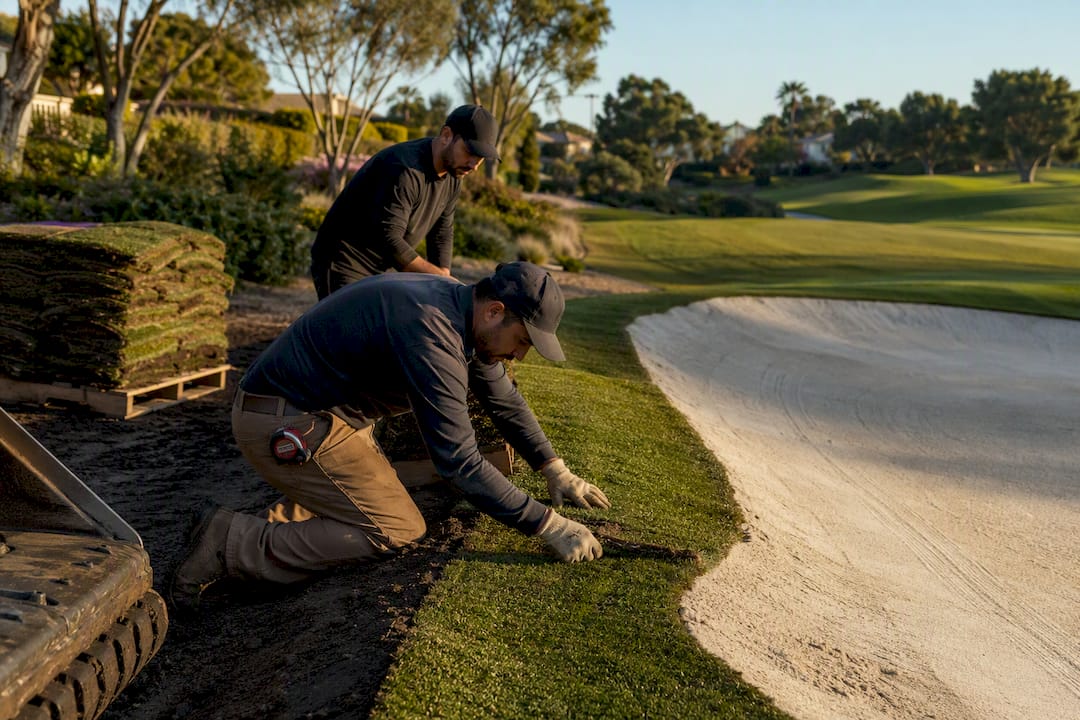
A flatbed of sod looks like an instant fix, but the real work is underneath it — cutting out the dead turf, leveling the soil, laying seams tight as bricks, and watering on a different clock until the roots stitch in. Cliff explains why that roped-off patch needs your patience for a few weeks before it earns back its place as just part of the course.
There is a morning on every golf course when the fix is not a spray, a mower, or a prayer. The fix arrives on a flatbed truck, stacked on pallets. It is sod — living grass grown somewhere else, cut in slabs with roots and soil still attached — and my crew and I will be on our knees laying it like carpet, because the old piece finally gave up.
People ask why a spot dies if we take such good care of it. Fair question, usually asked while standing right on the dead spot. In Ponte Vedra the suspects line up fast: a leaking valve that drowned a corner, shade that thickened until the bermuda starved for light, cart traffic through the same gap by a tee until the ground packed hard as a parking lot. Sometimes a patch just quits. Seed can fix some of it, given weeks and luck. Sod fixes it today — if we do the unglamorous work underneath first.
That underneath work is the part nobody photographs. We cut out the dead turf and haul it off — you do not lay new grass on top of a corpse and expect a marriage. Then we loosen the soil, level it, and take out every hump and dip we can feel with a rake, because sod is honest to a fault: it will show you exactly how crooked the ground was the minute we lay it down. We check the irrigation on that spot before a single slab comes off the pallet. Putting fresh grass over a broken sprinkler is just scheduling the same funeral twice.
Then the carpet work starts, slower and pickier than it looks from a cart. Each slab gets laid tight against the last, seams staggered like bricks in a wall so no long crack runs across the patch and dries out. We butt the edges snug — not overlapped, which makes a ridge your ball will find from thirty yards, and not gapped, which makes a little canyon that loses moisture and stays visible for months. Knees in the dirt, hands in the dirt, nudging a living slab a quarter-inch left, because that quarter-inch is the whole job. When the last piece is in, we roll the patch so the roots make real contact with the soil below. Sod that is not touching dirt is just a green rug waiting to curl at the edges like old linoleum.
The water schedule after that would make a newcomer think we lost our minds. New sod gets watered light and often — we are not soaking a fairway, we are keeping roots alive while they reach down and grab hold in a new home. For the first week or two that patch lives on a different clock from the rest of the course, and somebody checks it every day, lifting a corner gently to see if white root tips are stitching it to the ground. That tug test is my favorite moment in the job. One day the corner lifts free. A week later it resists, just a bit, and you know the grass has decided to stay.
Which brings me to the begging part, and I mean it kindly. Fresh sod and golf traffic do not mix. A cleat can twist a slab that has not rooted yet and shear off a week of growth in one pivot. A cart tire can slide a whole piece sideways on wet soil. That is why you will see rope, stakes, or a ground-under-repair marking around a patch that looks, to your eye, perfectly finished. It is not finished. It is healing, same as a green after aeration, and the fastest way to kill good sod is to play on it because it looks ready before it is ready. Give it two or three weeks. That rope is not protecting grass — it is protecting your lie three Saturdays from now.
Seed is cheaper, and given a kind spring it can knit into something tough. But on a tee that takes divots like a battlefield, sod earns its money the day it goes down — instant cover, and erosion stopped before the next downpour carves bare dirt into a ditch.
So next time you round a corner and find us on our knees unrolling somebody else's farm onto our course, wave and keep your cart on the path. That patch may look like carpet, but by month's end — if the water stayed honest, the seams stayed tight, and your spikes stayed off it — it will just be the course again, the highest compliment any repair here can get.