 The Fairway Wire
Editorial
We Keep a Spare Green Hidden Behind the Maintenance Shed
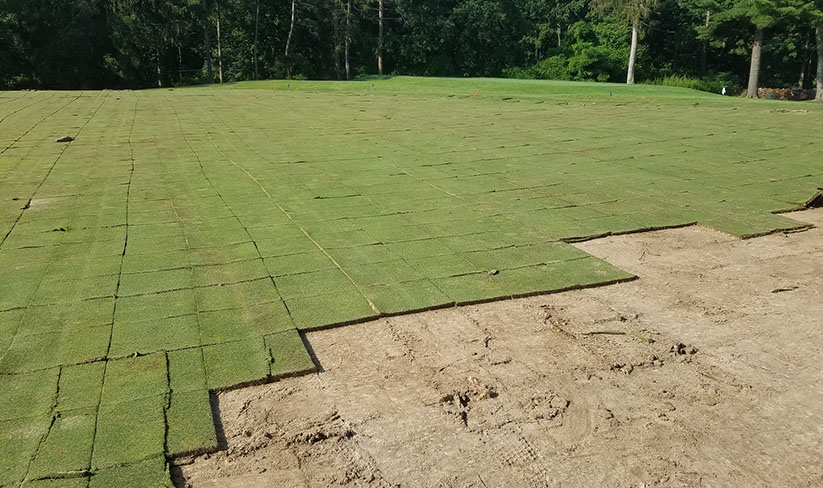
Behind the shop, past the fuel tanks, sits a perfect little green no golfer will ever putt on — and it may be the hardest-working acre on the property. From Ponte Vedra, here is how a nursery green kept in reserve lets a crew cut out a dead, oiled, or tire-tracked patch and heal a putting surface almost overnight.
Every golf course you love has a green you will never putt on, and mine sits behind the maintenance shed where the cart path turns to dirt. No flag flutters over it most days, and half the members who have played here for twenty years could not find it with a map. That is fine by me. That little green is not for playing. It is insurance, and on the worst mornings of my working life it has been the difference between a course that healed overnight and a scar everybody stared at for a month.
We call it the nursery green, and we treat it better than some of the greens you do play. It gets mowed at the same height, on the same mornings, with the same care. It gets watered, fed, rolled, and topdressed right along with the other nineteen — yes, nineteen, count the practice green too. The grass is the exact same grass, grown in the exact same sand, under the exact same Florida sky. That sameness is the whole point. Grass is not paint. You cannot buy a can labeled green number seven and touch up a putting surface. If a patch dies, the only honest replacement is living grass that already matches it — and that grass has to come from somewhere that has been preparing for the bad day all along.
Bad days come in more flavors than golfers guess. A hydraulic line lets go on a mower and paints a hot stripe of oil across a green before the operator even knows he is leaking. A stretch of disease wakes up faster than the fungicide can answer. Somebody decides at midnight that driving across a green sounds like a story worth telling, and I have stood at dawn looking at tire tracks I would not wish on any crew. A freeze sneaks under a blanket, a chemical gets mixed a shade too strong by a good man having a bad morning. I have caused one or two of those days myself, and I will not pretend otherwise in print. The nursery does not care whose fault it was. It just sits back there, green and ready, holding spare parts for a living course.
Here is how the rescue works, because it is less glamorous than it sounds and more satisfying than almost anything else we do. We roll a sod cutter out to the nursery and cut neat strips, the way you would cut brownies out of a pan if the brownies cost this much to grow. Then we cut the dead patch out of the wounded green in the same shapes — a little larger than the damage, out to healthy grass on every side. Out comes the bad, in goes the good, and we butt those seams tight, roll them flat, topdress the joins with sand, and water them in. Done right, most golfers never find the patch. The seams are the tell if you know to look: a faint straight line in a world of curves, there for a week or two until the roots knit.
Next to it we keep its country cousin, a plain sod nursery for fairway and rough grass. It fills the spot where a cart tore a turn too sharp, where a pipe repair left a trench, where armadillos held a convention overnight. Out front, everything looks original and untouched. That is the trick of this business. Half of keeping a course beautiful is hiding the repairs so well that nobody believes repairs were ever needed.
Folks ask why we do not just seed the dead spots and wait. On a fairway, sometimes we do. On a putting green in Ponte Vedra, seeding is a promise written in pencil. Seed has to germinate, creep, and thicken at a height that would kill your lawn in a week. That takes weeks in good weather and forever in bad, and all the while every putt across the wound bounces like a shopping cart wheel. Nursery sod is not instant, but it is close. It arrives already grown up, already tough, already putting true the morning we lay it — provided we water it like we mean it.
So if you ever catch a glimpse behind our shop — a perfect little green with no golfers on it, among the fuel tanks and spare mowers — do not feel cheated out of a twentieth hole. Feel looked after. That green is standing watch for the eighteen you came to play. Ours just happens to keep its worries green, mowed and ready, waiting for a bad day we hope never comes and know eventually will.