 The Fairway Wire
Editorial
We Cut the Greens Sideways, and That's Why Your Putt Runs True
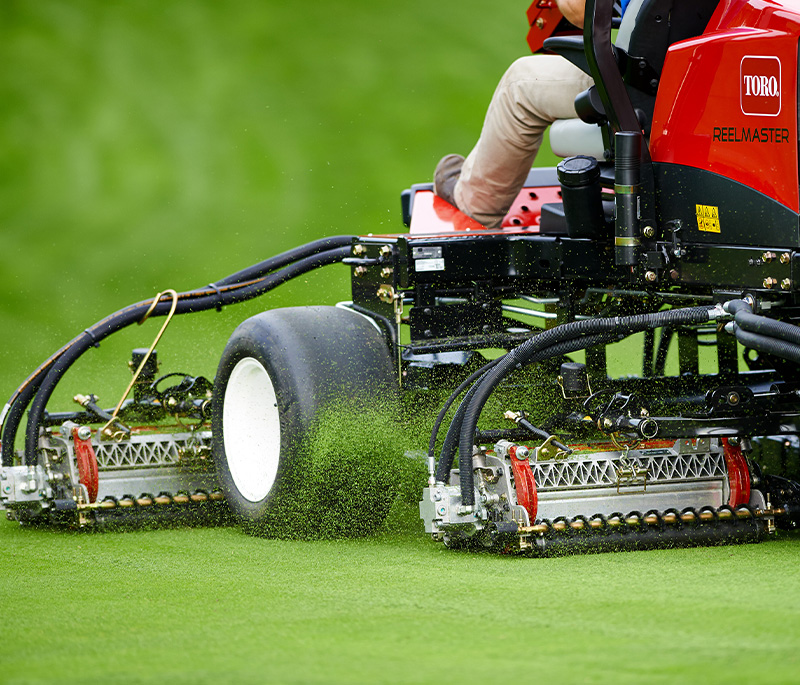
Those thin brown lines on a green are not damage — they are verticutting, the sideways cut that stands bermudagrass upright, thins the thatch, and kills the grain that secretly steers your putt. Light, frequent, and timed to Florida growth, it is the invisible work behind a roll that finally holds its line.
Every so often a golfer will catch us mid-morning, point at a green striped with thin brown lines, and ask with real concern: what in the world did you do to it? It is a fair question. From the cart path it looks like we scratched up a perfectly good green on purpose. We did. Those lines are the best thing that happened to your Saturday putt all week — and once you understand grain, you will never read a bermudagrass green the same way again.
A regular mower cuts grass from the top. It keeps the height honest. A verticutter does a different job. It carries a row of thin vertical blades that slice down into the canopy, cutting the grass sideways as much as up and down. Set right, it does not scalp the green. It combs it with a knife. We run it light and we run it often, pulling out the tangle underneath before the tangle starts making decisions for your golf ball.
Here is the part nobody tells you at the lesson tee: bermudagrass does not want to grow straight up. It wants to travel. Left alone, it lays down runners, leans toward the light, and builds a grain — a direction the blades all point, like hair combed flat on a dog's back. In Florida that grain can get strong enough to boss a putt around. Roll a ball into the grain and it dies like it hit a rug. Roll one with the grain and it takes off like it is late for something. Same green, same speed on the meter, two completely different putts — and the golfer blames his hands for what the grass did.
Under that leaning canopy sits the second problem, thatch — a spongy layer of old stems and runners woven together just under the surface. A little of it is cushion. Too much is a mattress. A green with too much thatch feels soft under your feet, holds water on top while the roots go thirsty underneath, and gives you that puffy roll where the ball hops instead of gliding. You cannot mow thatch away from above. You have to reach down and cut it loose, a little at a time. That is exactly the work those ugly brown lines are doing.
So we verticut, and we groom, sometimes in the same pass. The groomer is the verticutter's politer cousin — a small vertical brush-and-blade unit ahead of the mower reel that stands the blades up right before they are cut, so the mower clips them clean instead of laying them flatter. Think barber, not surgeon. We save the heavy slicing for the right windows, when the bermuda is growing hard enough to heal in days. The light grooming happens far more often than golfers realize, sometimes inside a normal morning mow, invisible by the time the first group reaches the green.
Timing is everything, and Florida gives us a long but honest calendar for it. Slice a green when the grass is hungry, cold, or stressed and those lines will stare at you for weeks. Slice it when the plant is pushing — warm nights, good moisture, feed in the ground — and it knits back together so fast you have to know where to look by Friday. After a pass we brush off the loose material, blow the green clean, and often work a whisper of sand into the cuts to keep the surface true while the plant fills in. Then we water it like we mean it and leave it alone.
The payoff does not photograph well, and that is why nobody talks about it. You cannot see trueness. You feel it on a twelve-footer that holds its line through the last three feet instead of wobbling off toward the nearest pond, drawn by grain you never knew was there. When a green is upright, tight, and honest, your stroke gets the blame and the credit it actually deserves. I can live with that arrangement. I suspect you can, too.
So the next time you see those thin lines striping a green, do not send the pro shop a photograph with three question marks. That green is not damaged. It just went to the barber and the dentist on the same morning, and it came out standing straighter than it went in. Give it a few days of Florida sunshine, then roll a putt across it and listen — no hop, no wobble, no quiet sideways tug near the hole. That clean little roll is the sound of a crew that cut the grass sideways, on purpose, with your putt in mind the whole time.