 The Fairway Wire
Editorial
The Wood Stork Feeds in My Pond by Touch, and It Catches Fish With Its Eyes Closed
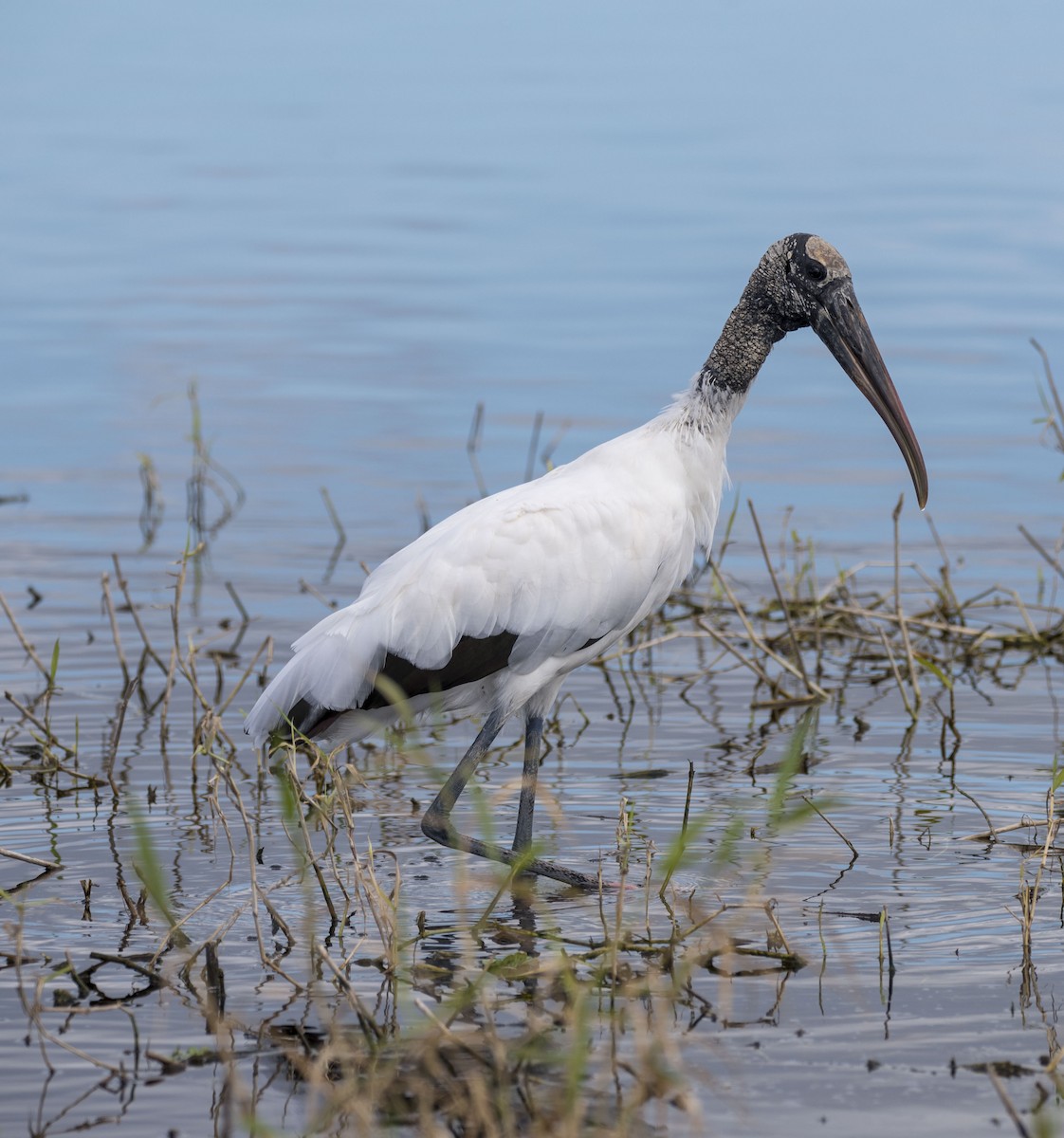
A big bald-headed bird works the shrinking fall ponds at Cliff's Ponte Vedra course, sweeping its bill through the shallows and snapping it shut on fish it never sees. Cliff explains why late November concentrates its groceries, why its return says good things about the water, and why he stopped waving it off his pond banks.
Late November is when my ponds tell the truth. The summer rains are done, the water drops a little every week, and everything that lives in there gets crowded into less and less room. The golfers see a pretty pond with a fountain in it. I see a shrinking grocery store. And nobody reads that store better than the big white bird with the bald gray head who shows up most mornings and goes shopping with his bill held wide and his eyes paying no attention at all.
That is a wood stork, and if you have never watched one feed, you have missed the strangest good fishing on this whole property. He wades out into the shallows on legs like gray stilts, slow as a man who has nowhere to be, and he sweeps that heavy, down-curved bill side to side through the water, held partway apart the whole time. He is not looking for anything. He cannot see a fish in that murky edge water any better than I can. He is feeling for it. The second something alive bumps the inside of that bill — a sunfish, a shiner, a tadpole having a bad morning — the bill snaps shut faster than you can blink. Faster, they tell me, than just about any reflex like it in the bird world. I believe it. I have stood on that bank with a cup of coffee and watched him come up with fish after fish, never once appearing to aim.
There is a second trick, and this one makes the crew laugh every time. He shuffles one big foot in the mud as he walks, stirring the bottom on purpose. He is flushing his groceries out of hiding. Fish that were tucked down in the grass and the silt panic at that foot coming through their living room, they dart, and the bill is waiting. He is not chasing dinner. He is arranging for dinner to run into him. There is a difference, and every man who has ever worked a job with his hands understands it in his bones. Set the table right, and the work comes to you.
This time of year is his season here because of that dropping water. In the wet months the fish spread out across every flooded low spot in northeast Florida, and a stork can starve in a full pantry because nothing is concentrated enough to be worth the sweeping. Come fall, my ponds shrink, the shallows warm at the edges, and the fish pack into the last good water. That is when the storks gather. Some mornings I count six or eight of them working one pond bank in a loose line, each in his own lane, bills sweeping, feet shuffling, nobody crowding anybody. It looks like a crew. I have told them so. They did not answer, which also makes them like a crew before coffee.
Folks around here used to see a whole lot fewer of them. The stork had hard years when wetlands got drained and messed with, because a bird that feeds by touch needs water that rises and falls on nature's schedule, not an engineer's. He has come back some in my lifetime — a young fellow on my crew had to ask what he was looking at, and I got to feel useful explaining it. I count his return as a report card on the water itself. If the pond were sick, he would stop showing up first, because he cannot fake a living in bad shallows.
He does cost me a little. A stork working a bank stirs the edge where my grass meets the water and wants to stay neat, and where the birds gather regular, the bank gets a worked-over look no edger will fix. Early on I waved them off a fresh bank I had just dressed. I do not anymore. That stirred edge is where the fish hide and the frogs work, and a pond with nothing living at its edges is just a blue hole we pump out of.
So most mornings I do my first pond check a little slower when the storks are in. I note the water level, check the intake and the fountain, then stand a minute longer than the job requires and watch a bird fish blind and eat better than men with boats and lures that cost more than my boots. He never hurries, never looks down. He keeps his bill ready, keeps his feet moving, and trusts that what he needs is already in the water in front of him. There are worse ways to run a morning.