 The Fairway Wire
Editorial
The Tree Roots Are Lifting My Cart Path One Crack at a Time, and the Trees Were Here First
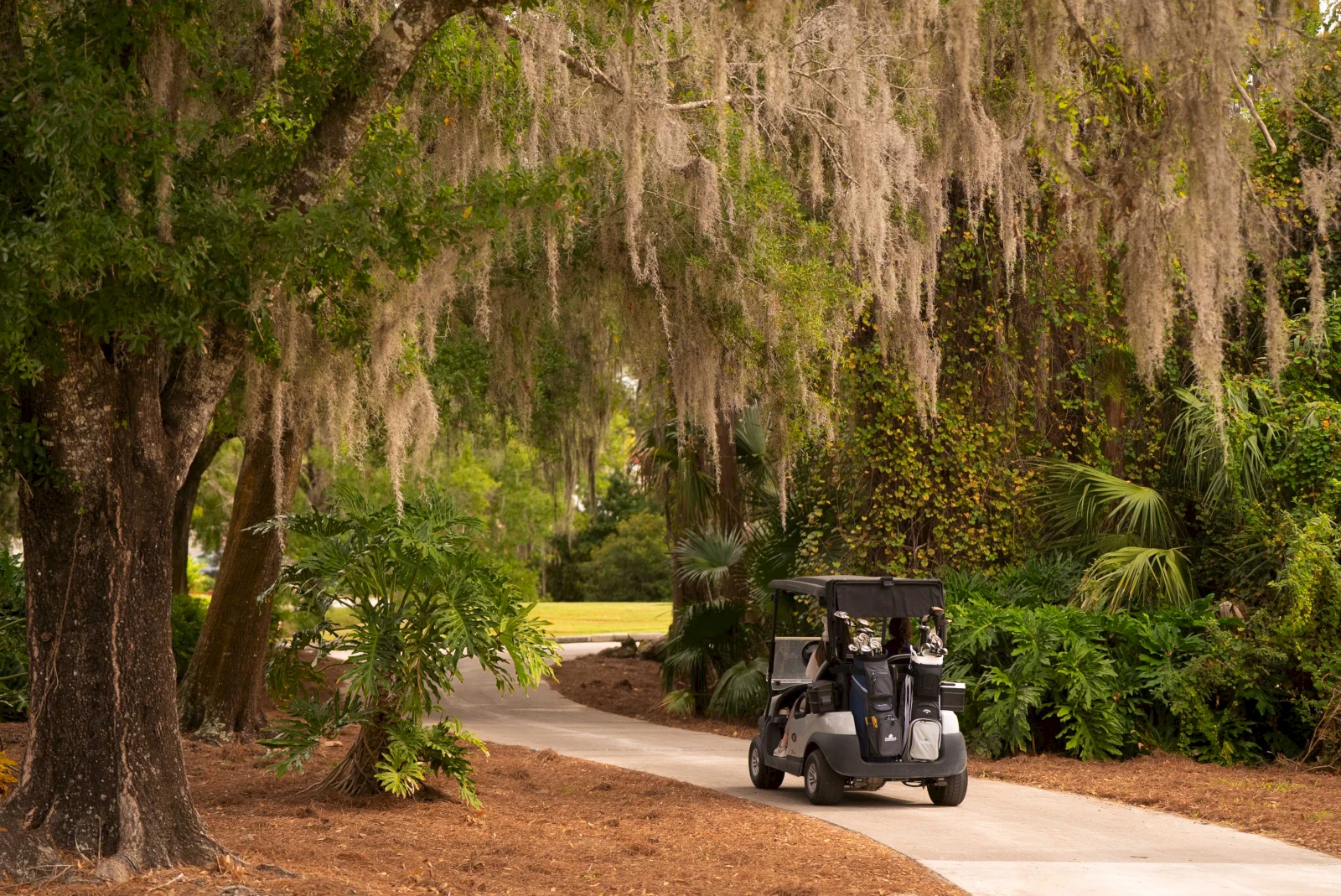
A bump in the cart path near our big live oaks spills more coffee than any pothole in the county, and I am the man sent to fix it. What I find under that concrete is a slow contest between a root doing its job and a path doing its own, and the honest fix bends toward the tree.
I can find the worst bump on this golf course with my eyes closed, and some mornings in the dark that is exactly how I find it. It is where the cart path bends past a stand of live oaks, and it announces itself the same way every day: the cart shudders, the wheel chatters, and my coffee jumps out of the cup holder and lands on my leg. That is my inspection report. No meter made reads a path like a full cup of coffee at five in the morning.
Under that bump, a root is winning an argument with concrete, and it is not even trying hard. People picture a root smashing up through the path like something in a movie. It is slower and sneakier than that. Moisture gathers under a path — irrigation overspray, rain soaking the edge, damp sand shaded all day — and roots go where the water is. One finds the underside of that slab, settles in, and gets a little thicker every year. A fraction of an inch at a time. Concrete does not stretch. So one spring the panel edge is up a quarter inch, the next spring an inch, and by the third spring your coffee is on your pants.
A lifted path is not just an ugly path. The lip catches a mower's front caster and jars a man half out of his seat. It catches a cart tire and thumps a golfer's bad back. It catches a shoe toe at dusk, when a walker is coming home in low light thinking about his score instead of the ground. Water pools behind the raised edge, softens the sand underneath, and the panel settles crooked and cracks. On Florida sand, a cart path is not permanent. It is a raft floating on soil that moves, under trees that grow. I walk our paths the way I walk greens — regular, on purpose, looking for trouble while it is still cheap.
When we finally cut into that bump, it is an excavation. Saw the joints, lift the broken panel, and there is the root map nobody drew: feeders thin as pencils running everywhere, and then the one we came for, thick as my forearm, straight as a pipe along the underside of the slab. Here is where a greens keeper has to think like something besides a repairman. A root that size, that close to the trunk, is not just plumbing. It is an anchor. In hurricane country, an oak stands up in seventy-mile-an-hour wind because those roots grip the ground. Cut the wrong one and you have not fixed a path — you have weakened a tree full of heavy limbs hanging over a fairway and the people on it.
So most of the time, the honest fix bends toward the tree. For a small heave, we grind the lip smooth and buy a year or two. For a real one, we pour the new panel with a bow in it, bridging over the root with room left to grow, and set a barrier along the edge to suggest — politely, underground — that the root find its water somewhere else. And twice in my years here we have given up and moved the path, swung it six feet out into a curve nobody planned. Golfers ask why the path bends there, like somebody laid it out after a long lunch. Somebody kind of did. The tree did, about forty years before any of us got hired.
Here is what I have made my peace with. The oaks were on this ground before there was a golf course, a path, or a me. They hold the bank together, shade the walk between holes, and make that stretch feel like old Florida instead of a subdivision. Concrete is cheap, and patient men can pour it in any shape they want. A sixty-year-old oak grows in one shape, on its own schedule, and it is not negotiating. The tree is the original resident. The path is the guest. When the two argue, the guest moves.
The root will push again, of course. Not under that panel — we left it room — but somewhere down the line, under a different slab, on a different dark morning. So I keep inspecting the cheapest way I know: full coffee, empty path, first light, and pay attention to where it jumps. Every course is a slow argument between what men built and what is still growing underneath it. My job is not to win that argument. It is to mediate it, one panel at a time, before somebody's ankle settles it for us.