 The Fairway Wire
Editorial
The Push Carts Come Back When the Mornings Turn Cool
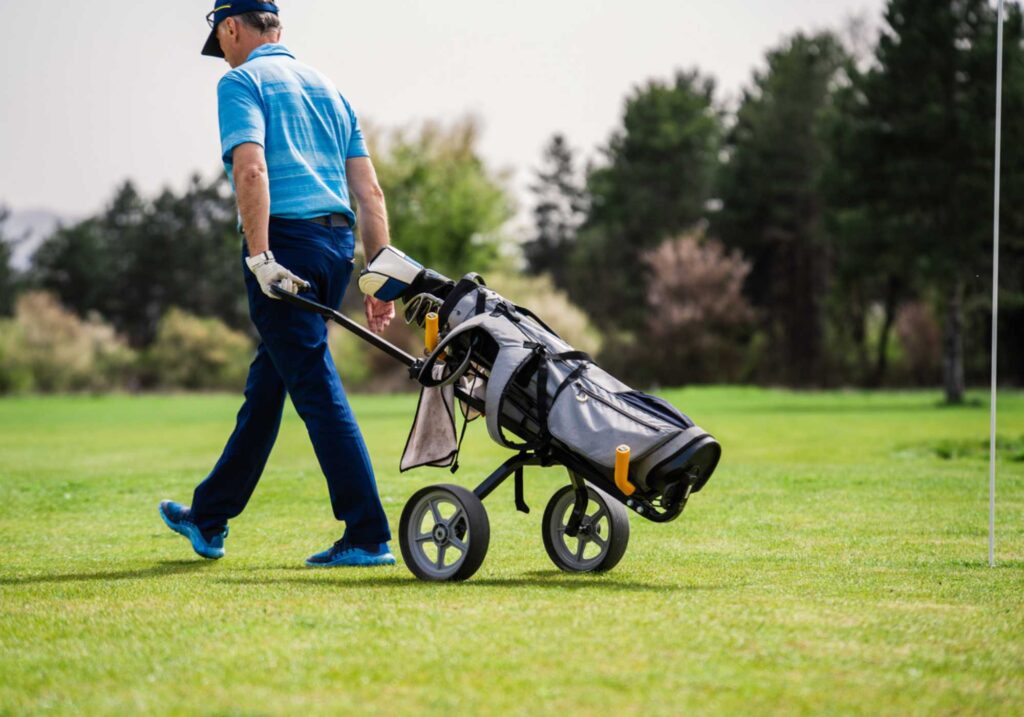
When the first cool November mornings reach Ponte Vedra, the push carts roll back down the first fairway. A greens keeper explains why walkers are easier on young rye, sharper-eyed over the sprinklers, and in less of a hurry than anybody else on the course.
You can set your watch by it in Ponte Vedra. The first morning the air at sunrise sits in the fifties instead of the seventies, the push carts come out of the garages. All summer long, walking eighteen holes here is a negotiation with the sun, and the sun wins by the seventh tee. Everybody rides. Then November turns the page, the dew sits heavy, the breeze off the ocean feels like somebody finally opened a window, and down the first fairway they go — one golfer, one bag on three little wheels, walking behind his own game like his grandfather did.
I love seeing them from the mower, and not only because a man on foot weighs a whole lot less than a cart. A riding cart with two golfers, two bags, and a cooler tips past half a ton, and every pound of it rolls over grass I am trying to keep alive. A push cart spreads that same load onto skinny wheels and a walking man's shoes. On young overseed rye, which roots shallow and tears easy this time of year, that difference is not small. The walkers can cross ground on a wet morning that I would never dream of sending a riding cart over. My fairways keep their shape in November partly because half the field suddenly decided to use their feet.
Walking changes what a golfer notices, too, and I say that as a man who watches both kinds all day. A rider goes tee to ball, ball to ball, green to cart, mostly looking at the next shot. A walker lives down at grass level for four hours. He sees the dew lines. He sees where the fairway is thin and where it is thick. He finds his ball mark because he watched the ball land from ground level instead of guessing from a cart path. More than once a walker has waved me down to report a leaking sprinkler head or a soft spot by a drain that no rider had mentioned in a week. Four hours at three miles an hour makes a man part of my scouting crew whether he signed up or not.
It changes the talk, as well. Riding pairs talk in bursts, between shots. Walkers fall into a rhythm side by side, and the conversation stretches out like it does on a front porch. I hear more laughing out of walking groups, because nobody is in a hurry to get back to a seat. Some of these men have walked together on Saturday mornings for twenty years. Their fathers carried. They push. It amounts to the same thing — time spent walking toward a little white ball, arguing about nothing important, in no rush to finish.
Now, the push cart does leave its own signature, and a greens keeper notices signatures. Those narrow wheels draw faint lines where they cross a wet green fringe in the same place every morning, so we ask walkers to roll around the collars instead of over them, same as we ask riders to keep carts off. A push cart parked on a tee while its owner putts is no trouble. One left leaning against a bunker edge while everybody searches the rough can hold up the group behind. None of it is villainy. It is just a new set of small habits for a crew to learn, and most walkers learn them faster than riders do, because a man on foot can see exactly what his wheels just did.
There is a practical side I respect, too. A push cart costs less than a decent wedge, folds flat against a garage wall, never needs a charge, and never once called the shop because its battery died on the fifteenth hole. I cannot say that for our riding fleet this month. Walkers also shrug off my worst morning decision. When I declare carts on the path only after overnight rain, the riders groan like I personally rained on their scorecards. The walkers just roll on. Their round was already on the path God gave them — two feet, straight down the middle.
So when the cool mornings settle in and you see that little parade heading down the first fairway, bags rolling behind like obedient luggage, know that at least one greens keeper is quietly rooting for them. They are easier on my grass, sharper-eyed over my sprinklers, and in less of a hurry than the rest of the world. Golf started as a walking game on rough ground by the sea. Around here, every November, it remembers.