 The Fairway Wire
Editorial
The Purple Martins Are Still in Brazil, and I Cleaned Their House Anyway
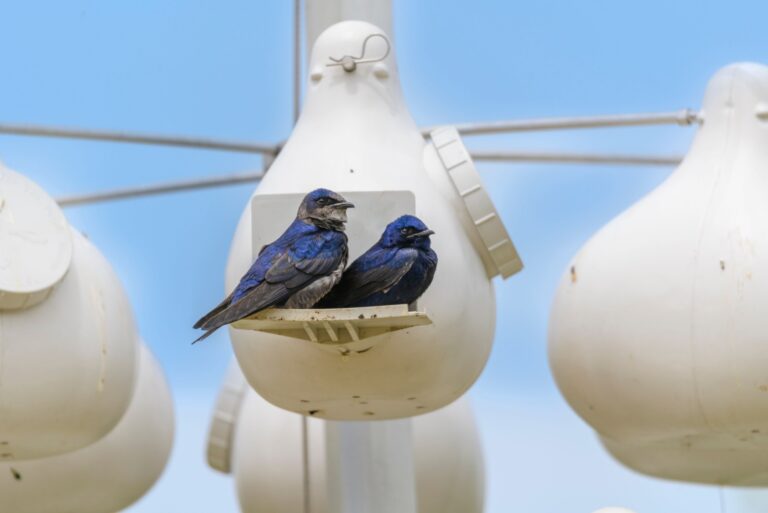
The purple martins that nest by my back-nine pond are wintering in Brazil, so this week I lowered their gourd rack, scrubbed out last spring's nests, and measured entrance holes for tenants who weigh less than a golf ball. A clean house in November is what brings the first scout home in January — and a working colony is the best pest control a course never has to pay for.
This week I stood on a ladder by the pond on the back nine, lowering a rack of white plastic gourds one crank at a time, cleaning out a house for guests who are currently in Brazil. That is not a figure of speech. The purple martins that nest on this course every spring spend our winter in South America, and right about now they are somewhere over the Amazon, fattening up and waiting on a clock in their heads that I cannot see. My job, in late November, is to make sure that when the first scout shows up — usually sometime in January down here in Florida, earlier than almost anywhere else in the country — the house he inspects is clean, tight, and ready to brag about.
If you have never paid attention to a martin rack, it looks like a strange white fruit tree on a pole: a dozen or more hollow gourds hanging from a metal frame, with a winch at the bottom so the whole thing rides up and down like a flag. Martins are particular tenants. They want open sky, water nearby, and no tree limbs close enough for a raccoon or a hawk to use as a launching pad. A pond bank on a golf course, with forty yards of mowed grass in every direction, is about the finest address a martin could ask for. We did not plan it that way. We just mow everything, and the birds read that as safety.
Cleaning a gourd is not glamorous work. You drop the rack, open the little cap on each gourd, and pull out last spring's nest — a flat mat of pine straw and leaves, and under it, if the season went well, a few dry flecks that tell you babies hatched and flew. You scrub out what the rain turned sour, check the drainage holes, and shake out the wasps that moved in after the tenants left. There is always at least one gourd with a wasp nest in it, and that gourd gets cleaned from a respectful distance with a long stick and strong language. Then you look at the entrance holes. Starlings and house sparrows spend all winter trying to claim these gourds, and a stretched or chewed entrance is an invitation. Good landlords measure. I am out here with a ladder and a tape measure for birds that weigh less than a golf ball, and I have stopped being embarrassed about it.
Here is the part golfers never think about: a martin colony is pest control that pays for itself in entertainment. A grown martin eats flying insects all day long — dragonflies, beetles, moths, and yes, mosquitoes, though not the thousands a day the old sales brochures promised. They work the pond at dawn when I am mowing the green beside it, stitching the air in long loops, chattering that gurgling song that sounds like water running over stones. When the colony is in full swing in April, the rack by the pond is the loudest cheerful place on the course. Golfers stop their carts to watch. Nobody has ever complained about the noise. It is the one noise on a golf course that makes people slow down instead of speed up.
The scouts are the reason November matters. The first bird back is usually an older male, dark as a blueberry, and he is not nesting yet — he is inspecting. He circles the rack, lands, ducks into two or three gourds, and decides whether this address is still good. If the gourds are filthy, full of sparrows, or hanging crooked off a bent pole, he keeps flying, and a colony that took five years to build can thin out in one spring because the landlord got lazy in the fall. Martins come back to the same site year after year, which means this is not really my rack. I am just the maintenance man for a family that commutes from Brazil.
So this week the gourds got scrubbed, the winch cable got greased, the pole got checked for the lean it picks up every hurricane season, and the whole rack went back up empty and clean, facing the pond. It will sit there through December looking like a strange white tree that lost its leaves. Then one morning in January, probably while I am mowing in the dark with a headlamp on, I will hear that gurgling chatter over the pond and know the first scout is home, checking my work.
I hope he likes what I did with the place. I did it all for a tenant who never pays rent, never fixes a ball mark, and eats bugs over my pond for five months a year. Fair trade. Best tenants I have.