 The Fairway Wire
Editorial
The Prettiest Tree on the Course Is Killing My Green
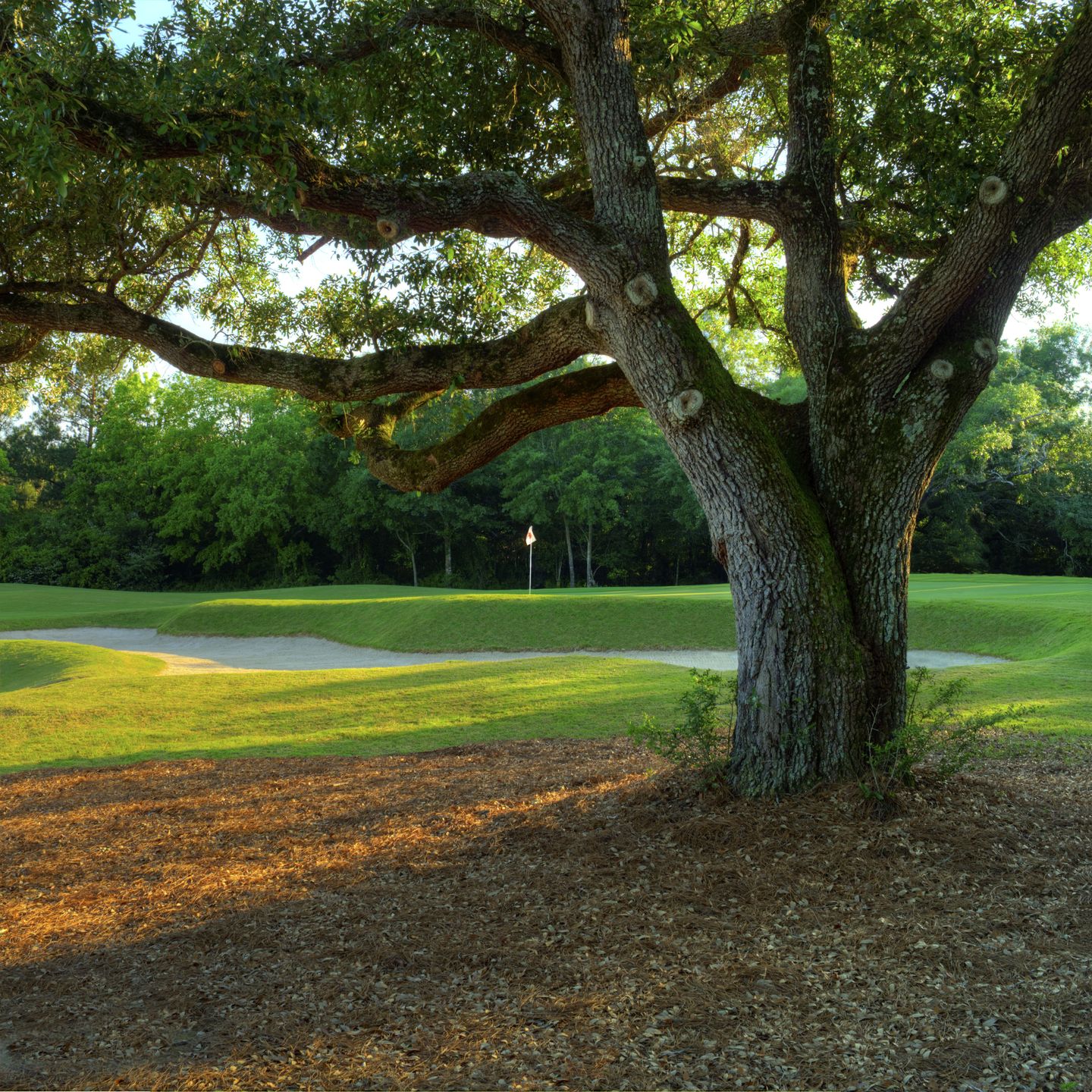
Every course has a beloved tree, and mine is slowly shading, starving, and soaking the green it frames. From morning sun to hungry roots, here is the quiet fight under the prettiest spot on the property — and why the chainsaw is the last answer, not the first.
Every course has one. Ours is a big, beautiful oak that leans in just enough to frame the green like a picture somebody ought to sell in the pro shop. Golfers stop under it on a hot Florida afternoon and say it is the prettiest spot on the property. I stand under it, look down at the thin grass at my feet, and think what everybody on a grounds crew thinks and is too polite to say at full volume: that tree is killing this green, slow and lovely, one shaded morning at a time.
Grass is not complicated about what it wants. It wants sunlight, air, water in the right amount, and room to eat. A green wants even more of all four, because we ask it to live cut down to almost nothing while people walk on it, spike it, and expect it to roll like a pool table. Put a big tree on the south or east side of that green and you have taken away the most important sunlight of the day — the morning sun. Morning sun dries the dew, warms the soil, and tells the plant to get up and grow. A green that stays shaded until ten or eleven stays wet, stays cool, and stays in trouble.
Shade does not just steal light. It steals air. A thick canopy settles over a green like a lid, and the breeze that should dry the leaves never quite gets there. Wet leaves that stay wet are an invitation, and in Florida the invitations get answered — algae slicks the thin spots black, moss creeps in, and disease finds exactly the weak, damp corner we were already worried about. From the cart path it still looks like a pretty, shady green. Down on my knees, it smells like a swamp and feels like a sponge.
Then there is the part nobody sees, under everybody's feet. A tree that size is drinking. Its roots run out under the collar and the edge of the green, and they are better at finding water and food than my grass will ever be. I can put down fertilizer for the turf and watch the tree take its share first. The turf is not losing a fair fight. It is sharing a small kitchen with something fifty feet tall and permanently hungry.
So why not just cut it down? Friend, if you want to start the loudest argument in golf, touch a beloved tree. That oak was here before half the membership joined. Somebody's grandfather played under it. Somebody got married in front of it. Somebody's name might be on a plaque near it, and that plaque matters to real people for real reasons. A superintendent who walks in swinging a chainsaw at a landmark will win the agronomy and lose the room, and golf courses run on both.
So we do the work nobody photographs. We raise the canopy so light and air can get underneath in the morning. We thin the crown so the sun comes through in pieces instead of not at all. We prune roots, carefully, without hurting the tree's hold on the ground — because in hurricane country, a weakened tree might be lying across my fairway in September. On bigger-budget courses you will see fans near a shaded green, just to move the air the tree will not let move. We make do with pruning, patience, and giving that corner a little extra of everything — extra food, extra drying, extra forgiveness when we set the pin and steer traffic away from the thin side.
And let me be clear: we do not hate trees. I plant them. A course without trees is a field with flags in it. Trees frame holes, break the wind, cool the walk between shots, and give the birds and the occasional gator somewhere to be that is not the sixth fairway. The problem was never trees. It is a tree and a green fighting over the same small piece of ground, each doing exactly what nature built it to do. Only one gets blamed when the surface goes thin, and it is never the one with the plaque.
So the next time you roll a putt across a green that is perfect except for one pale, tired corner under a beautiful tree, you will know the story. That corner is not neglected. It is probably the most fussed-over grass on the course. It is just living in the shade of something everybody loves — including, if I am honest, me. I just wish, on behalf of my green, that it had grown about forty feet farther from the flag.