 The Fairway Wire
Editorial
The Pink Bird With a Spoon for a Bill Shows Up and Everybody Forgets Their Score
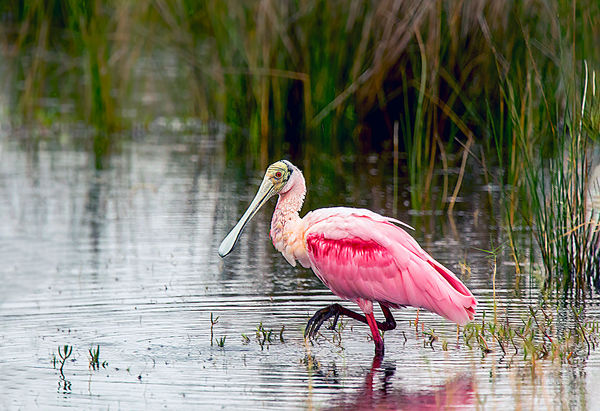
A roseate spoonbill is a rare pink visitor to a Ponte Vedra pond, feeding by feel with a bill shaped like a spoon. From a greens keeper's cart, here is why its color is earned at the table, why its shallow corner of the pond matters, and why a whole foursome will forget the score to watch it work.
I was edging the pond on the back nine when I saw a flash of pink that did not belong there, and my first thought was that a flamingo had escaped and filed a change of address. Then the bird lifted its head, and I saw the bill — flat, wide, and rounded at the end, shaped like a spoon you would stir a big pot with. No flamingo carries silverware. That was a roseate spoonbill, and on my course in Ponte Vedra, that bird is rare enough to stop work for.
Up close, through a slow cart roll so I did not spook it, the colors are hard to believe. White neck and chest, pale pink body, and wings that go deep rose, almost red at the shoulder. The head is mostly bare skin, greenish and plain — bald on top, dressed for a party everywhere else. The legs are long and reddish, built for wading, and that spoon bill is pale and smooth, wider at the tip than at the face. A young bird is paler, nearly white with a blush. An adult in full color looks hand-painted, and the white egrets and gray herons I mow past suddenly looked underdressed.
The feeding is the best show here, and it is all done by feel. A spoonbill wades into water just a few inches deep, dips that spoon under the surface, and sweeps its head side to side in a steady arc, step by step, like a man hunting for a dropped coin in a dark room with his hands. The bill is full of nerves. When it brushes a shrimp, a small fish, or a water bug, it snaps shut in a blink. It never saw its breakfast. It felt it. A heron stands still and aims. A spoonbill walks and sweeps. Two birds, same pond, completely different trades, and I respect them both.
That pink is earned at the table. The color comes from the food — tiny shrimp and other small water life full of the same pigments that turn a shrimp pink in the pot. Eat well in rich shallow water and the feathers come in bright. Scratch a living in poor water and the bird fades toward pale. There is no faking it. This bird wears its diet where everybody can see it: the brightest spoonbill in the pond is the one that found the best groceries and worked them hardest.
This bird carries a hard history. A little more than a century ago, spoonbills were hunted nearly out of Florida for their feathers, which went into hats and fans — pink sold well, and the birds paid for it. They hung on in a few far corners of the coast before protection gave them room to come back. Now they nest again in mangroves and low trees near the coast, and after nesting season they wander — that wandering brings one to a golf course pond in Ponte Vedra. He is not lost. He is traveling, checking shallow water the way I check a weather app, looking for the next good place to eat.
Which is where my job quietly touches his. A spoonbill needs water shallow enough to wade and sweep in, a soft bottom holding shrimp and small fish, and a bank that eases into the pond instead of dropping off a stone wall. Ponds ringed tight with rock look tidy, and they feed almost nothing. Leave one corner with a gentle shelf, keep the water at a fair level, let a patch of low growth stand at the edge, and you have built a lunch stop without meaning to. When a pond level dips in a dry stretch, the food gathers in the shallows that are left, and he will find that spot before I have finished my coffee.
The golfers, to their credit, get it every time. A group will roll up mid-sweep, and the talk about scores just dies. Phones come out. Somebody whispers, and grown men who were arguing about a gimme two holes back stand quiet as church. When a spoonbill leaves, it flies with its neck stretched straight out in front, unlike a heron, which folds its neck back. Nobody has ever asked for that pond corner to be tidied up after seeing pink work it at breakfast.
So if a flash of pink stops your round one morning, let it. Give the bird its room, watch the spoon sweep, and enjoy the fact that the rarest color on this course is not a shirt or a cart — it is a working bird that nearly vanished, came back, and picked my pond for lunch.