 The Fairway Wire
Editorial
The Pin Sheet Looks Simple. Picking Those Pins Is Anything But.
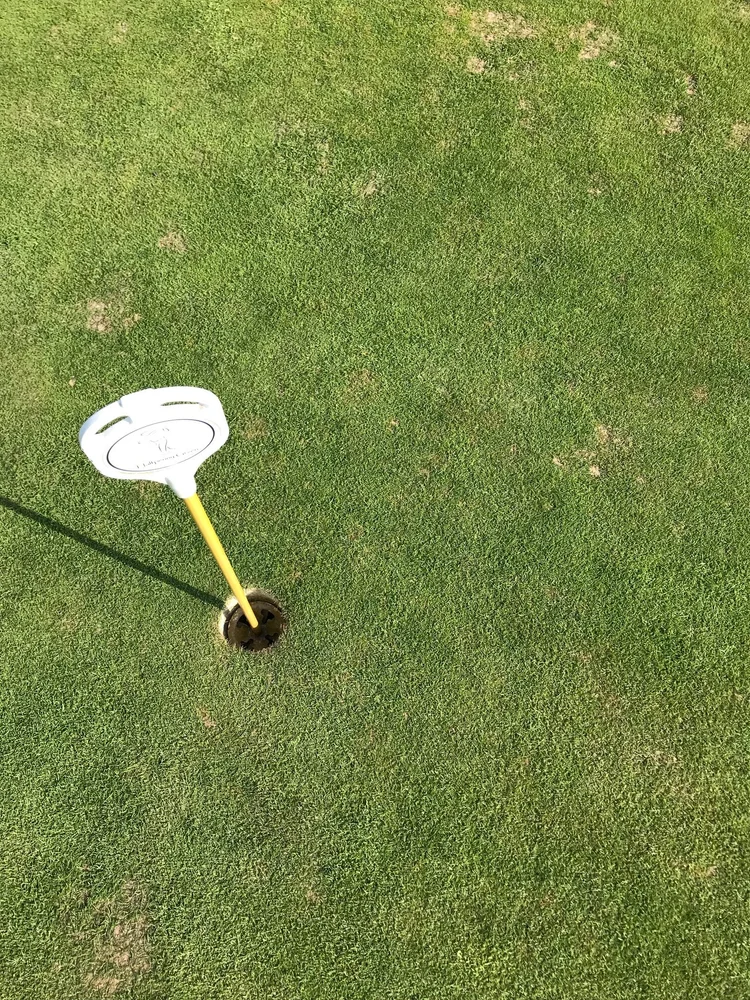
Most golfers fold the pin sheet under a scorecard and forget it by the third hole. I cut the cups before sunrise, and I can tell you every number on that sheet is a negotiation between turf, weather, slope, and mercy.
**Summary (deck):** Most golfers fold the pin sheet under a scorecard and forget it by the third hole. I cut the cups before sunrise, and I can tell you every number on that sheet is a negotiation between turf, weather, slope, and mercy.
---
The Pin Sheet Looks Simple. Picking Those Pins Is Anything But.
Most golfers treat the pin sheet like a receipt. You glance at it in the cart, see a bunch of little numbers, fold it in half, and lose it under a scorecard by the third hole. Three steps on, five from the left, sixteen deep — it reads like directions to a place nobody's going. I used to read it that way too, back when I only played golf. Then I started cutting the cups, and that sheet turned into something else. It's not a receipt. It's a promise the crew made before sunrise.
Here's the part nobody tells you: a hole location isn't picked, it's negotiated — between the grass, the weather, the field, and mercy. The grass gets the first vote. You cannot put a pin where the turf is thin, healing, or tired, no matter how perfect the spot looks on paper. A cup cut into stressed turf chews up the edges and putts start wobbling out for reasons nobody can see. So before I think about challenge, I think about health. Yesterday's hole is still closing up. Today's cannot live anywhere near it.
The weather gets the second vote, and in Florida it votes loud. If rain softened the green overnight, a pin tucked on a slope will turn every approach into a trick shot and every putt into a prayer, because the ball won't hold and won't stop. If wind will blow twenty by noon, a pin on the exposed side is just cruelty with a flag on it. You're not placing a hole for the calm at 6 a.m. You're placing it for 2 p.m., when the Saturday game is wondering who hurt me.
Then there's the slope itself, and that's where the science and the feel shake hands. The general rule you hear is three feet from the edge, minimum, and a patch of ground around the cup flat enough that a ball rolling the last few feet has a fair chance to die near the hole instead of taking off down a ridge. On a fast green, a gentle two percent grade near the hole plays like a cliff. You learn a green by mowing it a thousand mornings — where the water sits, where the grain pulls, which corner looks innocent and putts like a slide. The sheet gives you numbers. The green gives you the truth.
Cutting a cup is violent work dressed up as precision work. The cutter is a heavy cylinder you drive straight down, pull the plug clean, set the cup exactly an inch below the surface, and then tend the edges like you're finishing furniture. A ragged lip catches putts. A cup set crooked makes the flag lean like it's had a long night. And yesterday's plug has to go back level, tamped, and watered, or next week that healed circle plays like a manhole cover. Eighteen holes, eighteen little surgeries, and the patient isn't allowed to look operated on.
The difference between a fair pin and a fun one is a negotiation that never ends. Put them all in the middle and golfers will call it easy and be bored by Thursday. Tuck them all behind bunkers and you'll hear about it in the parking lot, in language I can't print here. The craft is the mix: a few gettable, a few honest, one or two that ask a real question — a rhythm like a set list. And yes, there is a sucker pin, close to trouble, begging you to aim at it — but a fair one always leaves a safe side. The moment there's no safe side, it's not a test. It's a trap, and I don't set traps on grass I'm responsible for.
So the next time somebody hands you that sheet in the pro shop, give it a second look before it disappears under the scorecard. Every number on it is a decision somebody made in the dark, on his knees, with a cutter in his hands — thinking about turf he has to protect, weather he can't control, and golfers he'll never meet who deserve a fair roll. Three steps on, five from the left. It looks simple. Friend, simple is the hardest thing we make.