 The Fairway Wire
Editorial
The Mulch Volcano Around Every Tree Is Slowly Smothering It, and November Is When I Tear It Down
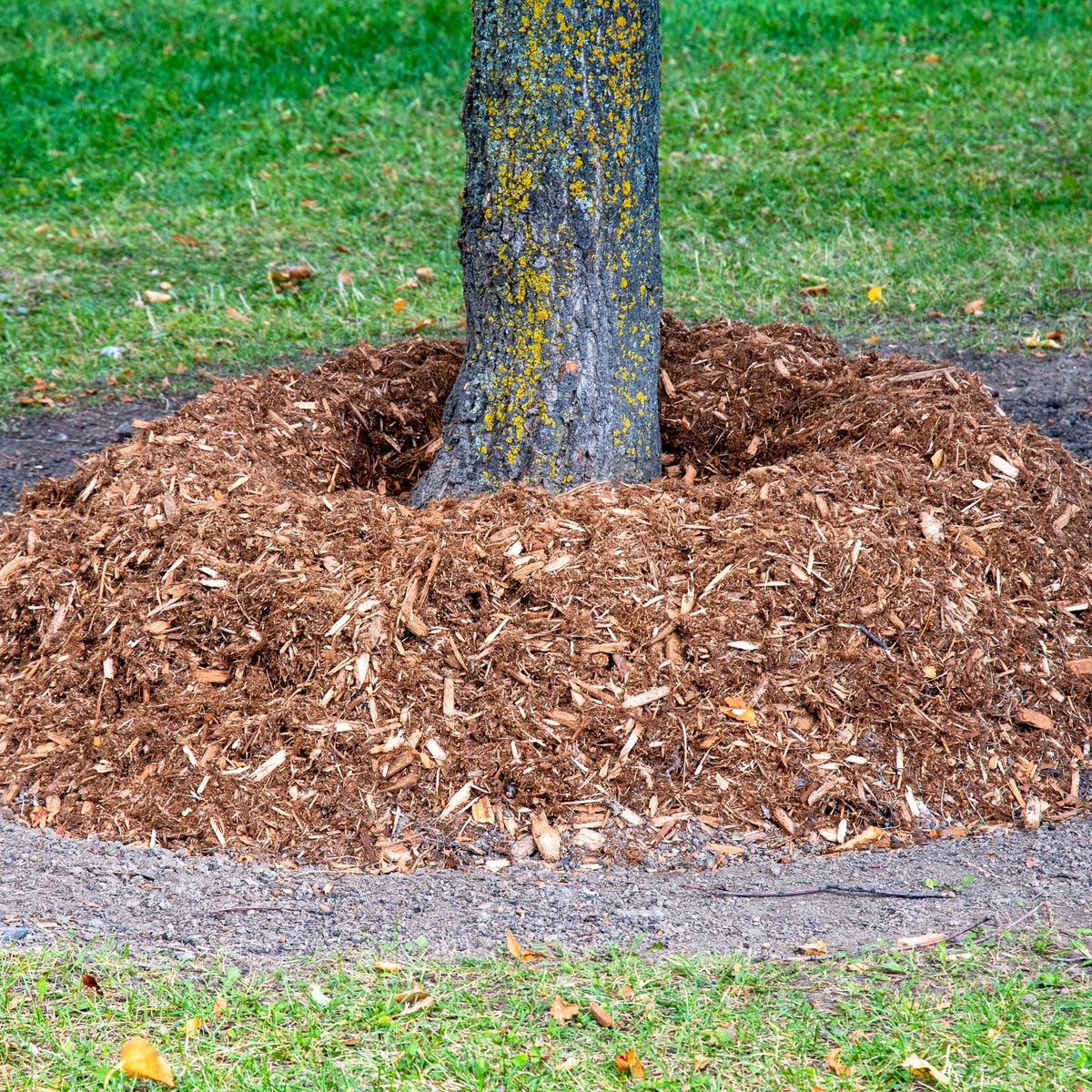
Every fall I walk the tree lines and find mulch heaped high against the trunks, neat as a little mountain and wrong in every way that matters. I pull it back by hand to save the damp bark, free the wide roots underneath, and leave a flat ring the rain can reach.
Every November I walk the tree lines with a rake over my shoulder, and every November I find the same polite little mountains. Somebody — a well-meaning crew years ago, or a bed crew in a hurry — has heaped fresh mulch up against the trunks in a steep, tidy cone. From a cart it looks cared for. Up close, on my knees, that neat mountain is slowly smothering the very tree it was meant to help, and my job is to tear it down before the bark gives up.
A tree is supposed to end the way a foot ends in a shoe. Down at the base, the trunk widens into a flare, then splits into the big roots that anchor it and drink. That flare is meant to sit out in the air where you can see it. On a healthy oak here in Ponte Vedra, I should be able to slide my palm down the trunk and feel it swell out before it touches dirt. When the trunk dives straight into a pile like a telephone pole, the tree is buried, and buried bark behaves nothing like a root.
Bark and roots are built for different jobs. Roots live wet and dark their whole lives and are fine with it. Bark is a coat meant to stay mostly dry and shed water. Pack damp mulch against it month after month and that coat never dries. It stays soft, it turns sour, and the small things that feast on soft wet wood move in to stay. I have peeled back a cone and found blackened bark that gave under my thumbnail, pill bugs by the dozen, and white threads of fungus already at work underneath. The tree above still had green leaves. Down at the base, where it matters most, it was rotting in private.
The second harm takes longer and is harder to forgive. Roots chase moisture and air, and a deep pile offers both right on its surface. So the tree does the sensible, doomed thing: it sends fine roots up into the mulch, and some of them find the trunk and start to circle it. Year by year those roots thicken. The trunk thickens too, and the two squeeze each other like a belt pulled one notch tighter every season. I call it a tree strangling itself with my help, because we built the pile that invited it.
Nobody builds one of these piles on purpose, which is why they are everywhere. Mulch settles and fades through a Florida summer, so next fall a fresh load goes down to make the beds look new again. Nobody pulls the old layer off first, because from the path the bed looks thin. Two inches a year sounds harmless until you stand there in year six with a cone halfway to the first limb. Good intentions and a wheelbarrow built every volcano on this property. I know, because I have shoveled onto the lower slopes myself in younger years.
The fix is unglamorous and mostly done on my knees. I rake the cone outward, then finish by hand until the flare shows itself again like a shoulder coming out of water. What stays behind is not a mountain but a saucer: a wide, flat ring two or three inches deep over the root zone, pulled back a hand's width from the trunk so air can reach the bark. Rain falls into that ring and soaks down to the roots instead of shedding off a steep pile like water off a roof. Flat, wide, and a little boring to look at. The trees prefer boring.
What I find in the teardown keeps me humble. Most flares come back fine once they dry. Some carry scars that will take seasons to heal over, and a few young trees have a circling root already thick as my thumb — those I flag for careful cutting rather than tearing at it myself. A tree forgives slower than grass does. Grass answers in weeks. A tree you unbury in November may not thank you until the spring after next, and I have learned to accept payment on that schedule.
So if you see me this month kneeling by an oak with mulch up to my elbows, ruining the neatest pile on the course, I am not undoing good work. I am finishing it the way it should have been left — flare showing, bark breathing, roots down in real soil. These trees shade my crew at noon and give my greens their sternest test on a windy afternoon. The least I owe them is to stop burying them alive, one volcano at a time.