 The Fairway Wire
Editorial
The Men With All Day to Play Are the Fastest Golfers on My Course
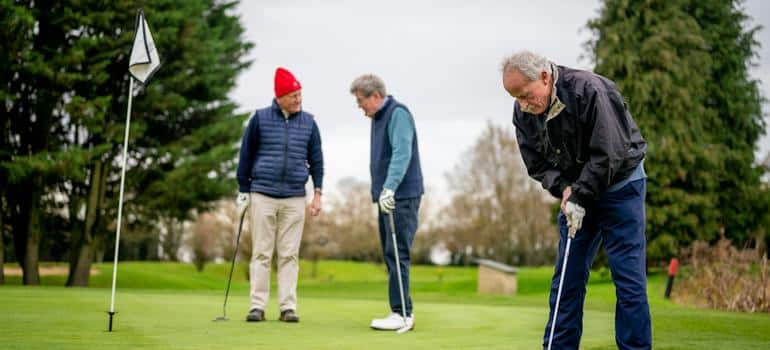
The retired regulars at my Ponte Vedra course have nowhere they need to be all day, and they still finish eighteen before most Saturday groups reach the turn. From my mower, they are the best golfers a greens keeper could ask for, and it has very little to do with their scores.
Every weekday morning, right around ten past eight, the same parade rolls off the first tee at my course in Ponte Vedra, and I plan my mowing around it. Four carts, sometimes six. Men in their seventies and eighties, sweaters on because a November morning in Florida still counts as cold to a man who has earned the right to say so. Every one of them is retired, with nowhere he needs to be all day. And they will finish eighteen holes before most Saturday groups have finished arguing about who won the front nine.
That is a standing fact of this golf course, and it still makes me grin from the mower. The men with all day to play are the fastest golfers I maintain grass for, and it is not close.
They play what folks now call ready golf, except they were playing it before anybody gave it a name, back when it was just called golf. A man hits when he is ready, not when the honor says so. While one of them is putting, the next one is already standing over his ball, putter in hand. Nobody reads a green from four sides. Nobody takes three practice swings at a shot he has hit four thousand times from that same patch of fairway. He knows what the ball does there. He has the receipts, in forty years of Tuesdays.
That is the real secret. Speed out here is not about hurrying. It is about knowing. They are fast because nothing on this course surprises them anymore. They know which bunker swallows a ball that lands two feet short, and they aim away from it without holding a meeting. They know the putt from above the hole on eleven cannot be stopped, so they never leave it there. A younger man plays the course he saw on television Sunday. These men play the course actually under their shoes, and that course is a shorter walk.
From my side of the ropes — the ones I set out at dawn to guard the young winter rye — they are the best friends a greens keeper has on the tee sheet. They wave me through and wait, patient as fence posts, while I finish a pass. Every one of them fixes his own ball mark and then, out of habit, one somebody else left behind. If a sprinkler head wept overnight and left a soft spot by a green, I hear about it before nine, hole number and all. My radio is good. Their network is better.
They are also the memory of this place. My crew changes, seasons turn over, the course gets a new bunker here and a moved tee there. The regulars remember all of it. One of them can tell you where the old practice green sat before I was born. When I cut a pin in a corner of a green that has not held one in years, they notice by the second hole, and I get the review at the turn, honest and complete. A man who has played the same course for thirty years is not a customer. He is a witness.
Every one of them has moved up a set of tees over the years, too, one quiet step at a time, and not one acts like it cost him anything. The ball flies a little shorter than it did in 1998, so the course got a little shorter to meet it, and the fun never left. The scorecard is just the excuse to get out of the house on a Tuesday.
November suits them. The heat that runs the summer visitor off by the twelfth hole is gone, the new rye is green and a little proud of itself, and the light comes in low and gold at the hour they tee off. They complain about the wet mornings and slow early greens the way farmers complain — fondly. They have played a hundred Novembers. They adjust, and they are in the parking lot by lunch, telling the same stories with new scores attached.
People ask me what makes a golf course feel loved instead of just maintained. My answer: a course is kept by two crews. Mine shows up in the dark with the machines. Theirs shows up at ten past eight with the memory, the patience, and the ball mark tools. The day those carts stop rolling off the first tee on a weekday morning is the day I will start worrying about this place. Until then, I will keep cutting the grass out in front of them and try to stay ahead. It is harder than it sounds. They are quick.