 The Fairway Wire
Editorial
The Little Weather Station on the Shop Roof Does the Math Before I Water
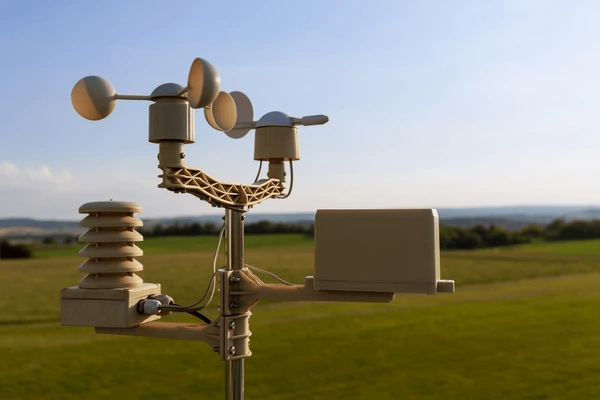
On a pole by my shop sits a little station with spinning cups and a glass eye, measuring sun, wind, and dry air all day so the irrigation computer can add up how much water the grass lost. This is the story of that midnight math, why I trust it most mornings, and why some days I walk the ground and overrule it.
If you stand in our shop yard and look up, past the fuel tank and the radio antenna, you will see the hardest-working member of this crew, and it is not a person. It is a little weather station. Three small cups spin in the wind on top of it. A white box breathes through slats. A dark glass eye stares at the sun all day, and a funnel sits open, waiting on rain that has not come to Ponte Vedra in weeks. It never sleeps, never asks for coffee, and every night it hands our irrigation computer a number that quietly decides how much water this whole golf course gets before morning.
Most folks around grass know the rain gauge, and I have one too. A gauge is a bookkeeper for deposits. It tells you what the sky put in. The station keeps the other side of the ledger. All day it adds up what the sky took back out — how hard the sun pulled, how long the wind blew, how dry the air sat over the fairways. Grass loses water like a man working in August loses it, a little at a time and then all at once. Scientists have a long name for that loss that I will spare you. Around the shop we just call it the day's thirst, and the station is the only one out here measuring it honestly.
Here is where the math happens. After dark, the irrigation computer takes that thirst number and turns it into minutes. Not the same minutes everywhere, either. A green baking in full sun gets back close to what it lost. A tee in morning shade gets less. The low fairway that holds its moisture gets told to wait its turn. Hundreds of sprinklers, each handed its own run time, all figured from cups spinning on a ten-foot pole. I used to do a rougher version of that figuring in my head with a soil probe and a hopeful expression. The station does it better. I am grown enough to admit that, most days.
November is when the little machine earns its keep around here. This time of year the rain mostly quits on us, but the thirst does not. A bright, windy fall day can pull nearly as much water out of this ground as a day in June, with no afternoon storm coming to cover the difference. Every gallon we run comes out of our ponds and wells, and I watch both all fall. Water too little and the young overseed rye thins out in the high spots first, pale and tired. Water too much and we are soft underfoot, growing grass that roots shallow and quits easy. The station walks that line with me, night after night, in numbers instead of guesses.
Now, the part where I still outrank the robot. The station stands in one place, and a golf course is eighty different weathers wearing one name. It does not know the corner of the ninth green that sits in pine shade until ten o'clock. It does not know one of my men hand-watered a dry slope yesterday, or that a sprinkler head on the fourth is throwing short. Some mornings I look at the run times it wrote, walk out with a probe, and cut a zone back or bump one up with my own thumb on the scale. The station does the math. I do the knowing. That split has kept this course green through more dry falls than I can count.
The station also needs keeping, same as any mower. Wasps love to build in that rain funnel, and a mud nest in there will lie to the computer about a storm that never happened. A spider web across the little cups can calm a windy day down to nothing on paper. Florida pollen coats the sun eye every spring until it reads a cloudy day in full blaze, so part of my rounds is a ladder, a soft rag, and five minutes cleaning sensors nobody else thinks about. A lying station is worse than no station at all, because the computer believes it completely.
So when you drive past a course at night and see the sprinklers up, throwing silver arcs nobody is there to watch, know there is a chain of custody behind that water. The sun pulled, the wind pulled, three little cups counted it, a computer did the arithmetic, and a greens keeper walked the ground and decided the numbers had earned his trust. That is a lot of thinking for a drink of water. The grass is worth it. It always has been.