 The Fairway Wire
Editorial
The Little Aluminum Ramp in My Hand Is the Only Honest Witness on This Green
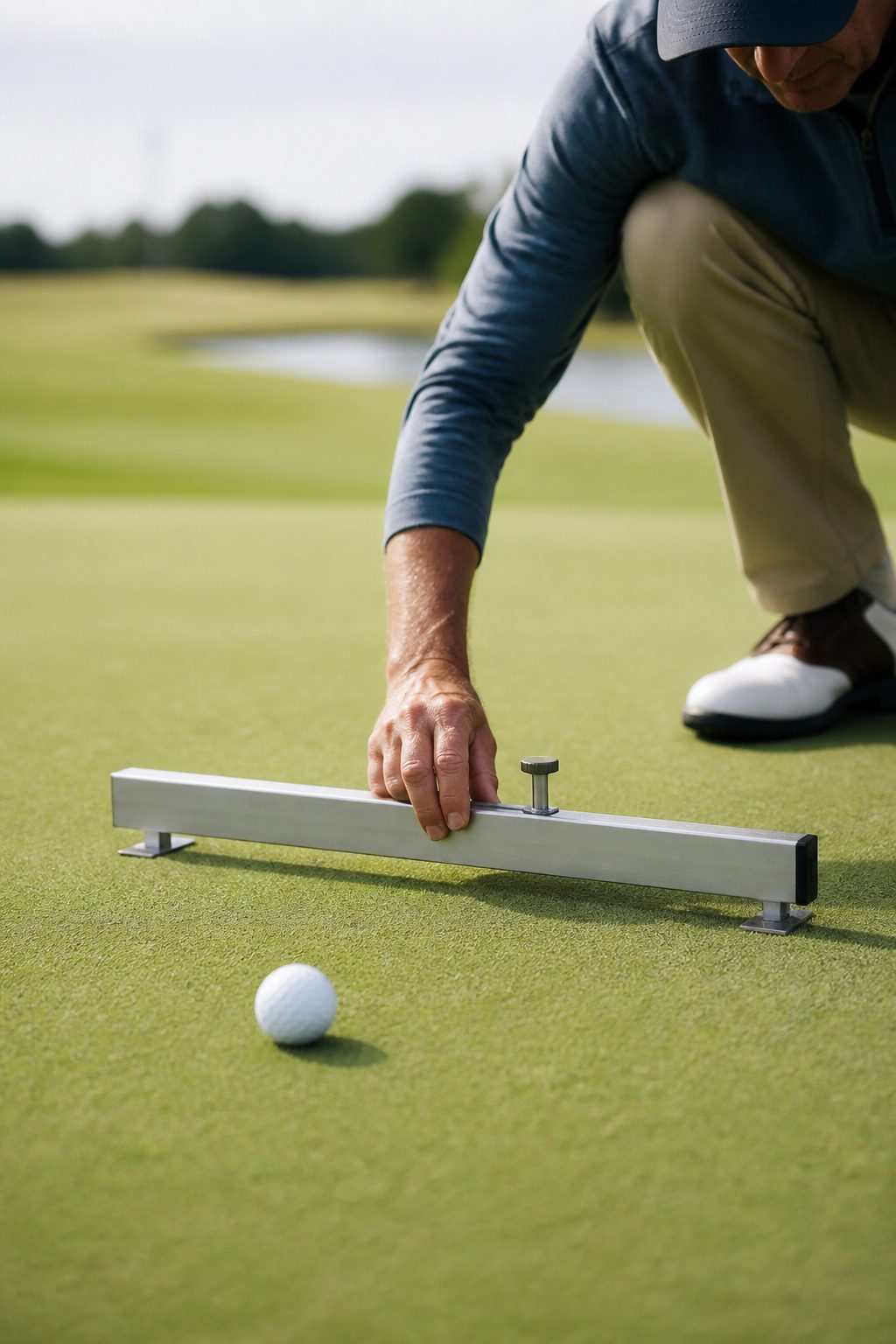
Every golfer on my course has a different opinion about how fast my greens are, and the little aluminum stimpmeter ramp I carry is the only witness that never had a bad round. Here is what that number in feet really costs the grass, why it changes between the seven o'clock tee time and the four o'clock one, and why sameness matters more than speed.
Everybody who plays my course has an opinion about how fast my greens are, and almost everybody is wrong in a different direction. The fellow who three-putted the second green will tell the pro shop we have got them rolling like a parking lot. The fellow who finally made a long one on the ninth will swear they slowed down overnight. Same greens. Same morning. Two completely different golf courses, depending on who is holding the putter and how his round went.
That is why I carry a little aluminum ramp in my hand some mornings, and why I trust it more than any golfer alive, including myself.
The tool is called a stimpmeter, and it is about as fancy as a yardstick with ambitions. It is a grooved metal bar, a little over two and a half feet long, with a notch near one end. You set a ball in that notch, lift the bar slowly until the ball rolls out of the groove on its own, and then you pace off how far it traveled across a flat part of the green. Roll three balls one way, roll three back the other way, average the whole business, and you have a number in feet. That number is the speed of the green, measured the same way everywhere on earth.
No batteries. No screen. No opinion. Just gravity, a ball, and a tape measure. In a trade where everybody wants to argue, that little ramp settles arguments.
Here is what most golfers never hear: I am not chasing the biggest number I can get. A green that rolls eleven feet on a calm Tuesday in November might be a fine thing. That same number in late July, with the bermuda stressed, the humidity sitting on the course like a wet blanket, and a hundred and fifty rounds a day beating on it, would be me writing the grass a death sentence in slow motion. Speed costs the plant. Every extra foot of roll is bought with a lower cut, more rolling, leaner water, and a thinner margin for error when the weather turns. The ramp tells me where we are. Experience tells me where we ought to be for the month we are in.
The number also moves during the day, which surprises people. I measure in the morning after the mow and the roll, when the green is at its quickest and truest. By three in the afternoon the grass has grown a whisker, the surface has taken a few thousand footprints, and that same green might give back half a foot or more. Dew makes it slower. The fellow teeing off at seven and the fellow teeing off at four are not putting on the same surface, and neither one of them is lying about it. They are just reporting from different shifts.
What I am really hunting with that ramp is not speed at all. It is sameness. I roll balls on several greens because the number that matters is the gap between my fastest green and my slowest one. If one green rolls ten feet and another rolls eight and a half, the golfers feel that in their hands on every putt, and they call it inconsistency, and they are right. My job is to bring the slow one up or ease the fast one back until they all sit close enough together that a putter can trust what he learned two holes ago. A course with honest, even greens at a sensible number plays harder and fairer than a course with one glass tabletop and seventeen question marks.
So if you see me crouched down early one morning, easing a ball down a little metal ramp and pacing off the roll like a man measuring a room for carpet, come say hello. Just do not ask me to make them faster because you saw some number on television last weekend. Those greens live in a different budget, with a different crew, and half the time they are one hot week from the edge themselves. Mine have to be alive on Monday for the ladies league, on Saturday for the foursome that has played here twenty years, and in August when the sky tries to cook them.
The ramp does not care about any of that. It just tells the truth, in feet, one roll at a time. Some mornings that truth is exactly what I hoped for. Some mornings it sends me back to the shop with a list. Either way, it is the only witness on this green that never had a bad round.