 The Fairway Wire
Editorial
The Grass Turns Blue Before It Turns Brown, and That Blue Is It Asking for Help
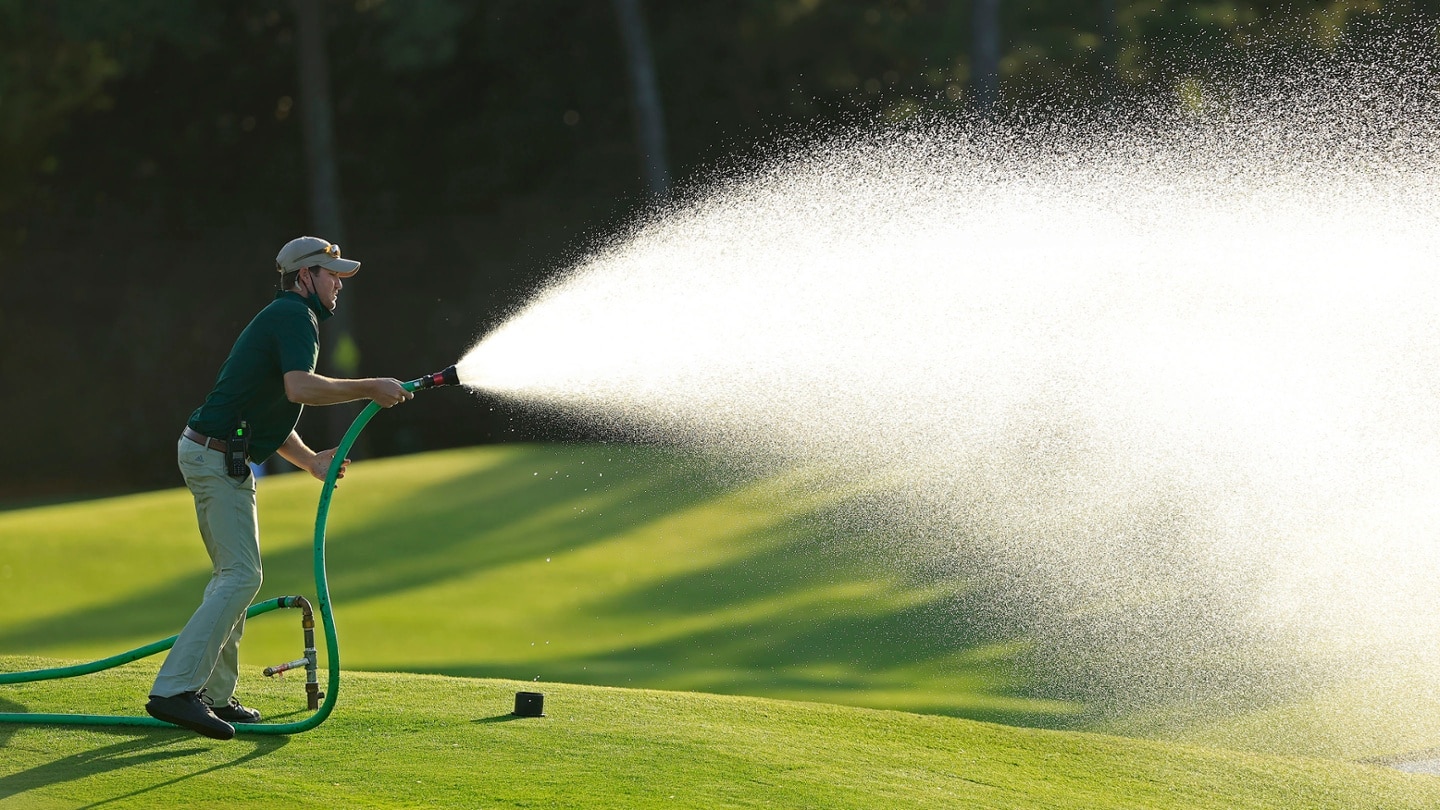
Before turf dies brown, it turns a dull blue-gray and holds your footprint — and that color is a same-day question, not a next-week problem. Cliff explains wilt, footprinting, and water-repellent dry spots, and why one man with a hose on one small patch is saving water, not wasting it.
There is a color on my greens that will stop my cart faster than any flag, any golfer, any radio call. It is not brown. Brown is too late. It is a dull blue-gray, like the grass got tired all at once, and if you know what you are looking at, you can spot it from twenty yards away while the mower is still running.
That blue is wilt. The plant has closed up shop to save itself. It is not drinking fast enough to keep up with what the sun and wind are taking out of it, so it folds its little blades, loses its shine, and turns that smoky color. Golfers walk right across it and never see it. I see it the way you see a friend's face and know he did not sleep.
The second sign is under your feet. Healthy turf springs back. Step on a good green and your footprint is gone before you look back. Step on a wilting patch and your shoe print stays there, pressed into the grass like it was made of memory foam. We call it footprinting, and it is the grass telling the truth with no instruments involved. My moisture meter can give me a number, and I trust that number, but my boot was the first meter I ever owned.
Here is the part folks get wrong: that blue patch is usually not a whole green dying of thirst. Nine times out of ten it is one stubborn spot, sometimes no bigger than a pizza, sometimes the size of a card table. The sprinkler may be hitting it fine. The trouble is down in the soil. Some patches turn water-repellent after they dry out hard once — the water beads and runs sideways instead of soaking in, like rain on a freshly waxed hood. So the head can throw water over that spot all night and the roots underneath stay dry as a bone.
That is why you will see one of us out there in the worst heat of the afternoon with a hose, standing over one little patch like we are watering a grave. We are not being dramatic and we are not wasting water. We are doing the opposite. Instead of running the whole green's irrigation for an extra twenty minutes to save one dry corner — and soaking eleven healthy corners that did not need it — we put the water exactly where the blue is. A slow, patient soak, sometimes with a wetting agent mixed in to talk the soil into accepting it again. Ten minutes of aim beats an hour of flood.
Timing matters more than volume. A wilting plant hit with a light syringe — just a cool mist over the top — can buy itself a couple of hours and pull through to evening, when the real watering does its work without the sun stealing half of it on the way down. Wait until the blue turns to a crispy tan, though, and you are not saving grass anymore. You are making funeral arrangements and pricing out the repair.
November in northeast Florida makes this sneaky instead of simple. The air feels kind — seventy degrees, a breeze off the ocean, golfers in short sleeves talking about what a perfect day it is. But this is also our dry stretch, the overseed is young and shallow-rooted, and a windy afternoon can pull moisture out of a green faster than a still day in June. The grass does not care that you are comfortable. It cares about wind, sun angle, and how deep its roots go, and right now those young roots do not go deep at all.
So I drive my greens slower than I need to. I am not admiring my stripes. I am reading color the way you read a sky before weather. Green is good. Blue is a question I need to answer today. Brown is a mistake I made last week.
Next time you are putting and you notice one dull patch off to the side, the shade of an old pair of jeans, know that somebody on my crew has already seen it, already stepped on it, and already decided what it gets and when. The grass asked for help in the only language it has. Our whole job, most days, is just being fluent.