 The Fairway Wire
Editorial
The Grass on My Ocean Holes Drinks Salt Water and Asks for More
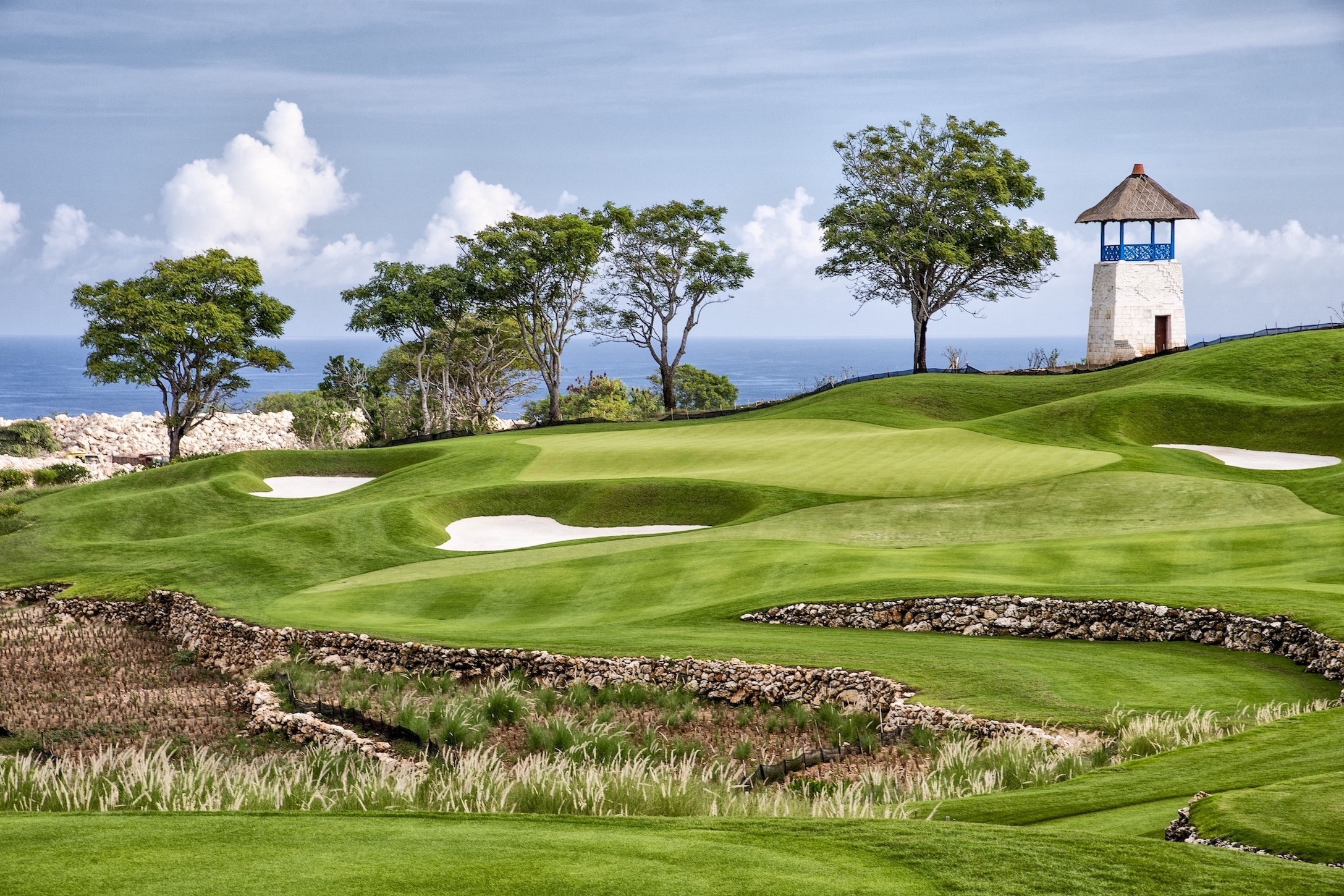
A Ponte Vedra greens keeper on the grass he plants where the ocean keeps trying to kill everything else: seashore paspalum, a dune grass that shrugs off salt spray and brackish water, stripes like a seed catalog cover, and charges him for the favor in thatch, shade complaints, and dollar spot.
Stand on my holes closest to the ocean on a windy November afternoon and you can taste the problem. The breeze comes off the water carrying salt spray, and it does not stop at the beach. It rides over the dunes, crosses the cart path, and settles on the grass like an invisible frost. Bermuda, which runs most of this course and most of Florida, hates it. Two or three days of hard onshore wind and the bermuda on those holes shows white, burned tips, like somebody dusted it with flour and malice. The grass a few steps away, greener than it has any right to be, is a different plant entirely. That is seashore paspalum, and it is not enduring the salt. It is home.
Paspalum grew up in the places grass is not supposed to survive — dune edges, salt marsh margins, ground that floods with brackish water and bakes the next week. It evolved drinking what kills other turf. Where bermuda wants its water clean and its soil polite, paspalum treats a salty drink as a birthright. Courses up and down this coast lean on it for exactly that reason, and so do I, in the spots where the ocean keeps voting against everything else I plant. Around my saltiest ponds, on the faces that catch the spray first, in the low corners where the tide pushes brackish water up through the ground after a king tide — that is paspalum country, and nothing else I have tried outlasts it there.
It helps that the stuff is beautiful. Paspalum has a deep, dark green color that makes bermuda next to it look slightly anemic, and a waxy leaf that holds a mowing stripe like it was painted and then ironed. After a fresh cut on a calm morning, those ocean holes look like the cover of a seed catalog. Golfers photograph them. Nobody photographs the gypsum I spread inland to flush salt out of bermuda soil, and I try not to take that personally.
Now, before anybody runs out and plants a whole golf course in it, let me tell you what paspalum charges for its one great trick. It is thirsty in its own way — it wants water, and it wants drainage under that water, because roots sitting wet in salty ground will still rot, salt lover or not. It despises shade worse than bermuda does, and under my oaks it thins out and files a complaint within a season. It builds thatch like it is saving for retirement, so the knives and the sand stay in its life on a schedule. It catches dollar spot if you look at it wrong in humid weather. Get greedy and scalp it low, and it sulks and comes back slow, because patience is not in its nature the way it is in bermuda's runners. And it costs more to put down and longer to grow in, which is why it lives on my course in the places that need it instead of everywhere I admire it.
November is when the arrangement proves itself. This is nor'easter season in Ponte Vedra — days of wind stacking up off the Atlantic, spray blowing sideways, the whole ocean side of the property getting salted like a pretzel. I walk those holes after a blow and read two different stories in two grasses. The bermuda is tipped white and tired and will need a drink of fresh water and a week of kindness. The paspalum stands there dark green and unbothered, holding its stripe, looking faintly smug. Same wind, same morning, same crew. The difference is not effort. The difference is ancestry. You cannot talk a plant into loving the thing it evolved to fear, and you cannot scare a plant out of loving the place it came from.
So the real job is not growing grass. It is matching grass to ground honestly. Every course I know is really three or four little countries stitched together — salt country by the water, shade country under the trees, wet country by the ponds, and the high dry country in between — and each one wants its own citizen. Put bermuda in salt country and you will spend your life apologizing for it with amendments and fresh water. Put paspalum everywhere and you will spend your life fighting thatch and shade. Put each one where it belongs and, on a windy November afternoon, you can stand on the ocean holes, taste salt on the air, and watch the right grass do what it was born to do.