 The Fairway Wire
Editorial
The Fire Ants Built Their House Overnight, Right Where You Want to Tee Off
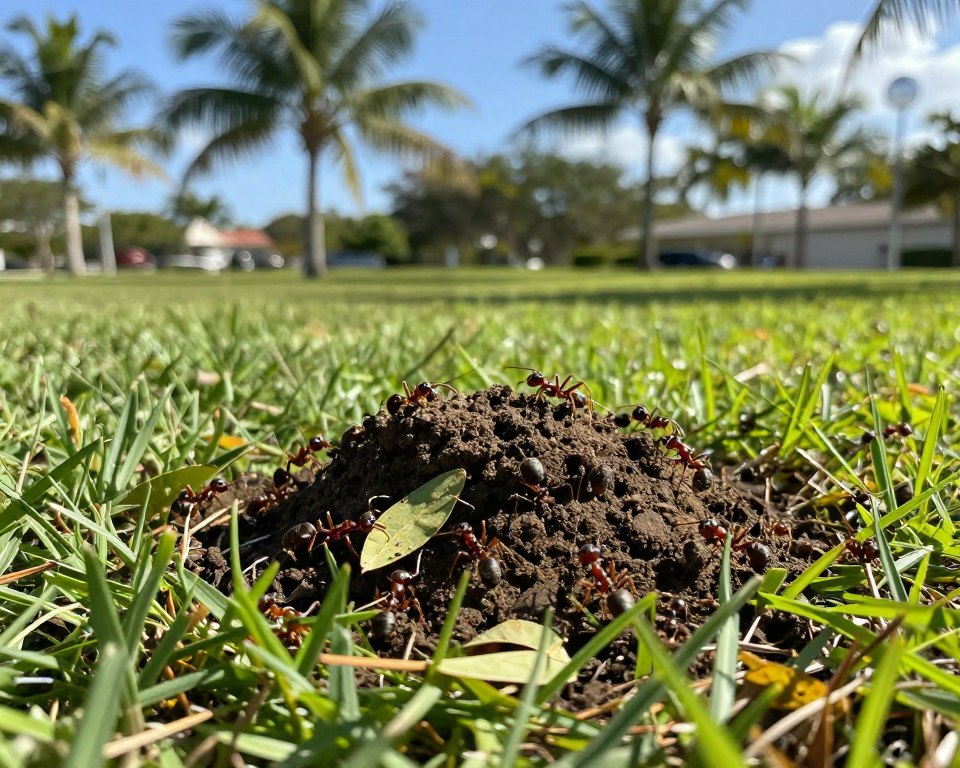
A tee box mowed clean yesterday can sprout a busy fire ant mound by first light, especially after rain pushes a colony uphill. A Ponte Vedra greens keeper explains why you never mow through one, how bait beats bravado, and why his first lap after a storm doubles as ant patrol.
Yesterday afternoon that tee box was clean enough to eat off of. I know, because I mowed it myself. This morning there is a mound of fresh dirt the size of a dinner plate sitting right where the back tees go, and it is already busy. The fire ants work nights, they work fast, and in Florida they never ask permission.
If you are new down here, let me introduce the neighbors. Red imported fire ants decided long ago that Florida is paradise — warm ground, sandy soil, and rain that keeps everything soft enough to dig. A tee box is high ground — it drains first, sits in full sun, and gets mowed short. They picked the best real estate on the hole, same as you would.
Rain is what puts them on my morning route. After a heavy overnight rain — and October still gives us plenty — a colony down low will move uphill, or push its mound taller to stay dry. That is why a mound can honestly appear overnight. It did not exist yesterday. By the first tee time thousands of residents could be home, all of them in a mood.
And a mood is the right word. A mound looks peaceful right up until it doesn't. Stand on the edge of one, shift your weight in your backswing, and the whole colony comes boiling up your shoes at once. It is never one sting. They swarm, hold on, and sting together, and by the time you are dancing off the tee — everybody dances — you have a dozen welts around your ankles. For most folks it is a miserable, itchy week. For somebody with an allergy it can be a genuine emergency. So a mound is not cosmetic. It is a safety problem standing exactly where I invite people to stand still.
The worst thing a new crew man can do is be a hero with the mower. Run straight through a mound and you have scalped their house, scattered furious ants across the tee, and dragged survivors down the fairway on your tires to start a new colony in a fresh zip code. Kicking one is worse — I watched a grown man in spikes do it on a dare, and he finished the hole in one sock. We do not fight fire ants with machinery or footwear. We fight them with patience and groceries.
Here is how it actually works. On a schedule, we broadcast a bait across the tee surrounds, rough edges, and the other standing-around places — benches, ball washers, cart-path corners where golfers linger. The workers carry that bait home like takeout and share it through the colony, which is the whole point: you are not trying to kill the ants you can see, you are trying to reach the queen you can't. A fresh mound in a play area gets spot-treated and flagged, and I slide that morning's tee markers a few steps away while the treatment works. Then we check it the next morning, and the next. Patience is a tool out here, same as a wrench.
After a big rain, my first lap has a second job on top of dew and pins and cups: ant patrol. Tees first, then bunker lips, path edges, and the ground under the water coolers — every place a person stands still with their guard down. It takes ten minutes and saves somebody's whole round. Nobody writes a review saying the tees were pleasantly free of stinging insects. They just got to play golf. That is the review. Most of my best work is the disaster you never met.
I have a grudging respect for the little devils. They rebuild overnight what a storm took, and they defend their families fiercely. We are never going to eradicate fire ants from Florida — anybody who promises you that is selling something. Out in the deep rough, we mostly leave each other alone. My job is narrower: where my golfers stand, the ants don't get to live. It is a border negotiation I re-open every morning, and so far we are holding the line.
So if you step up to a tee and spot a fresh mound, or one of my little flags standing guard over one, move a few steps, give it a wide berth, and tell the starter on your way by. Please do not perform surgery on it with your seven-iron. Somewhere under your spikes is a whole city that woke up in a new house this morning, and the fellow who negotiates with them is already on his way — he just works earlier than you do.