 The Fairway Wire
Editorial
The Enemy Eating My Greens Is Smaller Than a Grain of Sand
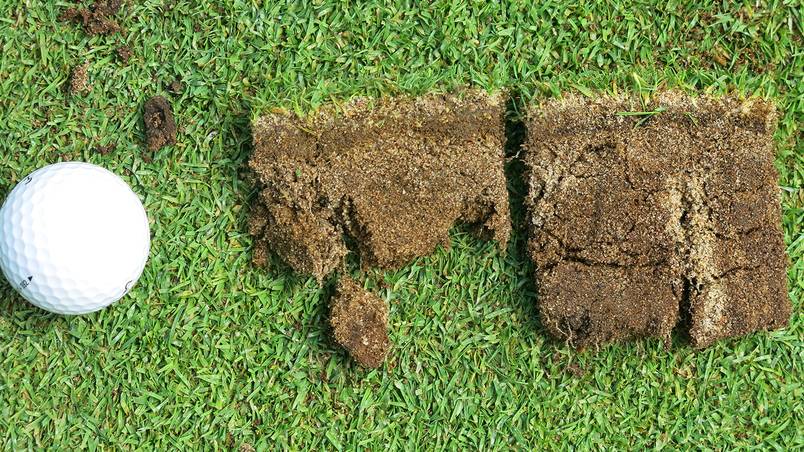
The most damaging pest on a Florida golf course never shows itself. Microscopic nematodes feed on bermudagrass roots in our sandy soil until the turf wilts with wet ground under it and starves with food right in front of it — and the only honest fight starts with a soil probe, a lab count, and helping roots grow faster than worms can eat them.
Every other pest on this golf course has the decency to announce itself. Armyworms march across a fairway where you can see them. An alligator sunbathes by the pond in plain sight. A mole signs his work in raised tunnels. The worst pest I fight does none of that. It is microscopic, it lives underground, and by the time the grass shows you what it has been doing, it has been eating lunch down there for weeks.
They are called nematodes, and if you have never heard the word, join the club — most golfers play their whole lives on top of them without knowing. They are tiny roundworms, thinner than a hair, swimming in the thin film of water between grains of soil and feeding on roots with a needle-like mouth. One worm is nothing. Millions of them in the root zone of a green is a buffet with no closing time.
Florida is heaven for them, which is a polite way of saying it is a headache for me. Nematodes move best through sand, and sand is what we have — our greens are built mostly of it, and the ground under the fairways is never far from beach. Warm soil keeps them active nearly all year. Up north, winter slows them down. In Ponte Vedra, they get maybe a few cool weeks of rest, and I am not convinced they take those.
Here is what their damage looks like from your side of the ropes: nothing dramatic. A green or a stretch of fairway goes a little pale in patches that follow no pattern a sprinkler would make. The turf wilts by noon even though my moisture meter says the soil is wet. Fertilizer goes down and the grass shrugs at it. That is the clue that fools people — the plant is not thirsty and it is not hungry. It cannot eat or drink. Its roots have been pruned down to nubs, and a plant trying to survive a Florida afternoon on nub roots is like a man trying to drink a milkshake through a straw somebody keeps pinching.
To prove it, you have to go look where the problem lives. I pull a plug with a soil probe and wash the roots clean, and the difference is plain even without a microscope. Healthy bermudagrass roots run long, white, and busy. Nematode-worked roots come up short, stubby, and dark, some swollen into little knots where the plant tried to wall off the feeding. It looks less like a root system and more like the remains of one.
But you do not treat a golf course on a hunch, and you cannot count worms you cannot see. So we do it the unglamorous way: soil samples, bagged and labeled by green, shipped to a lab where somebody with a microscope counts nematodes in a measured scoop of soil and sends back numbers. Sting, lance, root-knot — each kind has a threshold, a count above which the damage stops being background noise and starts being the diagnosis. That report decides where the money goes. Guessing at this job gets expensive fast.
Fighting an enemy this small is mostly not about killing it outright. The products that knock nematodes back are costly, applied carefully, and timed to when roots are growing and can recover. The everyday work is humbler: raise the mowing height a whisker so the plant keeps more leaf, ease the traffic and the rolling when a green is struggling, aerate so roots can push deeper, and feed in small spoonfuls the weakened plant can actually use. You are not erasing the worms. You are helping the grass grow roots faster than they can eat them. Some weeks that race feels closer than I would like.
I have a grudging respect for the arrangement. Everything on a golf course is competing for that grass — heat, shade, feet, tires, fungi, and a worm with no eyes that found the root zone long before there were fairways on it. My job is not to make a sterile green. It is to keep the balance tipped toward the plant, using a meter, a probe, and a lab report instead of a guess.
So the next time a green looks tired on a bright morning and you cannot name why, spare a thought for the underground. Under that smooth, striped surface is a second, invisible contest, counted in worms per scoop of sand. I will be out there before your tee time, pulling plugs and reading roots — fighting the smallest opponent on the property, one sample bag at a time.