 The Fairway Wire
Editorial
The Egrets Follow My Mower Because I Serve Breakfast at Dawn
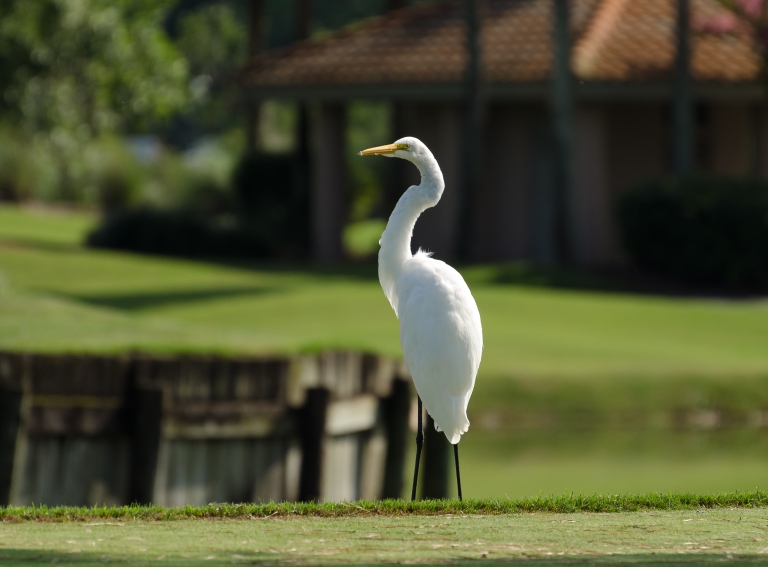
Every dawn a loose parade of egrets and ibis falls in behind my mower, because a mower rolling through wet grass flushes the best breakfast in Ponte Vedra. They are not decoration — they are free pest control, early warning, and the most reliable crew I have ever worked with.
Section: community Source: By Cliff Stearns Jr. Image: https://www.fws.gov/sites/default/files/styles/scale_width_768/public/images/2024-07/great-white-egret-at-grand-cypress-golf-in-florida-by-camron-flanders-june-13-2012.jpg?itok=fkQrEeNc
---
The Egrets Follow My Mower Because I Serve Breakfast at Dawn
Long before the first tee time, I have a following. Not golfers. Not the crew, who are spread out over a hundred acres doing their own dark-morning jobs. Mine is a loose parade of white birds — cattle egrets mostly, a few ibis, now and then one tall great egret standing like a mayor — walking in the grass behind my mower, close enough that I check the mirrors for them. They are not there for my company. They are there because a mower rolling through dawn grass is the best breakfast bell in Ponte Vedra, and they learned the sound of it a long time ago.
Here is what the mower does that the birds understand better than most golfers do. At first light the fairway is full of life that is hiding — grasshoppers, crickets, mole crickets, little frogs, lizards, things that spent the night in the turf and plan to spend the day in it too. A mower coming through flushes all of it. Every pass stirs up a moving buffet, and the birds walk the fresh-cut strip behind me picking off everything that jumps. Cattle egrets got their name following cattle around pastures for exactly this reason. I do not own a single cow. I drive a mower at four miles an hour, and as far as an egret is concerned, that makes me livestock.
Spend enough mornings out here and you stop seeing a flock and start seeing regulars. There is a cattle egret with a crooked neck who works the same three fairways and waits by the shop gate before I have even finished my coffee. The ibis travel in a gossiping crowd of a dozen, probing the soft ground with those long curved bills, and they get downright excited the week after we aerate, because the holes give up worms like a vending machine. The great egret is a loner and a professional — he keeps his distance, works the pond edges while I mow the slopes above them, and spears frogs with a patience I wish I had for fixing irrigation heads.
Now, the part that turns this from a nature moment into a maintenance fact: those birds are working. A flock of egrets walking my fairways all morning eats a staggering number of the exact insects I spend real money fighting. Mole crickets tunnel through roots and can ruin a fairway in patches. Armyworms can eat one down to dirt between dinner and dawn — I have written about that horror before, and I meant every word. I am not claiming the birds replace a spray program, because they do not, and anybody who tells you otherwise is selling something. But a healthy crew of birds is free help that shows up seven days a week, and a smart keeper notices when they stop showing up. Birds vanishing from a pond or a fairway is one of the first signs something in that corner of the course is off, long before the grass files its own complaint.
So we return the favor with a few unwritten rules. You do not chase birds off a fairway with a cart to save thirty seconds. You mow around a feeding flock when you can, and when you cannot, you slow down and let them stroll off at bird speed, which is slower than golfer patience but faster than you would guess. And we mind what goes on the grass and when, because a bird eating insects out of turf I treated an hour ago is a bird I have failed at basic arithmetic. The schedule on the spray board has more than golfers' tee times in mind, even if the golfers never know it.
If you play here, you have seen them — a line of white birds strung out across a fairway in the early light, and you probably took a picture, because everybody does. Just know they are not decoration and they are not tame. They are clocked in. Give them the same courtesy you would give any of us working out there: do not hit into them, do not let your cart chase them off their station, and do not be surprised when they barely move for you. From their side of the morning, you are the one wandering through their workplace without a hi-vis vest on.
I have worked with a lot of crews in this business, human and otherwise, and I will put the egrets up against any of them for reliability. They have never called in sick, never asked for a raise, never left a mower dirty, and they are standing in the fairway ready to work before I have turned the key. All they ask for wages is everything my mower scares out of the grass. Fair trade, I say. Tomorrow at dawn I will roll out of the barn, the crooked-neck regular will be waiting by the gate, and breakfast will be served right on schedule.