 The Fairway Wire
Editorial
The Earthworms Leave Little Mud Piles on My Fairway, and I Thank Them for Most of It
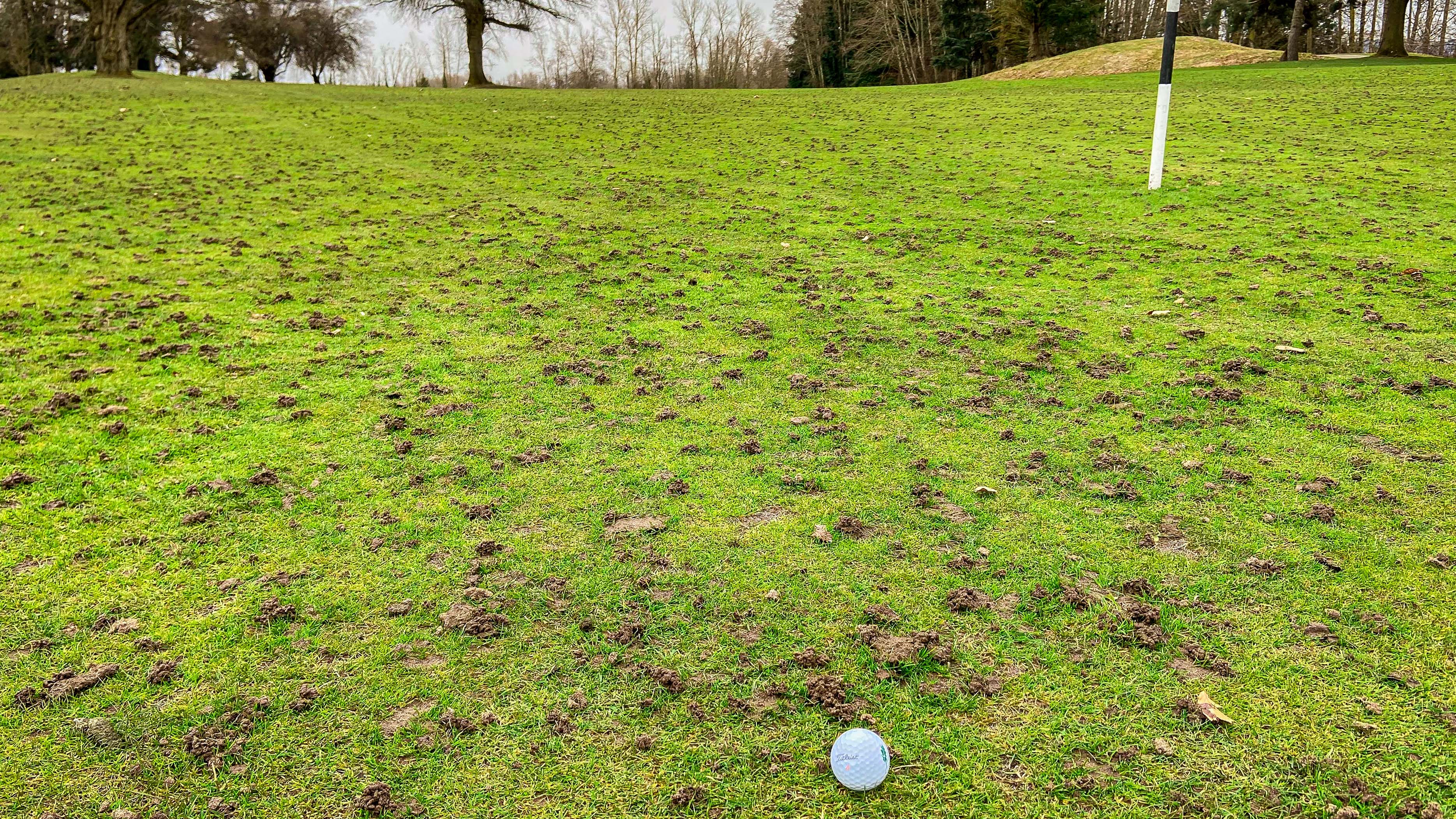
After a good rain, little coiled mud piles cover the fairways in Ponte Vedra — and to a greens keeper they read like a report card, not a mess. An earthworm's casting is proof of air, water, and good soil moving under the grass for free, so Cliff knocks the piles down where a ball has to roll and thanks the crew he never hired for the rest.
Some mornings, after a good rain, my fairways look like somebody held a tiny mud-pie contest in the dark. Little coiled piles everywhere, each one about the size of a quarter, soft as wet cake. Golfers step around them like they are something rude. I step up to them like they are a report card, because that is what they are. Those little piles are worm castings, and a fairway covered in them is telling me the ground underneath is alive and working.
A casting is just dirt that has been through an earthworm. The worm eats its way through the soil at night and leaves the rest on the surface in that little coil. Simple, but it is work I cannot buy a machine to match. Every tunnel is a drain. Every tunnel is an air vent. Roots follow those tunnels down into ground they could never push through alone, and water follows too, instead of sitting on top and cooking the grass in our Florida sun.
Here in Ponte Vedra our soil is mostly sand with ambition. Sand drains fast and holds almost nothing, which is why we feed and water the way we do. A healthy worm population changes that math a little for free. Castings hold moisture better than plain sand, they carry nutrients in a form roots can actually use, and they bring good soil up from below and mix it in, one little pile at a time. The crew with the most members on this course does not clock in at the shop. They clock in at dark, they never call out, and they work the whole property every single night.
Now, I would be lying if I said the piles are all blessing and no headache. On a fairway, fine — I will take them all day. On a green, a casting is a lump in the one place a lump is not allowed. A mower rides over a wet pile and smears it, and now I have a mud smear where a clean cut ought to be. A putt rolling through a smeared casting is not rolling through grass anymore. So on greens and tees we deal with them plain and simple: we knock them down before we mow. A switch, a hose, a drag — anything that breaks that little coil back into the surface before the blades get to it. Timing matters too. Mow when the castings have dried a touch and they crumble. Mow them soaking wet and you have decorated the whole pass.
There is a temptation, and I have heard it from smart people, to just get rid of the worms. Sprays exist that will thin them out, and for a week or two the surface looks cleaner. I want no part of it, and not just because I like worms, though after five years on this ground I honestly do. Kill the worms and you have voted for compacted soil, water standing where it should not, and roots sitting shallow in the heat. Then I get to pay for machines and man-hours to poke air holes and spread material to do a worse version of the job the worms were doing for free. That is not a trade. That is a man firing his best crew because their boots were muddy.
Fall is when the piles really show up here. The soil cools a little, the rain keeps it soft, the overseed is coming in thin and new, and the worms get busy right up top where the feeding is easy. That is also when a golfer is most likely to point and ask me what went wrong. My answer is always the same: nothing went wrong — that is what right looks like before the mower evens it out. Give me an hour of sun and one pass, and those piles melt back into the ground they came from.
I keep a simple rule about living things that mess up my surface. First I ask what the mess is buying me. The hogs buy me nothing. The armyworms buy me nothing. But a worm casting is a receipt for work done — air moved, water moved, soil fed, all of it under my feet while I was home asleep. So I knock down the piles where a ball has to roll, I leave the rest right where they fell, and I say thanks on my way past with the mower. The best crew I have never hired is already on the payroll of this ground, and they are paid in dirt.