 The Fairway Wire
Editorial
The Drone Sees My Stressed Grass a Week Before I Do
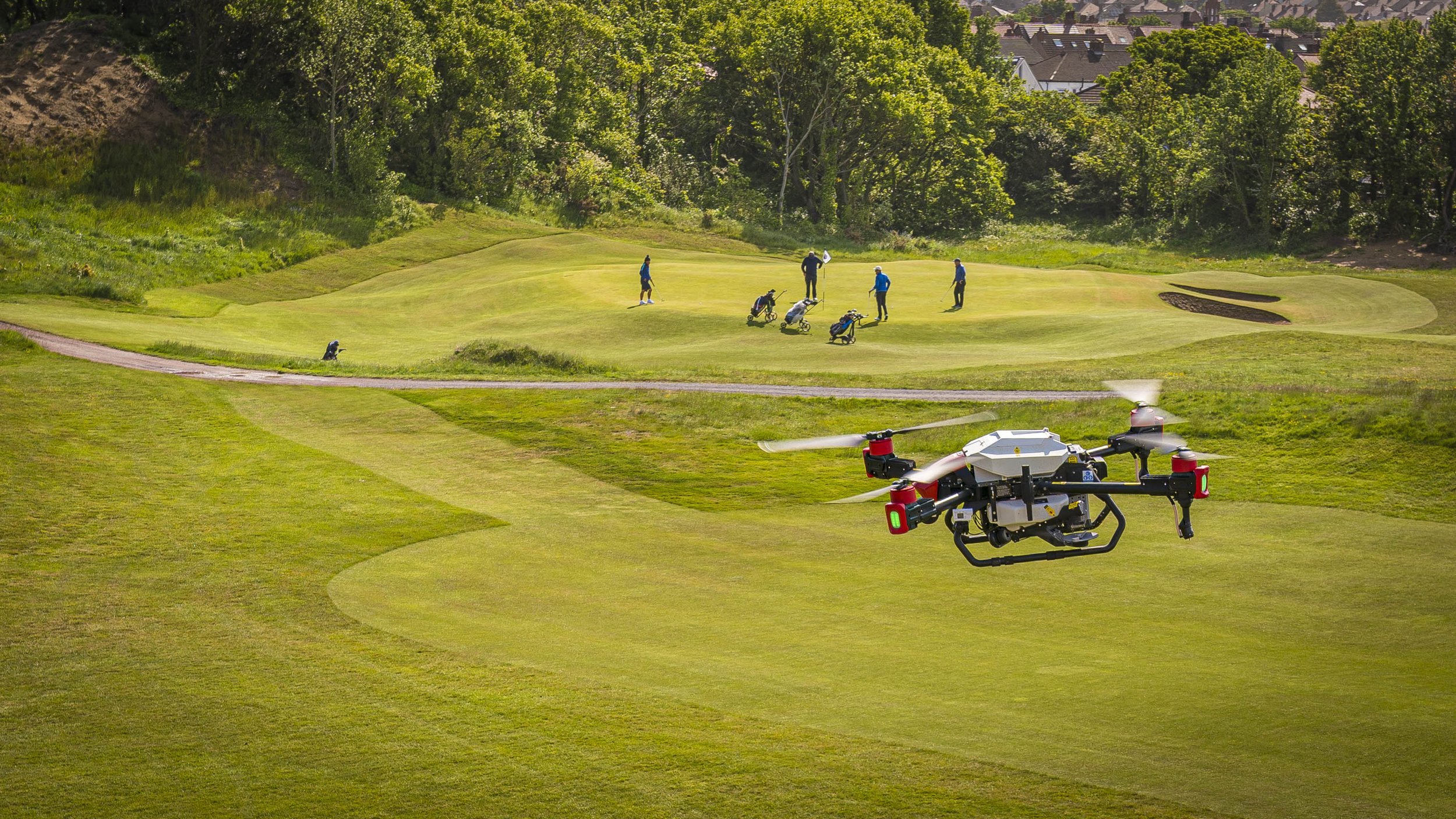
A drone with a special camera now scouts Cliff's fairways and paints stressed grass in false colors a week before the human eye can see it — catching a buried irrigation leak and a clogged sprayer nozzle before they became weekend disasters. It hasn't replaced a single boot on the ground; it just tells thirty years of experience where to stand first.
I have walked the same fairways so many mornings that I can tell you which green dries out first, which bunker holds water after a storm, and which tee box the geese have claimed as their personal bathroom. My boots know this golf course better than my truck does. So nobody was more surprised than me the first time a drone showed me a sick patch of grass I had walked right past that morning — and I had walked past it because, from boot height, it did not exist yet.
Here is the thing about stressed turf: it gives up on the inside before it shows on the outside. A week before a dry spot turns tan, before a diseased patch shows its rings, the plant is already struggling — reflecting light differently, running a touch hotter, closing down shop in ways your eyes cannot catch at six in the morning with a dew whip in your hand. A camera on a drone can catch it. Not a regular camera, either. The fancy ones read light the human eye was never issued, and they paint my fairways in false colors where healthy grass glows one way and struggling grass glows another. I look at that map on a tablet in the shop and I am looking at next week's problems while they are still small enough to fix with a hose and an hour instead of a sod cutter and a Saturday.
I want to be honest about my first reaction, because it was the reaction of every man who has ever pushed a mower for a living: that little flying weed eater is not taking my job, and it is not smarter than thirty years of sunburn. Both of those things turned out to be true. The drone has never once fixed anything. It cannot water a hot spot, it cannot pull a soil sample, and it has absolutely no opinion about what to do next. What it does is point. It points earlier and more honestly than I can, because it is not tired, it is not in a hurry to beat the first tee time, and it does not have a favorite nine it checks more carefully than the other.
The morning routine changed in a way I did not expect. Instead of driving the whole course looking for trouble — burning fuel, burning daylight, finding the worst of it by noon — I fly the weak sisters first. Every course has them: the green built over sand that drains too fast, the fairway corner the irrigation never quite reaches, the low spot that stays wet and invites disease to move in and put its feet up. The drone checks those addresses in minutes and tells me which ones need a man standing on them and which ones are holding fine. Then my crew spends its morning where the grass actually needs us. That is not technology replacing experience. That is technology doing the looking so experience can do the work.
It has caught things I would have sworn were nothing. A faint off-color smudge on a screen turned out to be the first whisper of a leak in an irrigation line, underground, days before it would have blown out and taken a whole fairway zone down with it on the hottest week of the year. Another flight showed one green running stressed in a perfect straight line — a line, in grass, is always a machine's signature — and we found a sprayer nozzle half-clogged before it cooked a stripe nobody could have grown back before the weekend. Grass does not make straight lines. People do. The drone just tattles on us faster than the turf can.
Now, the golfers have opinions, because golfers always have opinions. The first time it went up during play, a gentleman in the fairway looked at it the way you would look at a mosquito the size of a mailbox. I keep it high, I keep it moving, I never hover over a backswing, and I try to fly before the tee sheet wakes up. It sounds like an angry bee having an argument with itself, and I will admit there is comedy in watching a machine that costs more than my first truck do a job my grandfather did with a coffee can of soil plugs and a squint. He would have loved it, by the way. Any tool that tells you the truth about grass a week early is a tool a grass man respects, whatever century it comes from.
The boots still matter most. Every red blob on that screen earns a visit — knees in the dirt, moisture meter in the ground, plug pulled and smelled and squeezed — because a map is a rumor until a man confirms it. But I would rather chase ten rumors on a Tuesday than meet one disaster on a Friday with a full tee sheet and a wedding on the eighteenth fairway. The drone sees my stressed grass a week before I do. My job is to make sure that by the time I would have seen it, there is nothing left to see.