 The Fairway Wire
Editorial
The Ditch Behind the Seventh Green Does More Work Than Anybody on My Crew
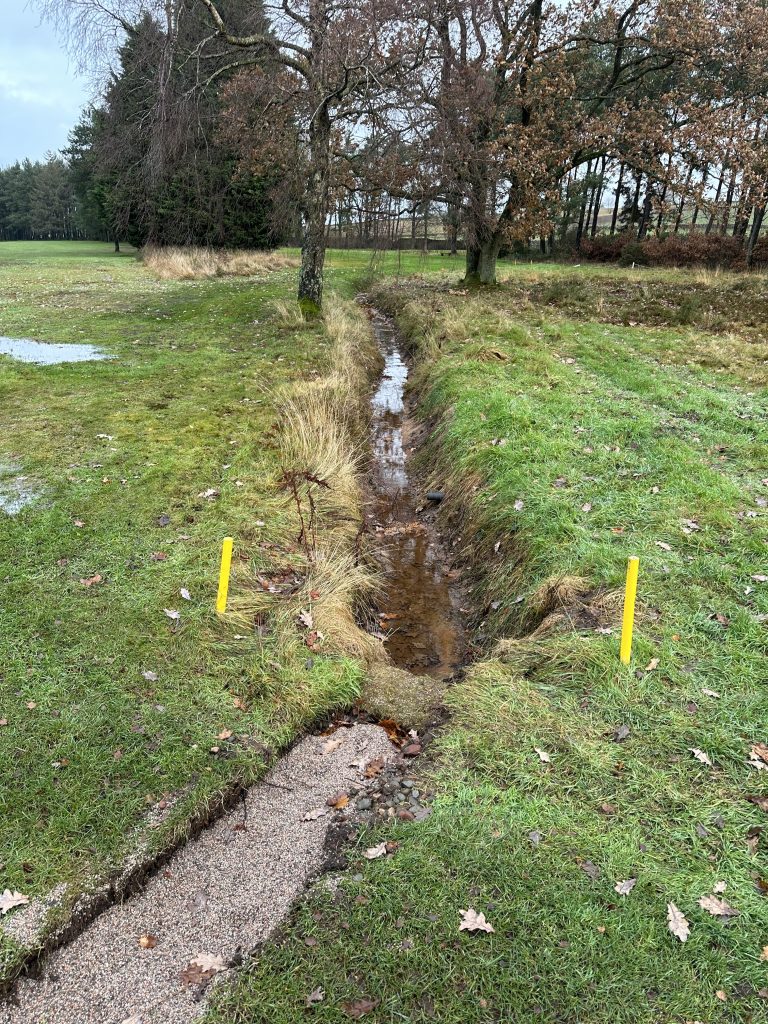
The ditch behind our seventh green never gets a thank-you, but on flat Florida ground it carries every storm off this course. November is the one dry month when I can climb down in it, clear the silt, and see the whole drainage system with my own eyes.
Nobody plays golf in Ponte Vedra and thinks about ditches. You think about the green, the pin, maybe the pond if your ball is headed that way. The ditch sits back there behind the seventh, half hidden by grass, doing the least glamorous work on the property. It gets no stripes and no photo. Most golfers have walked right past it a hundred times and never once looked down.
Down is exactly where you need to look on ground like ours. This part of Florida is flat in a way folks from up north do not quite believe until they watch a summer rain sit still. Water here does not run downhill, because there is barely any downhill to run to. It moves because somebody dug a path for it, graded that path with care, and keeps that path clear. The ditch behind the seventh is the main road out for all of it.
When a storm drops two inches in an hour — and around here that is just a Tuesday in September — every green and low spot around that end of the course sends its water one way. It comes down through pipe, spills into that ditch, and rides it out to the pond system. If the ditch is clear, the seventh green is firm again by morning. If the ditch is choked with silt and cattails, the water backs up, the low ground stays soup, and I am the fellow explaining why half the back side is roped off. Same rain. Different ditch. Completely different golf course.
That is why November matters so much to me. November is our dry season down here, the ponds sit low, and for a few weeks that ditch is not a river anymore. It is a muddy hallway I can actually walk. So I put on the tall boots, grab a shovel, and climb down in there while the getting is good. You learn more in twenty minutes standing in a ditch than in a whole summer looking at it from a cart.
Down in the bottom you can read the year. Silt tells you where the water slows down. A pile of sand at one bend tells you a bank is washing somewhere up the line. Cattails standing thick tell you the flow has been lazy, because moving water does not let them settle in and get comfortable. A culvert mouth half buried in muck tells you next summer's flood is already scheduled. None of that shows from up top, where it all just looks like a ditch.
The work itself is about as fancy as work gets, which is to say not fancy at all. We pull the dead cattails out by the armload. We shovel the silt bars back down to grade so the water remembers which way it is supposed to travel. We check every pipe mouth that feeds in, clear the sticks, leaves, and the odd range ball that somehow found its way down there, and we make sure the banks are not slumping in and narrowing the channel. A ditch does not fail all at once. It fails an inch at a time, all year long, and November is when I take those inches back.
I will be honest with you, it is not a beloved job. The mud down there has a smell that stays with you through lunch. The bottom is slick in a way that makes a grown man move like he is learning to walk again. A heron usually watches from the grass, patient as a statue, waiting for me to stir up his breakfast, and once in a while a turtle slides off the bank ahead of me to remind me I am a guest in his hallway. Fair enough. He lives there. I just visit with a shovel.
But here is the part I wish more golfers understood. The firm green you love in the morning, the fairway that does not squish under your shoes after a wet week, the playable bunker — none of that is an accident, and most of it is not really about the grass at all. It is about water having somewhere to go. Grass is the part you see. Drainage is the part that decides whether you get to enjoy it. The ditch is drainage you can stand in.
So the next time you walk off the seventh green, take half a second and look behind it. That muddy cut in the ground has carried every storm of the year off this course without asking for credit. My mowers get thanked. My greens get complimented. The ditch just keeps working. Around here, that makes it the most valuable member of the crew I have got.