 The Fairway Wire
Editorial
The Deer Leave Their Scorecard in the Dew
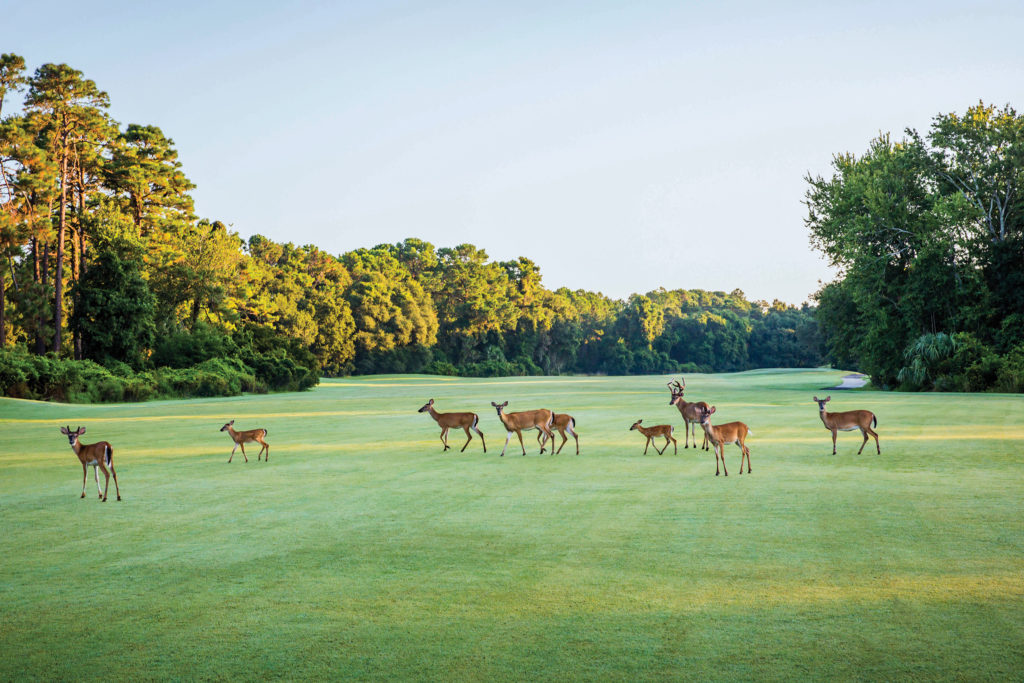
Before the first tee time, the night herd leaves a full report in hoofprints across the dew, and a working greens keeper learns to read it. Deer tracks in bunkers, dents in soft greens, nipped flower beds and a fawn asleep in the rough — sharing a course with its oldest regulars is part of the job.
The first report I read every morning is not on paper and nobody in the shop wrote it. It is out on the dew, in hoofprints. A whole herd can cross a fairway before daylight and leave me a neat dotted line of dark prints in the silver grass, and from my cart seat I can read it like a tee sheet: how many came through, which way they were headed, and whether anybody stopped to graze along the way.
Deer sign tells the truth before the day has a chance to pretty anything up. Prints wandering in a loose zigzag mean a relaxed bunch feeding as they went. Prints in a straight, hurried line, with the dew splashed instead of pressed, mean something spooked them — a coyote on the tree line, a truck on the service road, sometimes just my own headlights catching them one hole too early. The course keeps a night diary. You just have to get there before the sun erases it.
The greens are where their handwriting gets expensive. A deer crossing a soft, wet putting surface means no harm. She is just a few hundred pounds balanced on four little hooves, and every step presses a neat crescent into the turf. One crossing can leave a dozen dents a ball will find long after the deer has forgotten the place exists. We fix them by hand, lifting the pressed turf back up and smoothing it level — but I will not pretend I have never stood on a green at daylight having a short, one-sided conversation with an empty fairway about it.
The bunkers keep their prints the longest, and I will admit those are almost too pretty to rake away. Almost. Sand holds a track the way fresh snow does, every edge sharp, and some mornings a bunker looks like a beach where a whole family spent the night. Then the rake comes out and the evidence goes back to smooth, because the first group off does not want to play out of a footprint, even a beautiful one. That is the quiet bargain of this job: the wild shift leaves its mark, the day shift tidies it, and the golfers never know either crew was there.
Then there is the eating, because a golf course to a deer is a salad bar with flags in it. The beds near the clubhouse take it the worst. We can plant a fresh flat of flowers on a Tuesday, looking like a picture, and come back Wednesday to find every bloom nipped off clean as scissors. They have opinions, too. Some plants they will not touch, and some they treat like we catered. Every grounds man in Florida keeps a mental list of what the deer leave alone, and that list decides what grows near our buildings.
The young trees get their own trouble in the fall, when the bucks rub the velvet off their antlers on anything slim and sturdy. A little oak we planted in spring can be stripped raw around the trunk in one night, bark hanging in ribbons, and a rubbed tree is often a dead tree on a delay. So the new plantings get guards and cages, which look like the tree is wearing a fence for a hat. Golfers ask about them sometimes. I tell them the truth: that is not landscaping. That is a negotiation.
Spring brings the one job rule nobody argues with. A doe will bed her fawn down in the tall rough and walk away for hours, counting on that spotted coat and stillness to do the hiding, and a mower coming through tall grass is the one thing that hiding cannot beat. So in fawn season we watch the rough the way you watch a road with kids on it. If I spot one — ears flat, not moving, doing exactly what its mama told it — everything stops. That stretch of rough can stay shaggy another day. There is not a blade of grass on this property worth more than what is curled up in it, and I have never met a crew member who felt different.
By the time the first tee time rolls around, the herd has melted back into the tree line, and the course belongs to the golfers again — or at least we let them think so. I like that the place has two sets of regulars and only one of them pays. The deer were walking these fairways before there were fairways, and from the tracks in the dew I would say they have kept their tee time every morning since. Tomorrow I will be out before them again, cart rolling slow, reading the ground like the morning paper. They always leave me something worth reading.