 The Fairway Wire
Editorial
The Corn in Your Gas Can Is Eating My Small Engines From the Inside
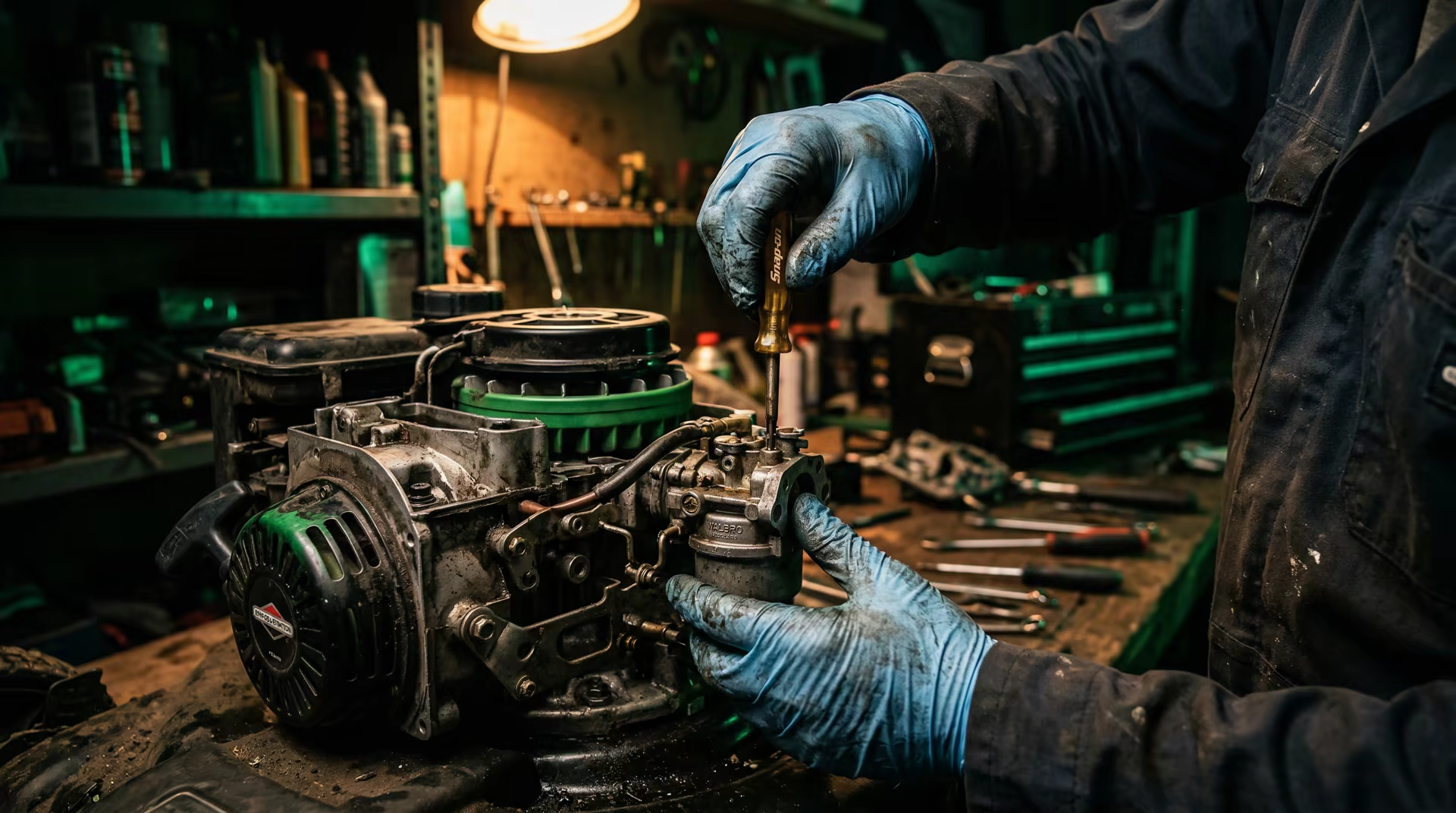
A trimmer that ran fine on Friday won't start on Monday, and the culprit is usually the ethanol hiding in ordinary pump gas — drinking Florida humidity, separating in the can, and varnishing carburetors the size of a walnut. Cliff explains why every handheld engine on his crew drinks ethanol-free fuel, why the cans wear dates like milk jugs, and why November is storage season in the shop.
The trimmer ran perfect on Friday. Monday morning it won't start, and when it finally coughs to life it surges like it's got a mind of its own — revving, dying, revving again. My mechanic doesn't even look up anymore. He just says one word: "Carb." Nine times out of ten he's right, and nine times out of ten the villain isn't the machine. It's the fuel we poured into it, and more specifically, the corn hiding inside that fuel.
Most pump gasoline in America carries about ten percent ethanol, and ethanol has a thirst problem. It pulls water straight out of the air — and if you've spent one summer in Ponte Vedra, you know our air is basically soup with a breeze. Inside a vented gas can sitting in a hot shed, that ethanol drinks humidity day and night. Get enough water in there and the whole mix gives up and separates: alcohol and water sink to the bottom in a pale layer, and the gasoline floating on top is weaker than what you paid for. The engine drinks from the bottom of the tank first. You can guess how that goes.
Then there's what ethanol does to the parts themselves. The carburetor on a string trimmer or a leaf blower is a tiny thing — jets you could cover with a pinhead, rubber diaphragms thinner than a business card, fuel lines soft as spaghetti. Ethanol swells some of that rubber, stiffens the rest, and leaves a white, crusty varnish in the bowl when a machine sits. A big diesel tractor doesn't care. A two-stroke engine with passages that small cares a whole lot. It doesn't take a season of neglect, either. A trimmer that sits three weeks in August can come back with a carburetor that needs a rebuild kit and an hour on the bench.
People ask why the crew's small engines get their own special fuel, and this is why. Everything handheld on this course — trimmers, blowers, edgers, chainsaws — drinks ethanol-free gasoline, the recreational fuel, mixed fresh and dated with a piece of tape on the can. It costs more a gallon, and I will defend every penny of it, because a gallon of the cheap stuff can cost me a carburetor, a mechanic's morning, and a man standing around with a dead trimmer while the overseed is growing faster than we can edge it. The mowers and the big iron run fine on regular fuel because they burn through it daily. It's the sitting that kills. Fuel is like milk around here — the date on the can matters.
November is when this fight gets serious, because November is when half my small fleet starts sitting still. The flymos rest. The spare trimmers hang on the wall. Tournament season's daily grind lets up, and a machine that ran every morning in October might not turn over again until a storm drops a limb in December. Sitting full of ethanol fuel, that's a machine quietly varnishing itself into a January repair bill. So this month the shop drains what needs draining, runs the keepers dry or fills them with the good fuel and stabilizer, and tags everything with what's inside it. It's unglamorous work. Nobody ever walked a fairway and admired a properly stored chainsaw. But come spring, when everything on that wall starts on the second pull, that's the applause.
I don't blame the gas stations, and I'm not here to fight about farm policy at the pump. Corn has its place — I've eaten enough sweet corn at crew cookouts to stay humble on the subject. But a carburetor the size of a walnut was designed in a world where gasoline was gasoline, and nobody sent the engineers a memo. Until they build a trimmer that likes drinking watered-down corn squeezings, my small engines get the plain stuff, my cans get dates, and my mechanic gets to spend his Mondays fixing things that are actually broken.