 The Fairway Wire
Editorial
The Compost Pile Behind the Shop Is Cooking, and Nobody Put a Match to It
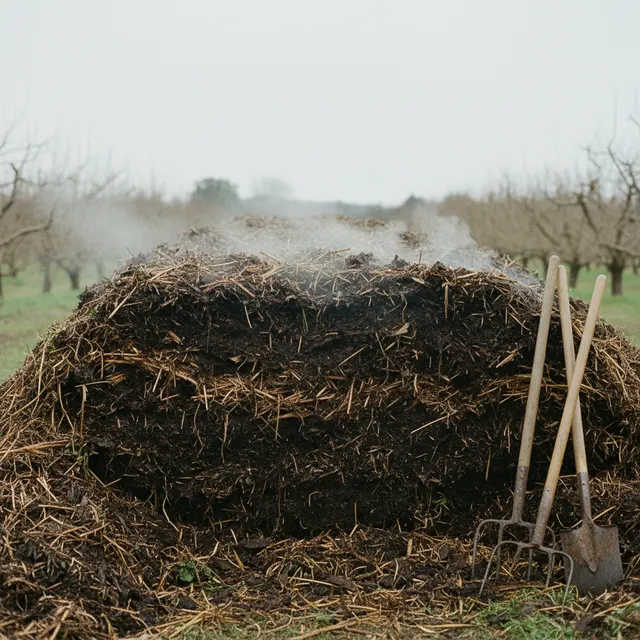
Behind our maintenance shop sits a steaming pile of clippings, leaves, and last month's fairway trimmings that heats itself without any help. I turn it, I feed it, and months later it goes back onto this course darker and richer than what came off it.
On the first cold mornings of November, our newest crew man stood behind the shop with his coffee going cold, staring at the compost pile. Steam was coming off it in the dark, steady as breath, and he asked me, quiet and serious, if he should go get the hose before it caught fire. I told him if that pile ever stops steaming on a cold morning, that is when I will worry. That steam means it is alive and working. Nobody lit it. Nobody plugged it in. It cooks itself, all winter, out back where no golfer will ever see it.
Most golfers do not know the pile exists. It sits behind the shop, past the fuel tanks and the mower wash pad, in the corner we do not dress up for anybody. Everything green that comes off this course and has nowhere better to go ends up there. Fairway clippings by the trailer load. Leaves, and in Ponte Vedra in November the oaks and palms give us leaves and fronds like they are paying rent. Pine straw rakings too dirty for the beds. Sod scraps from repair work, and coffee grounds the clubhouse saves for us in buckets. Layer by layer, green on brown, wet on dry, the pile grows until it is taller than the man feeding it.
Here is the part that still gets me. Stick a long thermometer probe in the middle of that pile on a morning when your breath shows, and it will read hotter than a Florida afternoon in August. The heat is not magic and it is not fire. It is life too small to see, working too hard to stay cold. Little organisms move into that pile the way a crew moves onto a course at daylight, and they get busy breaking all of it down. Clippings that smelled sweet and green on Tuesday smell like rich dirt a few weeks later. Given air, moisture, and time, the pile turns what we hauled off the course into something the course can use again. I just keep it fed and keep it turned, the way you keep any good worker going.
Turning it is loader work, and it is nobody's favorite hour. You lift a bucket from the cold outside edge, fold it into the hot middle, and the steam comes up in your face carrying a smell that is hard to describe to a man who works indoors. It is not a bad smell, exactly. It is an honest one — earth, heat, and last month's fairways. The rule for what goes in is simple. If it grew here, it can go in the pile. If it did not grow here, it stays out. Broken tees come out by the handful, because they ride in with the clippings whether we invite them or not. Range balls come out. Bottle caps come out. I once pulled a good sand wedge out of the pile's edge, which tells you somebody had a bad afternoon and a quiet walk back to his cart.
November is when the pile earns its keep twice. It grows fastest now, because the leaves are falling at the same time the overseeded grass is giving us fresh clippings. And November is when we start pulling from the finished side, the dark, crumbly end that has been cooking since summer. That finished compost goes back out where golfers will never know it went. It gets worked into flower beds that need feeding without a hard push. It gets blended into the mix we use under sod repairs, so new roots wake up in something friendly. It goes around young trees that need help holding moisture through a dry stretch. Nothing fancy, nothing with a label on a bag. Just the course, returned to the course, one bucket at a time.
Underneath all of it is a loop, and the pile is where you can see it plain. What we mow off in June feeds what we plant in November. What falls off the oaks this week will hold water around a tree next spring. Nothing out here is really thrown away unless we are careless with it, and I try hard not to be careless with a place that feeds my family.
So if you ever come around the back of our shop on a cold morning, which you will not, do not reach for the hose. That steam is not trouble. That is last season, cooking down into next season, doing quiet work in the dark while the course sleeps. My greens get the photographs. The pile does the recycling. We are both fine with that arrangement.