 The Fairway Wire
Editorial
The Bird That Screams Like a Banshee at 3 A.M. Is Just Eating Snails on My Pond Bank
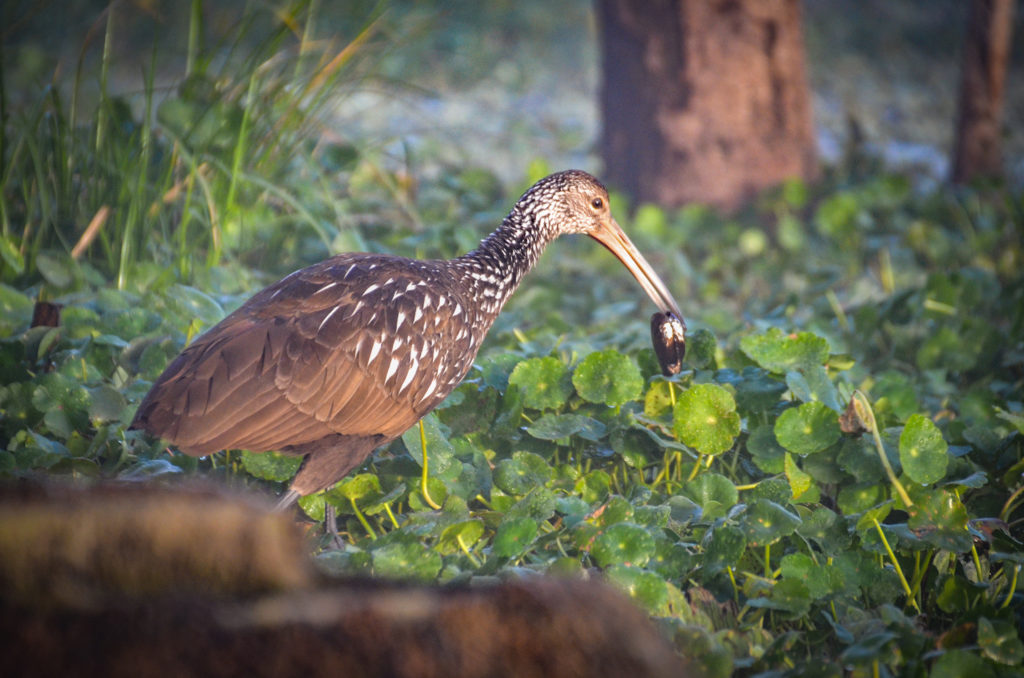
That 3 A.M. scream rolling across the pond is not trouble — it is a limpkin, the speckled wading bird with a crooked bill built for exactly one job: pulling apple snails out of their shells whole. A greens keeper reads the empty shell piles on his pond banks like a newspaper, and explains how an invasive snail nobody wanted brought back a native bird everybody missed.
If you live anywhere near one of my ponds, you have heard it. Three in the morning, dead quiet, and then a scream rolls across the water that sounds like somebody stepped on a haunted house. New folks call the police. Old Florida folks roll over and go back to sleep. That is a limpkin, and he is not dying, and nobody is hurting him. He is just talking. That wail is his normal speaking voice, and from November through spring, when the males get territorial and lovesick at once, my ponds have a full choir going half the night.
The limpkin is a brown, speckled, chicken-sized wading bird with a long bill that curves down just a little and bends slightly to the right, like a tool made for one job. Because it is one. That bill is a snail extractor. The limpkin eats apple snails — big freshwater snails the size of a golf ball, some of them bigger — and almost nothing else. He wades the pond edge at dawn when I am setting up the course, finds a snail in the shallows, carries it up on the bank, and works that crooked bill into the shell opening like a man who has opened ten thousand oysters and never needed the knife to slip. The meat comes out whole. The shell drops empty. Thirty seconds, no fuss, next snail.
You can read my pond banks like a newspaper because of him. Where the limpkins have been feeding, the bank is littered with perfect empty apple snail shells, stacked up in little middens along the same stretches of shoreline week after week. When I walk the ponds checking intakes and looking for washouts, those shell piles tell me two things I actually need to know. One, the apple snails are thick this year, which matters, because snails graze on the pond plants that keep water clear and banks held together. And two, the limpkins are on the job, which matters more, because snails with nothing eating them turn into a pond problem, and a pond problem always eventually becomes my problem, usually on a Saturday.
Here is the part that makes old-timers shake their heads. When I was coming up, you almost never saw a limpkin. The native apple snail had gotten scarce — wetlands drained, water managed for everything except snails — and the birds that depended on that one food went scarce right along with it. Then an exotic apple snail from South America showed up in Florida waters, bigger and tougher than the native, and spread pond to pond. Everybody braced for an invasion story. Instead we got a comeback story. The limpkins found the new snails, figured out the bigger shells, and started raising chicks on them. Now they are on every pond I manage. An invasive snail nobody wanted brought back a native bird everybody missed, and I do not pretend that makes sense, but I have learned this job is watching things not make sense and working around them.
Working around them is literal, by the way. Limpkins are protected, and they are also completely unbothered by me, which is a combination that requires some diplomacy at 5 A.M. A limpkin feeding on the bank will let the mower get closer than any golfer would believe before he bothers to sidestep, with an expression that says he was here first — and his kind was, by a few thousand years. During nesting season they tuck nests into the reeds at the pond edge, which is one more reason my crew trims those edges on a schedule the birds can live with instead of scalping everything to the waterline in one pass. The reeds are not laziness. Some of that shoreline is somebody's nursery.
Golfers notice the shells more than the bird. I find apple snail shells on cart paths, on the bank, once in a bunker, which is a delivery I still cannot explain. Players pick them up and ask what kind of creature leaves a shell that clean, and I tell them: the night-shift foreman of this pond. The heron gets the statue treatment, the egrets get the photographs, and the limpkin gets blamed for waking up the neighborhood. But pound for pound, nobody on this course does a more specific job better. One bird, one food, one crooked bill built exactly for it, patrolling the water I depend on while the rest of us sleep — screaming about it, sure. But on a golf course at 3 A.M., I have decided that is just a man proud of his work, telling the pond it is handled.