 The Fairway Wire
Editorial
The Ball Retriever Is the Most Optimistic Tool in Golf
Every Saturday somebody unfolds fifteen feet of aluminum hope at the edge of my ponds and goes fishing for a four-dollar ball while his whole group ages on the tee behind him. I have repaired the banks they tear up and collected the retriever heads they leave behind, and I still say it is the most honest tool in the bag — because nobody buys one planning to hit it straight.
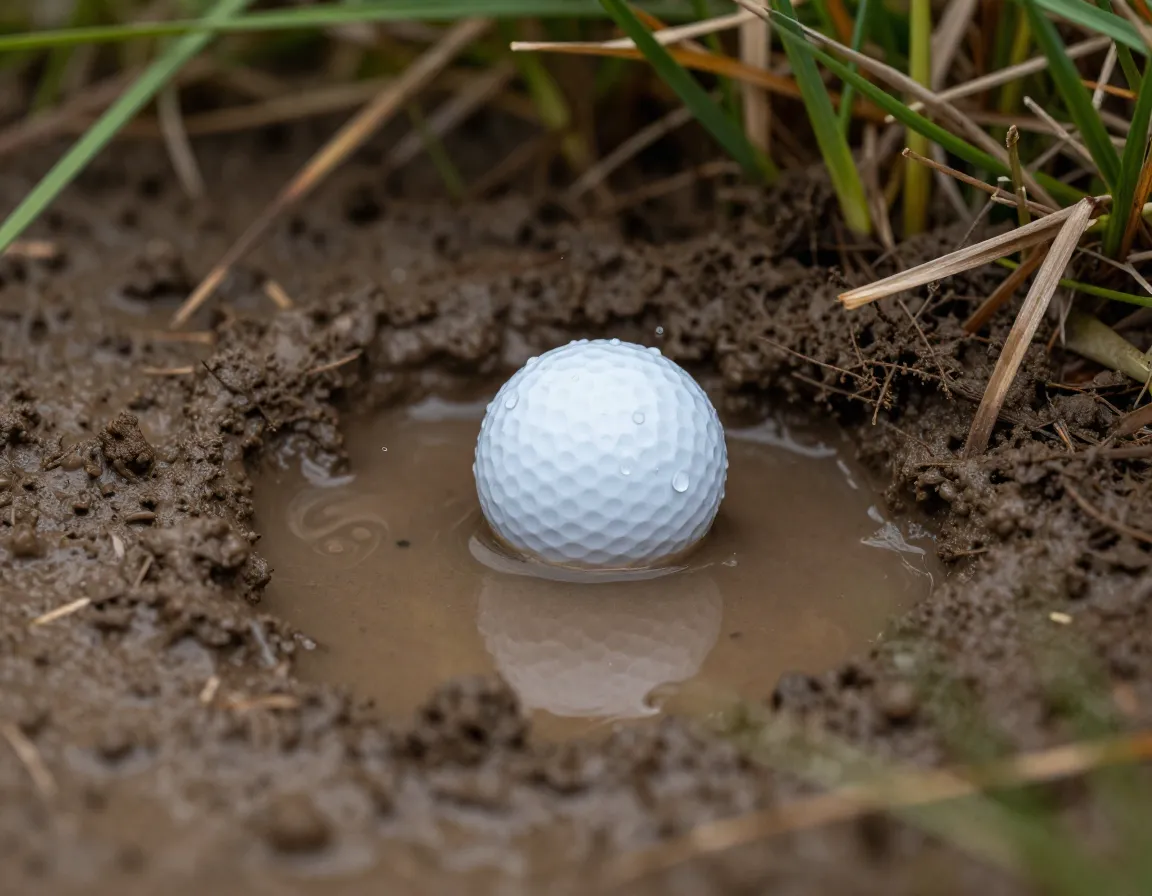
Saturday morning, about eight o'clock, I watched a man unfold fifteen feet of pure hope at the edge of our pond. His ball was in the water. Not near the water, not sitting pretty on the bank. In the water, two feet past where his retriever wanted to reach, with just the top of it showing like a little white periscope. He extended that pole section by section, the way a fisherman rigs up at a dock, while his partners stood on the tee behind him studying their shoes. I finished a mower pass two fairways over, turned, came back, and he was still fishing. The pole had not gotten any longer. Neither had his chances. But his faith had not lost an inch, and I respect the faith even when I am timing it.
For anybody who has never owned one, a ball retriever is a telescoping pole with a little scoop on the end, and it lives in the golf bag right alongside the clubs, like it belongs there. Fourteen clubs are chosen for hitting the ball. The fifteenth tool is chosen for the certainty that you will hit it somewhere terrible. Nobody buys a retriever on a good day, thinking about his career round. You buy it after a pond has eaten three balls in nine holes, the way a man buys a lottery ticket after a bad week at work. It is not equipment. It is a plan for failure, purchased in advance — and the most honest thing in the entire bag.
The math never works, and nobody cares. A new ball costs four or five dollars. A decent retriever costs three times that and mostly retrieves balls not worth the walk over. I have watched men spend four full minutes fishing out a ball you could see was a waterlogged range ball from the stripe on it. And here is what nobody tells them at the shop: a ball that has sat in a pond for a week has taken on water and will never fly right again. It is dead. It just does not know it yet. So the great rescue ends with a man holding up a ball that will betray him on the very next tee.
Now my side of this. When you fish from my pond bank, you are standing on the most fragile ground on the whole course. That bank is soft, sloped, and held together by grass roots and good intentions. One man leaning out at full stretch can tear up in thirty seconds what takes me half a morning to repair on Monday. I find the evidence every week: heel marks at the water line, a scoop head snapped off and left in the rough like a little orange skull, and twice a year a whole retriever leaning forgotten against a tree, which rides on my cart to the lost and found. If the fellow who lost his retriever while retrieving is reading this, friend, the irony was not lost on us. We talked about it all week.
I am not asking anybody to stop fishing. I am asking for the one rule that governs everything out here: your good time cannot spend somebody else's. If your group is holding up the fairway behind you, wave them through before you rig up. If the scoop misses twice, the pond has voted. Take your penalty, drop a ball, and go be a golfer again instead of a crab fisherman. And if you do land one, smooth the bank with your foot where you stood — my crew notices, and remembers kindly.
Because here is my confession, and the crew already knows it. There is a retriever in my own bag. Of course there is. I know the good balls sink within a day and the dead ones float up like regrets, and I still cannot walk past a ball sitting in the shallows without thinking, well, that one is just right there. The pond always lets you win just often enough to keep you coming back. That is not a flaw in the design. That IS the design.
So unfold it with pride, is my ruling. Fifteen feet of aluminum optimism, bought by a man who looked at his own game with clear eyes and planned for the water anyway. Every other tool in that bag promises you will play well. The retriever is the only one that promises you will play again after you don't. That might make it the wisest money in golf — just keep one eye on the group behind you, and one foot out of my pond bank.