 The Fairway Wire
Editorial
The Armadillo Works the Night Shift, and I'm the One Who Cleans Up After Him
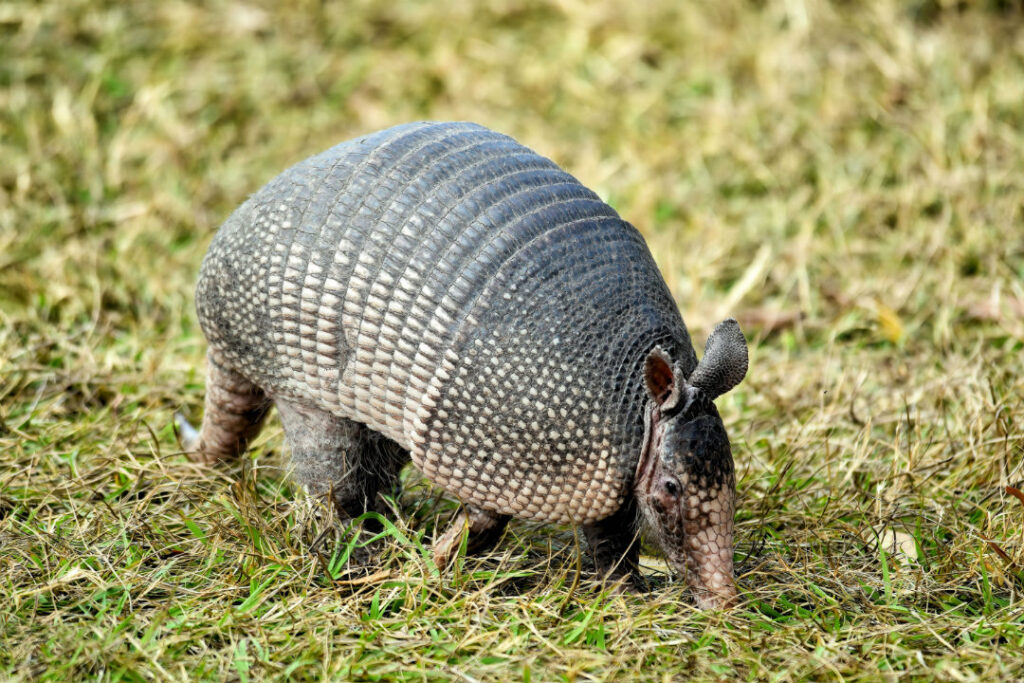
An armadillo can tear up a perfect Florida fairway overnight hunting grubs in the soft soil, and the first hour of my morning in Ponte Vedra is putting it back together by hand before the first group tees off. He digs hardest where the ground is healthiest — which is why we fix his work, manage the buffet, and accept the tenant.
You can tell what kind of morning it will be before you cut the engine. I come through the gate in the dark here in Ponte Vedra, headlights sweeping the fairway, and some mornings the grass looks fine. Other mornings it looks like somebody snuck out overnight with a garden fork and a grudge. Little holes everywhere. Flaps of turf peeled back like lids on cans. That is not a golfer. That is not a machine. That is my night-shift coworker, the nine-banded armadillo, clocking out right as I clock in.
He is not here to ruin your round, even if it feels personal when your ball settles into one of his fresh digs. He is here for dinner. Just under a healthy Florida fairway lives a whole menu — grubs, beetle larvae, worms, insects in the top few inches of soil. His nose is better than any probe I own. When he finds something, he digs. Not deep, not fancy. A shallow, cone-shaped hole, a torn patch the size of a dinner plate, then on to the next one. On a good feeding night he can leave a fairway looking like it hosted a very small, very determined plowing contest.
The worst mornings follow rain, and a Jacksonville summer means plenty of those. After a soaking, or a heavy night of irrigation, the soil goes soft and everything he eats moves up toward the surface. That is a buffet sign in a language only he reads. I find his work where you would expect if you thought like a hungry animal: the low, damp edges of fairways, the rough under the pines, the ground around pond banks. The high-and-dry holes might get one hole. The wet corner of number twelve can get forty.
Here is the irony I have made my peace with. He digs hardest where the ground is healthiest. A fairway with nothing living in its soil has bigger problems than an armadillo. We work all year to build deep roots and active soil, and active soil has a food chain in it. He is simply the biggest, armored member of that chain, and the only one who leaves receipts. I have stood at first light, coffee going cold, looking at a hundred digs across a fairway we had perfect the evening before, and had to admit the course was alive in every sense — including the sense that costs me the first hour of my day.
Because that first hour is the repair. No machine does it for you. You walk it, or ride it slow, and put the ground back by hand and boot. Flaps still attached get folded home and stomped flat — turf pressed back into moist soil fast enough will re-root. Torn-out holes get filled with divot mix, tamped level so a mower passes without scalping. It is quiet, on-your-knees work, and it has to happen before the first group judges the whole course by the first three holes.
People ask why we do not just get rid of him. This is Florida, and he was here first. Trapping and moving him sounds simple until another one moves into the same good ground within the week — you have not removed a problem, you have posted a vacancy over the best grub ground in the county. Fencing eighteen holes against an animal that digs is a fantasy with a price tag to match. So the strategy is the unglamorous one we use for half the things on a course: keep grub pressure managed so the buffet is smaller, fix the damage early every morning, and accept the tenant.
There is a standing joke on our crew that he is the only free aerator we own. It is only half a joke. His digs loosen soil, and he eats insects that would chew roots and invite worse damage than his holes. The alligator gets the respect. The geese get the complaints. The armadillo gets neither — he works the shift nobody sees, leaves a mess nobody photographs, and has never once worried about what the first tee thought of him.
So if you play a Florida course this fall and find rough that looks freshly tilled, or your ball in a neat little crater that was not on the architect's drawing, do not assume my crew fell asleep. Assume the opposite. Somebody already found a hundred just like it at daylight, fixed the ones your group would step in, and left that one in the deep rough because the morning ran out. The course you get at eight is the truce we negotiated at six. He will be back tonight. So will I.