 The Fairway Wire
Editorial
That Snake Sunning on the Cart Path Is Doing a Job Out Here
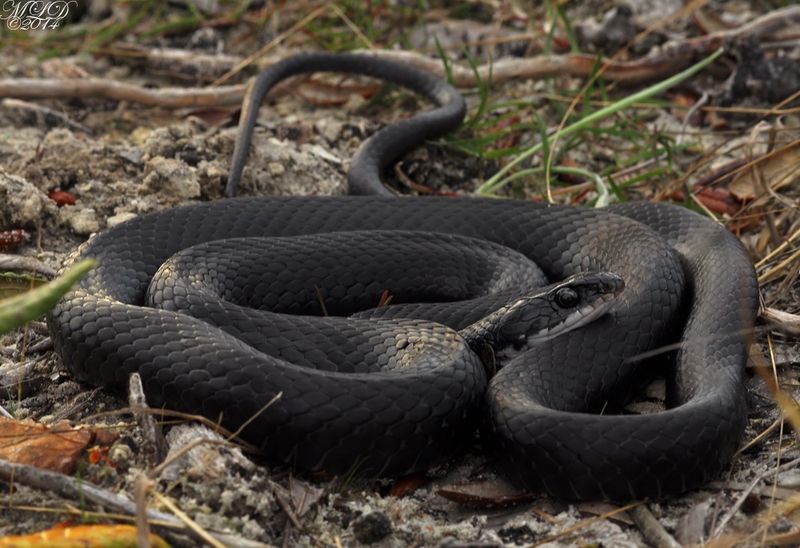
A black racer stretched across the warm cart path stops my cart cold most weeks, and I am in no hurry to move him. The snakes on a Florida course eat the rats, keep to themselves, and ask only for a little room — here is the crew rule for sharing the fairways with them.
All week, everybody has been dressing up like something scary for Halloween. Meanwhile the scariest-looking resident on this course has been out here in plain sight all along, wearing no costume at all, and I stop my cart for him every time. He is a southern black racer, about four feet of shiny black rope sunning himself on the warm concrete, and as far as I am concerned he is on the crew. He just never clocks in.
A racer out on the path at first light is not lost and he is not hunting you. He is cold. Snakes run on borrowed heat, and after a cool Florida night that cart path holds yesterday's sunshine like a skillet holds warmth. He stretches out to get his body up to working temperature, same as I stand in the shop doorway with my coffee waiting to feel like a person. Once he is warm, he is gone — racers are fast enough that watching one leave is mostly watching where he used to be. Give him a minute and he pours himself off into the grass, and the path is mine again. That minute is the whole secret to sharing a course with snakes. They almost never want the meeting. They just want the exit.
Here is what he does for a living, because it is real work. A black racer eats rats, mice, frogs, lizards, and — my favorite item on the menu — other snakes, including the ones you actually do have to respect. Around a maintenance shop, where feed and seed and warm engine corners draw every rodent in Ponte Vedra, a resident racer is pest control that never sends a bill and never misses a shift. The rat snake curled up in the back corner of our shed is the same deal. Younger hands than mine have wanted to relocate those two. No sir. A snake in the shop eating rats beats a trap line and a poison bucket every day of the week, and it is not close.
Now, Florida does keep a second category out here, and a working man learns the difference the way he learns his sprinkler heads — by sight, without thinking. The cottonmouth lives down by the ponds, thick-bodied and heavy-headed, and when he feels cornered he will sit still and show you the white inside of his mouth like a flag. That is not an invitation to look closer. That is the whole negotiation, and he has said his piece. You back up, he keeps the pond bank, everybody's morning stays ordinary. In twenty-some years around water and palmettos I can count my close cottonmouth meetings on one hand, and every one ended the same way: I left, and he let me.
So the crew rules are plain, and I teach them to every new hire before I teach him the mower routes. Never reach blind — not into a valve box, not under a pump cover, not into the palmettos after anything, because your hand does not know what address it is knocking on. Look before a boot comes down on the far side of a log or a pond wall. If a snake is on a path or a tee, we stop, we get on the radio and say where, and we let him finish crossing on his own schedule. Nobody moves a snake with a rake handle for entertainment. Nobody is that bored, and if he is, he can come see me.
The golfers, bless them, are the harder species to train. A man will wade into pond-edge weeds up to his knees after a three-dollar ball, poking around with a retriever in exactly the grass a cottonmouth calls home. Friend, take the drop. I say it with love: that ball belongs to the pond now, and the pond has staff. Same with the fellow who wants a photograph from six feet away. Your phone zooms. That feature is on there for this exact occasion.
By full daylight the racer is off the concrete and out working the rough, the cottonmouth is down in the pond shade, and the course is just a golf course again — flags up, cups cut, not a scale in sight. That is how you know the arrangement is working. This place was swamp and scrub and snake country long before it was yardage markers and white sand, and the oldest residents never signed the lease the rest of us did. The least I can do is slow the cart down, tip my coffee, and let a fellow finish crossing the road to work. He is headed to his job. Same as me.