 The Fairway Wire
Editorial
Somebody Dives for the Balls You Hit in the Pond, and He Is Never Short of Work
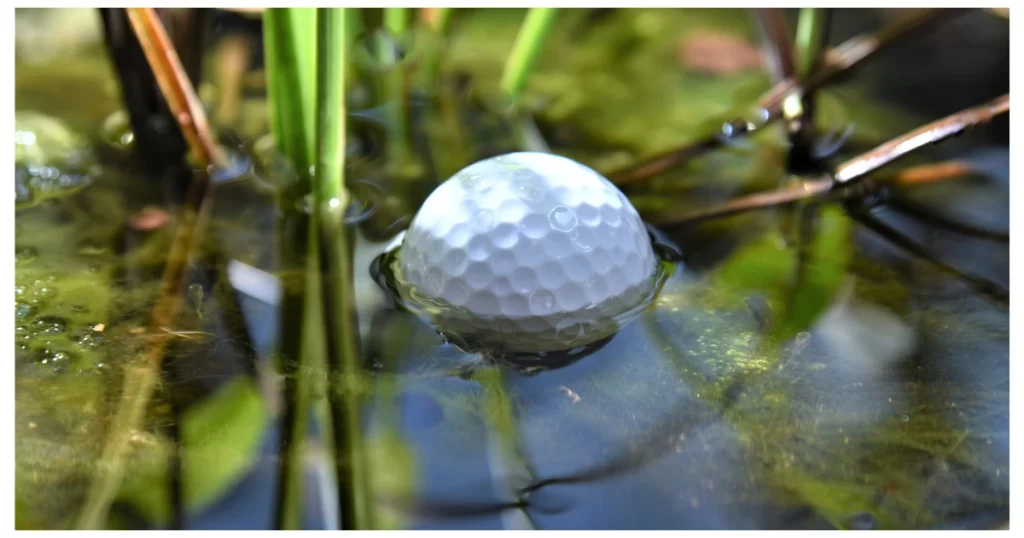
Every ball you donate to a Florida pond gets a second life — if somebody is willing to go down in the dark and feel for it in the mud. Meet the pond diver, the one job on a golf course where everybody else's bad day is inventory, and where the haul tells a greens keeper exactly how a hole really plays.
Early one morning, before the first tee time had even had coffee, I watched a man in a wetsuit slip into one of our ponds in Ponte Vedra like he was clocking in at the office. Because he was. Just a mask, a tank, a mesh bag, and a nod to the crew member on the bank watching for company in the water. Then he went under, and all you could see was a slow line of bubbles moving along where the fairway gives up and the pond gives in. That man dives for a living in the exact spot where your round fell apart.
Every golf course with water has this arrangement, and almost no golfer knows it exists. You cannot leave the balls down there forever. A busy Florida pond collects them by the thousands — tee shots that never carried, approaches one club short, and premium balls that lived exactly one swing between the pro shop and the water. So courses contract with ball-retrieval divers, who work pond to pond and haul out what you donated. It is one of the few jobs in golf where a bad day for everybody else is inventory.
Here is what surprises people: he is not really looking. In pond water like ours, visibility is close to zero once you stir the bottom, so the work is done by feel. He sweeps his hands through the mud in slow arcs, the way you would search a dark drawer for keys, and the balls are just there, settled in layers under the silt. Old ones and new ones, range balls and tour balls, one with somebody's initials still sharpied on it like that was going to talk the water out of taking it. He fills a bag, surfaces, empties it, and goes back down. Just reps.
This being Florida, there is a safety routine and nobody treats it like paperwork. Before anybody gets wet, we walk the bank and look hard. If an alligator has taken up residence in that pond, there is no dive that day — the balls can wait; they are not going anywhere. A crew member stays topside as a spotter, and the diver works a planned section. I have written here before that the gator gets the right of way on my course. That rule doubles underwater, where it is entirely his house.
What happens next would make a tidy little business class. The balls get washed and sorted. The good ones — and you would be amazed how good a ball can look after a month in the mud, once it is cleaned — go back into the world as recycled balls, sold at a fraction of the new price. The beat-up ones become range balls. Under most arrangements the diver's pay is the harvest itself, or the course and the diver split the value. Either way, a pond most golfers curse is a small, steady mine that refills itself every Saturday, courtesy of a slice that lives pin-high to the water.
My favorite part is pure greens keeper. The haul is a report. Which pond gives up the most balls tells you which tee shot truly scares people, where the afternoon wind off the ocean pushes a fade farther than anybody planned, and which approach asks for one more club than the yardage book admits. Architects draw a hole on paper. The pond bottom draws the hole golfers actually play, in white, a thousand balls at a time. When a diver tells me one corner was loaded, he is handing me a map of everybody's misses, and a good superintendent files that away next to the pin sheets.
There is an honest environmental side too. A golf ball left in a pond is plastic sitting in a living marsh, and thousands sitting there for years is nobody's idea of stewardship. Pulling them out, a bag at a time, is slow, muddy proof that a course can clean up after the game it hosts. The herons do not thank us. They just go back to fishing.
So the next time you watch a brand-new ball bounce once and vanish with that small, expensive plop, take your drop and your medicine like the rest of us. But know this: you did not lose it forever. Somewhere on a quiet weekday morning, a man with a mesh bag is going to close his hand around it in the dark and bring your worst swing of the day back up into the Florida sunshine. In golf, even your mistakes get a second life. Somebody just has to dive for them.