 The Fairway Wire
Editorial
Some Nights I Tuck My Greens In Under Blankets, and All of Florida Laughs at Me
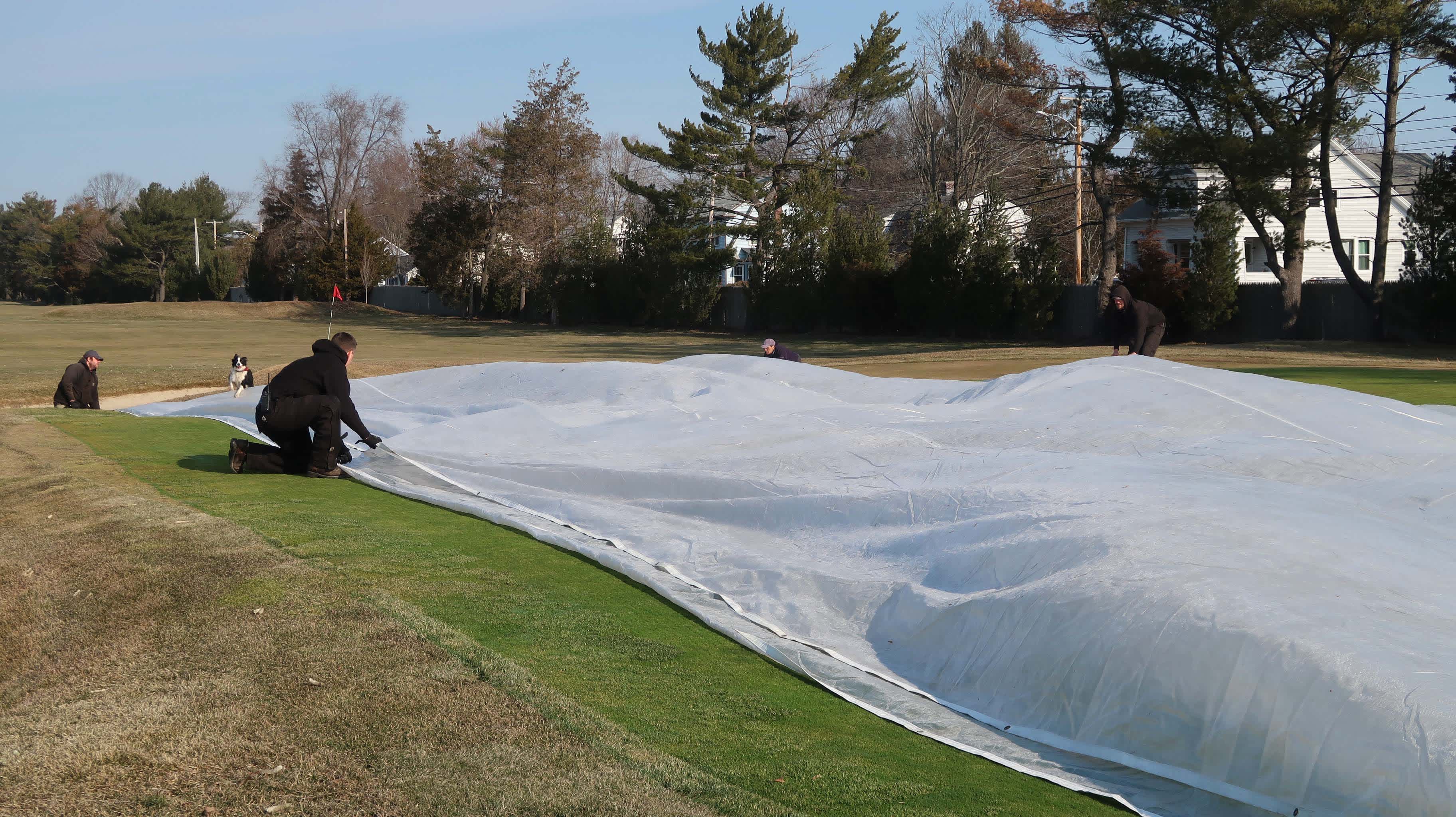
On the coldest nights in Ponte Vedra, Cliff's crew drags giant covers across the greens before dark. He explains the simple physics behind the blankets, the judgment call on which nights earn them, and the 2 a.m. loose corner that keeps a greens keeper awake.
People move to Florida to get away from winter, and then they drive past my course on a cold December-bound evening and see my whole crew dragging what looks like giant white bed sheets across the greens. I can read their faces through the windshield. That man has lost his mind. He is tucking in the grass.
I am, in fact, tucking in the grass. Those sheets are green covers — big breathable blankets made for putting surfaces — and on the right kind of cold night in Ponte Vedra, they are the difference between a green that wakes up fine and a green that wakes up hurt.
Here is the part folks miss about cold down here. Our bermudagrass is a warm-season plant living near the edge of where it ought to live. All summer it laughs at heat that would melt a northern green. But it has no real winter coat. When a clear, calm night pulls the temperature down into the twenties, the cold does not just sit on top of the plant. A clear sky lets the heat stored in the soil all day radiate straight back up and out, so the surface can end up colder than the air around it. The crown of the plant — the little knot where all the growing happens — sits right at that surface. Freeze that crown hard enough, with the plant already tender from overseed season, and you are not looking at a bad week. You are looking at dead patches in spring and a long, expensive apology.
The cover fights that with embarrassingly simple physics. It traps the earth's own warmth against the surface and keeps the coldest air and the frost off the leaf. A few degrees does not sound like much on a weather report. Down at crown height, a few degrees is the whole ballgame. The cover also blocks the wind, and wind on a freezing night is a thief — it strips away whatever little warmth the plant is holding and dries the tissue out at the exact moment it can least afford to lose moisture.
Deciding which nights to cover is where the job gets interesting, because covering is not free. Each green takes a team, time, and a wrestling match. The forecast low alone does not make the call. I look at how long the cold will sit — two hours at dawn is a different animal from eight hours starting at midnight. I look at the wind, the clouds, how wet the soil is, and what shape the greens are in. A puffy, overfed green worries me more than a lean, hardened-off one. And I look at the calendar: a late-November snap, with the overseed still young and shallow-rooted, gets covered sooner than the same temperature in January, when everything has toughened up.
Then comes the wrestling match itself. A green cover is big, awkward, and convinced it wants to be a sail. You unroll it in the afternoon, while there is still light and a little warmth to trap, and walk it out flat — a fold leaves a cold stripe the plant will remember. The edges get pinned with staples long enough to hold when the north wind tests corners at 2 a.m. One loose corner flapping all night will beat the grass under it half to death. Ask me how I know.
Morning is the other half of the dance. Covers come off early, before the sun turns that trapped warmth into a steam bath, and before the first groups reach the green and find it dressed. Off too late on a bright morning and you cook what you saved. Off on a morning colder than promised and you stand there holding a frozen-stiff blanket while the frost on your boots argues the forecast lied to both of you.
Do we cover every green, every cold night? No. Labor is real, covers wear out, and a plant babied through every mild chill never hardens the way it should. It is a judgment call, made green by green, night by night, by somebody standing outside in the cold he is making decisions about. That is the job nobody sees: not mowing, not stripes — a man at dusk, reading the sky, deciding which of his greens sleep under a blanket and which ones sleep bare.
So yes, laugh at the Florida man tucking in his grass. The grass does not mind. Come spring, when those greens wake up green instead of patched and pleading, I will be laughing too — quietly, from the mower, at 5 a.m., while everybody else is still asleep under blankets of their own.