 The Fairway Wire
Editorial
Some Greens You Still Have to Walk Behind a Mower
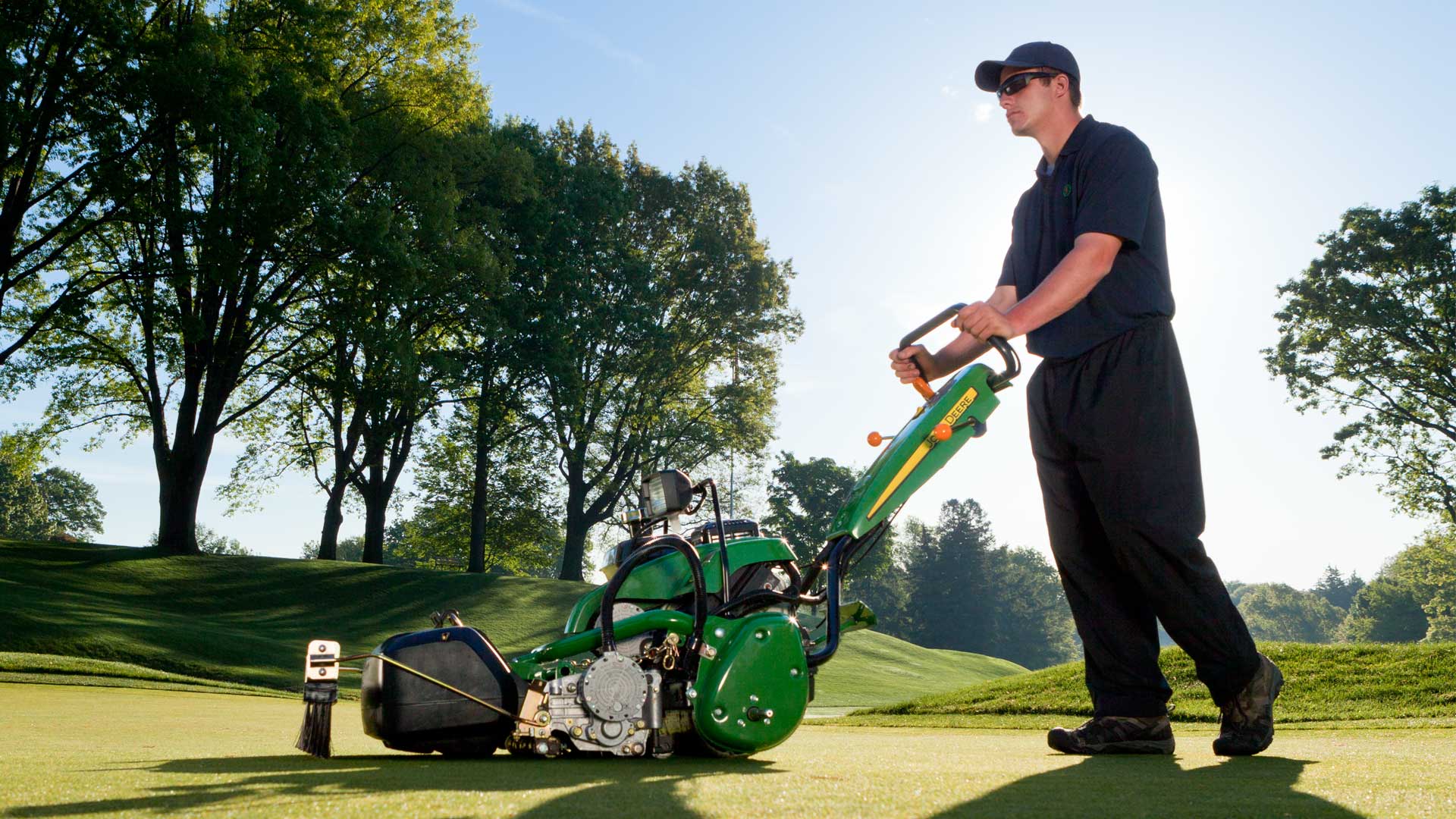
Riding mowers do most of the course, but some greens at Ponte Vedra still get cut by a man on foot behind a single reel. Cliff explains why we walk them — the slopes, the cleanest cut in the building, and what your feet learn about a green that your eyes never will.
People see the big riding mowers out on the fairways and figure that is how all of it gets done now — sit down, turn the key, steer. Most of the course, they are right. But come out with me at first light and you will find some greens where the riding mower stays parked on the path, and a man walks. Slowly, back and forth, behind a mower not much wider than his shoulders. That is not nostalgia. That is a choice we make on purpose, and we make it most mornings.
A walk mower is a simple-looking machine with nothing simple about it. One reel, about twenty-two inches wide, set to cut at an eighth of an inch or lower, pushed at a steady walking pace. No seat, no steering wheel, no shade. Where a riding triplex covers a green in a few wide passes, the walker covers it in stripe after narrow stripe, and every stripe is exactly as straight as the man walking it. The machine does not forgive a wandering mind. It records it, in grass, for everybody with a tee time to read.
So why walk when we could ride? Start with the ground. Some greens have shoulders and fall-offs a heavy riding unit would scalp or slide on, especially wet before sunrise. Some have collars so tight that turning a triplex all morning would chew up the fringe we are trying to protect. A man on foot weighs what a man weighs. He can work a slope and ease around a bunker lip without leaving a tire mark to apologize for later. Less weight means less compaction, and on a green, compaction is a debt that always comes due.
There is a quality argument, too, and tournament mornings prove it. A walk mower, kept sharp and set right, gives the cleanest, most even cut we can put on a green. One reel, one pass, no overlapping units set a fraction apart. When every putt matters, that is the surface you want to hand them. Is it slower? By a lot. A green that takes minutes to ride can take half an hour to walk well, and a man assigned three or four has earned his breakfast before the sun is up. We do not walk them all. We walk the ones where the difference is worth the legs.
Here is the part nobody told me when I started: your feet learn a green before your eyes do. Riding, you see color and contour. Walking it, stripe by stripe, you feel it. You feel the soft spot holding too much water before it shows a mark. You feel a dry crown through your boots a day before it turns off-color. You feel how a slope actually falls, because your own ankles have been standing in it. More than once I have come off a walk-mowed green and gone straight to a hose or a moisture check, not because it looked wrong, but because it felt wrong underfoot.
The walk teaches the new men, too. Keeping a straight line sounds easy until the green falls away and the mower wants to wander downhill with every step. Pace matters — rush and the reel tears instead of cuts. Then there is the turn: lift, pivot, set down clean, without leaving a scallop on the collar. And after the stripes, the cleanup lap, one careful ring that frames the whole green. Do it sloppy and the prettiest stripes in Florida sit inside a ragged border. We have all cut a crooked one. You live with it all day, because a green does not let you hide your morning.
By the time the first groups come through, the man who walked that green is three holes away, boots soaked, already stripes-deep into the next one. He will walk miles before lunch behind a reel, in the quiet before the course wakes up. Some mornings it is my favorite work. No engine roar to think over. Just the reel ticking, the line holding straight, and the green getting better one pass at a time.
So if you roll a putt on a green that feels a touch smoother, a touch truer than the rest, look at the stripes. If they are narrow, close together, and straight as a plumb line, chances are nobody rode that green this morning. Somebody walked it. On purpose, in the dark, at a pace set by his own two feet — because some greens still deserve a man close enough to feel them.