 The Fairway Wire
Editorial
Sand Walks Downhill All Year, and I Shovel It Back Uphill
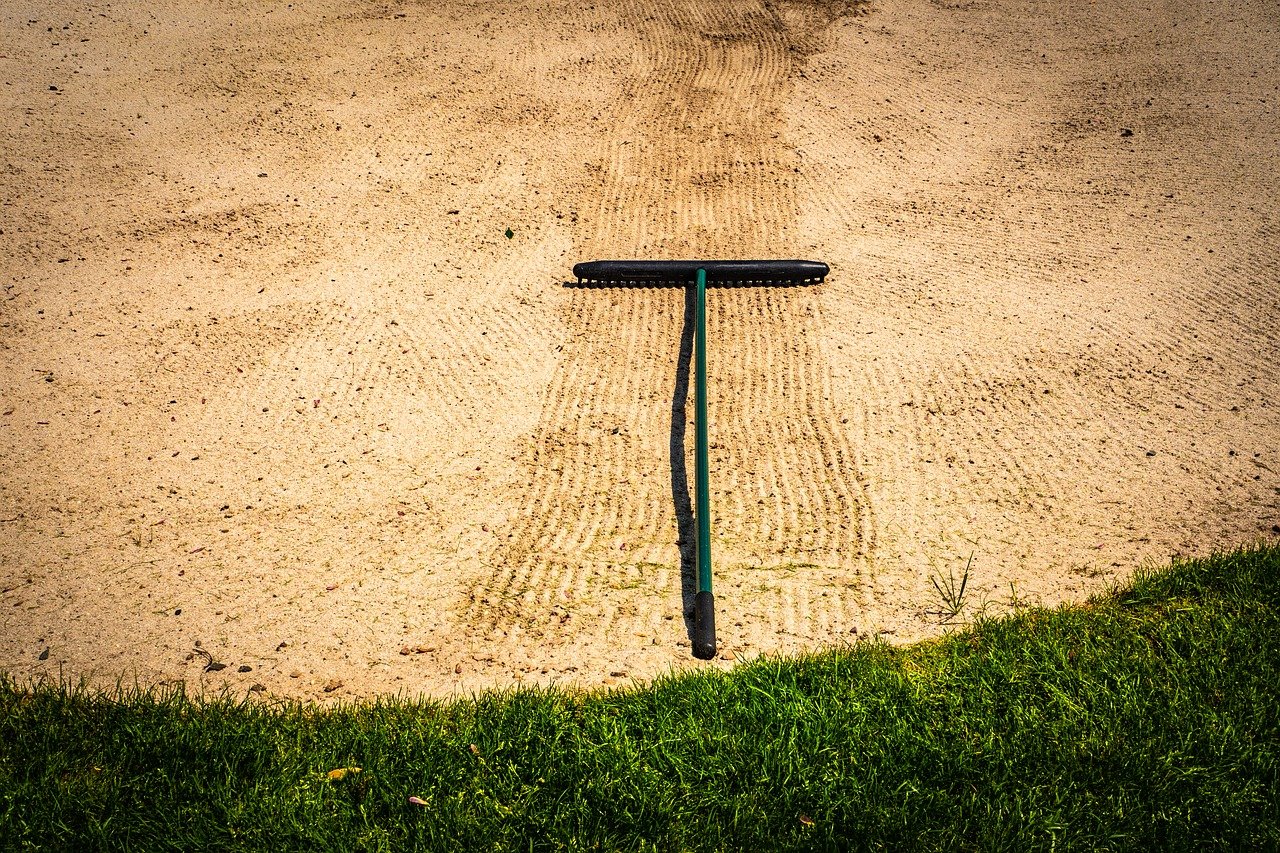
Sand never stays where I put it. Rain, wind, wedge shots, and a hundred boots a day walk it off the bunker faces and pile it in the bottoms, until one quiet morning my crew and I shovel it all back uphill by hand — the invisible work that makes a bunker play fair from the first group to the last.
Nobody tells you when you take a job on a golf course crew that sand has legs. Not fast legs. Slow, patient, all-year legs. But give a bunker twelve months of rain, wind, rakes, and golf shots, and the sand that started the year spread nice and even across the face will end the year piled in the bottom like it slid down there on purpose. Because it did. Gravity never takes a day off, and neither does a Florida thunderstorm.
Here is the part golfers never see. A bunker is not a bowl of sand sitting still. Every bladed wedge shot throws a little sand up the face and out onto the grass. Every hard rain washes a little more down off the slope. Every pass with the machine rake drags some toward the low side, no matter how careful the man driving it is. Foot traffic does it too — a hundred golfers a day climbing in and out, and every boot pushes a spoonful downhill. One spoonful is nothing. A season of spoonfuls is a beach in the bottom and bare liner showing on the face, and that bare face is where the trouble starts.
When the sand gets thin up top, balls plug. Not the friendly fried egg you can splash out of — the buried, half-vanished kind that turns a decent shot into an archaeology project. Thin sand also means the club finds what is under it: the liner, the drainage gravel, sometimes the clay the bunker was carved out of. I have seen a man take a full swing, catch gravel through two inches of sand, and send a spark and a very surprised look in my direction. Meanwhile the bottom of that same bunker is sitting on eight inches of soft, deep sand that swallows golf balls and ankles alike. Same bunker. Two different sports, depending on where your ball lands.
So a few times a year, on a quiet morning, my crew and I do the least glamorous job in golf. We shovel the bottom back onto the face. By hand. A bunker rake machine can smooth sand, but it cannot carry it uphill against gravity and leave it there — the machine just drags it back down on the next pass. The only way to move sand up a bunker face and have it stay is a man, a shovel, and a wheelbarrow, throwing it high, packing it with the back of the rake, and checking the depth with a probe as he goes. Four inches on the face, a little deeper in the bottom, even as we can get it. It is slow, hot, honest work, and by the third bunker your shoulders are filing formal complaints.
There is a rhythm to it that I have come to like. You work one bunker as a pair — one man throwing, one man spreading — and you talk about everything except sand. Kids, football, whose truck is making that noise again. The early light comes over the trees, the first groups are still drinking coffee in the clubhouse, and the bunker slowly turns back into the bunker the architect drew. By the time the tee sheet wakes up, we are gone, the faces are dressed, and nobody who plays that day will ever know a thing happened. That is the job in one sentence, really. Most of what we do is invisible precisely when we do it right.
I think about that sand when I hear golfers argue about whether bunkers should be perfect. Out on tour the sand is groomed like a wedding cake, and I understand why — those men are playing for money that would pave my street. But a bunker was born as a hole sheep dug in a dune to get out of the wind. It is supposed to cost you something. What it is not supposed to do is cost you something different depending on which end of it you land in. That part is on us. Fair is a depth probe and a shovel. Fair is the same four inches for the first group and the last group, the high side and the low side.
So if you play my course this winter and your ball finds a bunker, splash it out and rake your tracks, and know that the sand under your feet did not get there by accident. It walked downhill all year, the way sand does. And one gray morning before you were awake, a couple of men with shovels walked it right back up.