 The Fairway Wire
Editorial
Our Water Paints Everything Orange, and I Have Stopped Fighting It Head-On
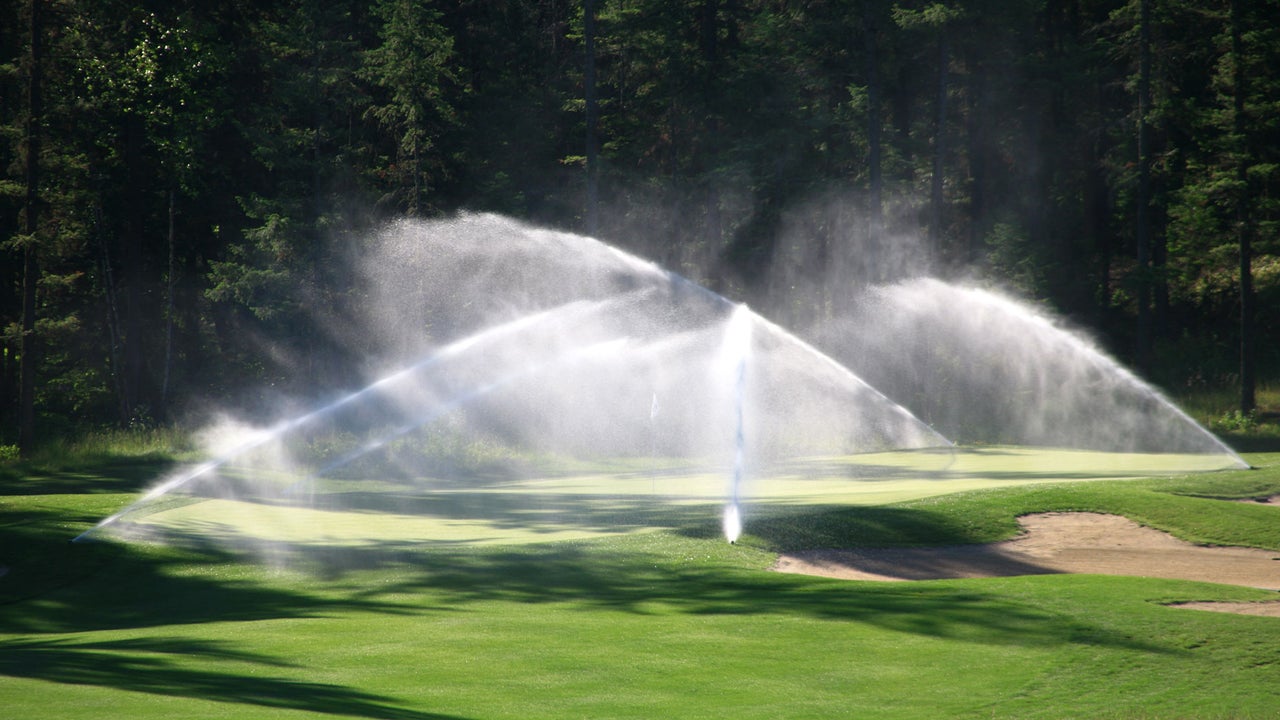
Every white fence, sign, and cart path on a Florida course slowly turns the color of a rusty nail, and the water itself is the painter. A greens keeper explains where that orange comes from, why scrubbing loses, and the quiet tricks crews use to live with water that stains everything it touches.
Put up a brand-new white sign on a Florida golf course and I can tell you what it will look like by Christmas. It will not be white. It will be the color of a rusty nail, streaked like somebody left it in a shipyard. First-time visitors think neglect. I think water. Our water did that, on schedule, and it will do it to the next sign too.
The strange part is the water comes out of the sprinkler heads clear. Catch it in a white bucket and it looks clean enough to drink. The color is hidden in there as iron, dissolved down to nothing an eye can spot. Then the air gets at it. Once that water lands on a fence or a path and meets the sun, the iron wakes up, rusts in place, and stays. We are not dirtying those surfaces. We are painting them, a few minutes a night, one irrigation cycle at a time.
If you want to read a course the way I read it, read the orange. Every stain is a map. A fan of rust on a path tells you exactly how far that sprinkler throws and where its arc stops, better than any chart in the shop. A palm trunk stained on one side only stands at the edge of a head's reach. A fence orange for twenty feet and clean for twenty more says the next head is not throwing as far as it should.
The joke is that iron is not even the villain. Down on the turf, iron is a friend. We put it on greens on purpose, in a spray tank, because it gives grass a deep, rich green without pushing a bunch of soft new growth the way heavy feeding does. Same iron, same water, two reputations. On the leaf it makes us look good. On a fence it makes us look like we quit caring in August. I just point at the green behind me and let the two colors argue.
Fighting the stain head-on is a losing fight, and I have the receipts in my knees. You can pressure wash a path back to bright in a morning, and it is satisfying work right up until the sprinklers run again that night. Inside a month the orange creeps back at the edges. Inside a season it owns the place again. We use rust treatments where it counts, around the clubhouse and the first tee. But a whole course, every path and post and trunk, every month, forever? No crew has those hours, and if we did, I would rather spend them on the grass you came to play.
So veteran Florida crews start designing around it. Look close at an older course down here and you will see color choices that are not surrender. They are experience. Signs are dark green or brown instead of white. Posts are natural wood near the stain's color. Trim and low walls are tan and bronze, tones that can take a rust freckle without shouting about it. White paint is a rookie decision in iron country. It looks sharp for exactly one photo and then spends the rest of its life apologizing.
November is when it shows the worst, and the timing has a mean sense of humor. Our overseed is young this month and thirsty, so the sprinklers run light and often to keep that new rye alive, which means every surface near a fairway gets painted more nights in a row than at any other time of year. November is also when winter visitors arrive with fresh eyes, meeting that orange right when we produce the most of it. A gentleman this week gestured at a stained wall and asked when we planned to clean the place up. I told him, sir, that stain is proof we water. A course down here with no rust on anything is a course that is not running its water — and you would notice that course a whole lot faster.
I have made my peace with it. The orange is part of the honest look of golf in this part of Florida, same as pine straw and pond mud and sand in your shoes. It says a crew runs real ground water every night to keep fifty acres green in a place built on sand. Scrub the first tee, pick colors that forgive the rest, and spend your worry on the turf. That is the deal I have cut with our water. It keeps the grass alive. It gets to sign its name on the fences.