 The Fairway Wire
Editorial
One Green on My Course Is Always the Coldest, and It Is Not Broken
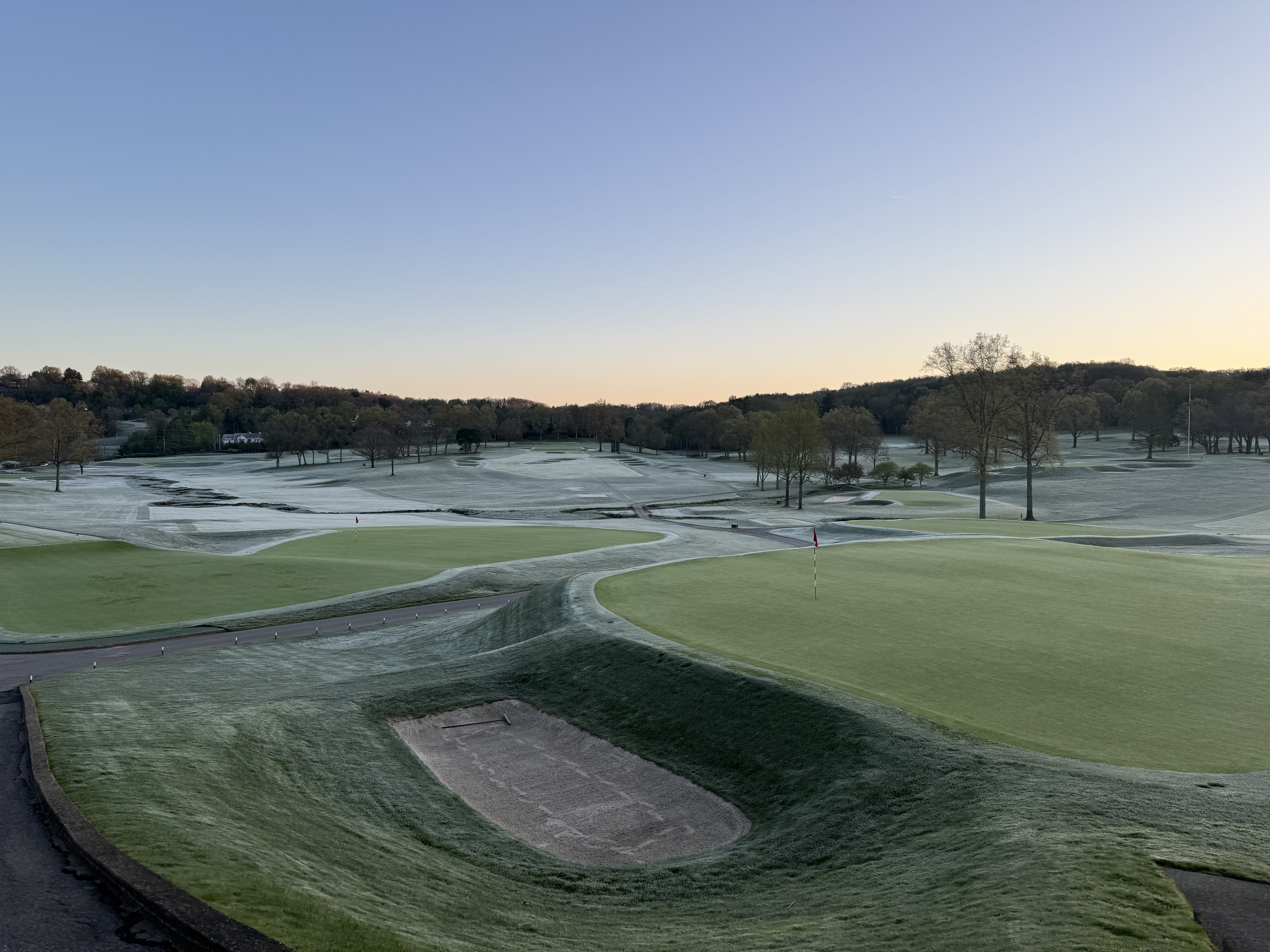
Every course has one low green where the cold settles in and stays, white with frost long after the rest of the property has thawed. Mine sits in a hollow by the pond here in Ponte Vedra, and on a November morning it keeps its own weather at ankle height.
Every golf course has one green that runs cold, and mine is not shy about it. It sits in a shallow hollow down by the pond, ringed on three sides by oaks, and on a still November morning it will be white with frost a full hour after the rest of this property in Ponte Vedra has thawed and gone green. Golfers stand up on the high tee boxes, look around at sunshine, and decide the frost delay is something we invented to finish our coffee. Then they finally get down to that low green and find it crunching under their shoes like a thin sheet of glass.
The green is not broken. It is just living in a pocket, and cold air behaves more like water than most people think. On a clear, calm night, the ground gives its heat back to the sky, the air touching the grass gets cold and heavy, and that heavy air slides downhill, slow and invisible, and pools in the lowest place it can find. My low green is that place. The cold settles in there the way water settles in the deep end, and with no wind to stir it and no early sun getting past those oaks, it has no reason to leave.
You can feel the whole thing with your own body if you know where to stand. Up on the bank beside that green, the air at your face might read forty-five degrees, mild enough that you have already peeled off your jacket. Kneel down the way I do to check a cup, put your hand flat in the grass, and it is a different morning down there — five, six, sometimes eight degrees colder at ankle height, right where the grass actually lives. The weather report on your phone is measured at shoulder height at an airport miles away. My greens live at ground level, in hollows and under trees, and they keep their own weather.
That is why a frost delay can look so crooked from the outside. Seventeen greens can be clear, soft, and ready, and one green can still be frozen hard enough that a single set of footprints would do real harm. Frost itself does not hurt the grass much just sitting there. The damage comes when somebody walks or drives across it while the leaf is frozen stiff — the ice inside the plant gets crushed under a shoe, the cells break, and days later you can read the trail in brown footprints, every step a man took, printed on my green like a signature nobody wanted to sign.
So on these mornings my crew works a pattern the golfers never see. We start high. The upper fairways and the greens out in the wind thaw first, so that is where the mowers go, and we leave the low pocket for last, checking it the way you check a sleeping baby — quietly, and more than once. Sometimes a little breeze finally spills over the oaks around eight and does in ten minutes what the sun could not do in an hour, stirring that pooled cold up and away. Sometimes the fog that formed over the pond just sits there, thick as soup, and we wait, and the tee times stack up, and the coffee really does get finished, but not by choice.
Over the years we have done what can honestly be done. We thinned a few limbs so the early light gets a better angle in. We keep the grass in that hollow a touch leaner going into fall, because lush, soft growth freezes harder and forgives less. What we will not do is force it — no marching a crew across it to knock the frost off, no sending the first groups through on a promise. A green takes all season to build. It can be set back in one impatient morning, and the man who let it happen gets to look at those footprints for a week.
If you ever draw an early tee time here in November, do me one favor. When the starter says we are holding for frost and the course in front of you looks perfectly fine, believe him. He is not looking at the course in front of you. He is looking at the one cold green down in the hollow that you cannot see yet — the one still holding last night's cold in its lap, waiting for the sun to climb over the oaks and let it go.