 The Fairway Wire
Editorial
My Weather App Says Sunny. The Sky Over the Ocean Says Give It Twenty Minutes.
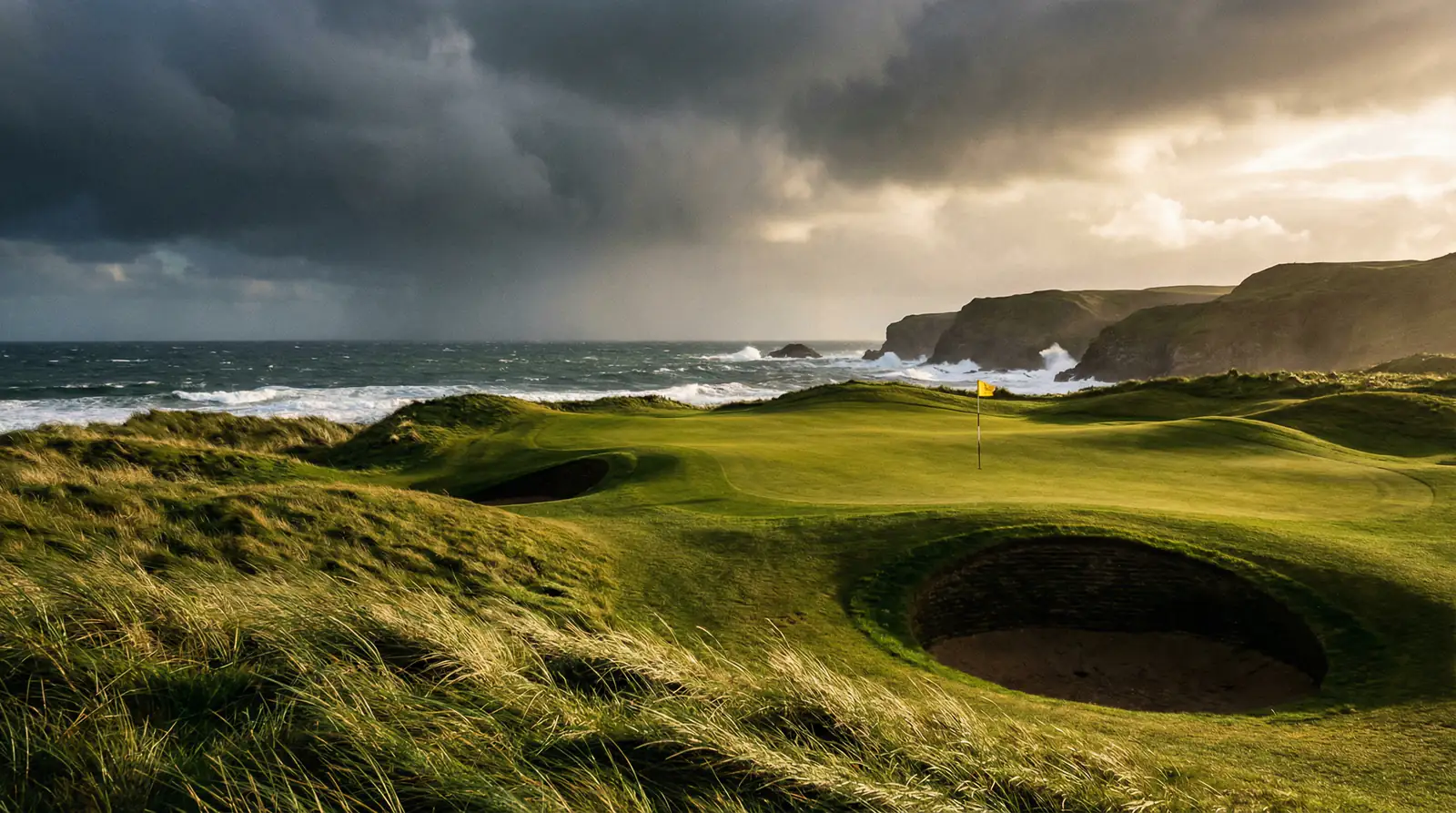
My phone swears it will be sunny while a bruise-colored sky is already rolling in off the ocean. A coastal greens keeper learns to read eighteen little weathers — sea breeze, marsh birds, and a limp flag — because every mowing, spraying, and crew decision at dawn runs downhill from the sky, not the app.
My phone is a liar before breakfast, and it lies with total confidence.
It will tell me sunny all day, zero percent chance of rain, while I am standing in the dark at the maintenance barn looking west at a sky the color of an old bruise. Twenty minutes later that bruise is over the back nine, the wind has flipped around to come straight off the ocean, and we are pulling covers, moving carts, and radioing the crew to hold off on a spray that would have washed straight into the pond. The app updates about an hour after the weather gets here. Out here, the sky files its report first.
That is the part of this job nobody puts on a scorecard. A greens keeper in coastal Florida is a weather reader before he is anything else. Not a forecaster — I leave the models to people with degrees and dry shoes — but a reader. Every decision we make in the first hour runs downhill from what the air is doing right now. Do we mow, or will the dew still be heavy enough to clump and tear? Do we spray, or is that breeze about to carry it somewhere it does not belong? Do we spread the crew across eighteen holes, or keep everybody close until we know what that dark line on the horizon intends to do?
Golfers read weather one way: will it ruin my round? We read it another: what will it do to the grass, and how long will the grass remember it? A pop-up storm that sends everybody laughing into the clubhouse for forty minutes is, to us, an inch of water on ground that was already full. That is washed-out bunkers at dawn tomorrow, gravel rearranged on the paths, and a low green sitting wet into the evening — and wet grass overnight in Florida heat is an open door for disease. Your delay is our second shift, scheduled by the sky.
Living this close to the ocean teaches you tricks no app has learned. The sea breeze is a clock if you watch it. On a still morning the dew sits fat on the greens, and we know syringing and fans will earn their keep by noon. When the breeze starts early off the water, the day dries faster, the greens firm up sooner, and a putt that held its line at eight will release a little more at eleven — same green, different weather, different golf course. Then there are the storms that build inland, over the heat of the pavement and the pine woods, and just sit there deciding. Half the time the ocean air shoves back and they die on the other side of the Intracoastal, close enough to hear. The other half of the time, they win.
I have learned to watch the birds, too, and I am only a little embarrassed to say so. When the ibis and egrets come off the marsh early and settle in the middle of the fairways like they own them, something is usually coming. When the flag on eighteen stops flapping and just hangs, in air like breathing through a wet towel, I start thinking about lightning before any phone in my pocket does. We have detection and follow it to the letter, but the hair on your arms has been a reliable instrument a lot longer than the app has.
None of this makes me anti-technology. I check the radar before my boots are tied and again at lunch, and a good radar loop has saved us more than one wasted morning. But radar shows you where the rain is. It does not tell you the twelfth green sits in a bowl that fogs over when the rest of the course is clear, or that the wind on the exposed holes by the water is doing something completely different from the wind in the trees three holes in. A course is not one weather. It is eighteen little weathers stitched together, and the only way to learn them is to stand in them at 5:30 in the morning, for years.
So if you see us at dawn standing still, coffee in hand, staring at the horizon, we are not taking a break. We are reading the only forecast that signs our paychecks. The app can have the whole state of Florida. I will take the sky over this one stretch of coast, a flag hanging limp, and twenty minutes of watching. It has been right more often — and when it is wrong, at least it had the decency to be wrong where I could see it coming.