 The Fairway Wire
Editorial
Laying Sod Looks Like Laying Carpet, Right Up Until It Dies in Strips
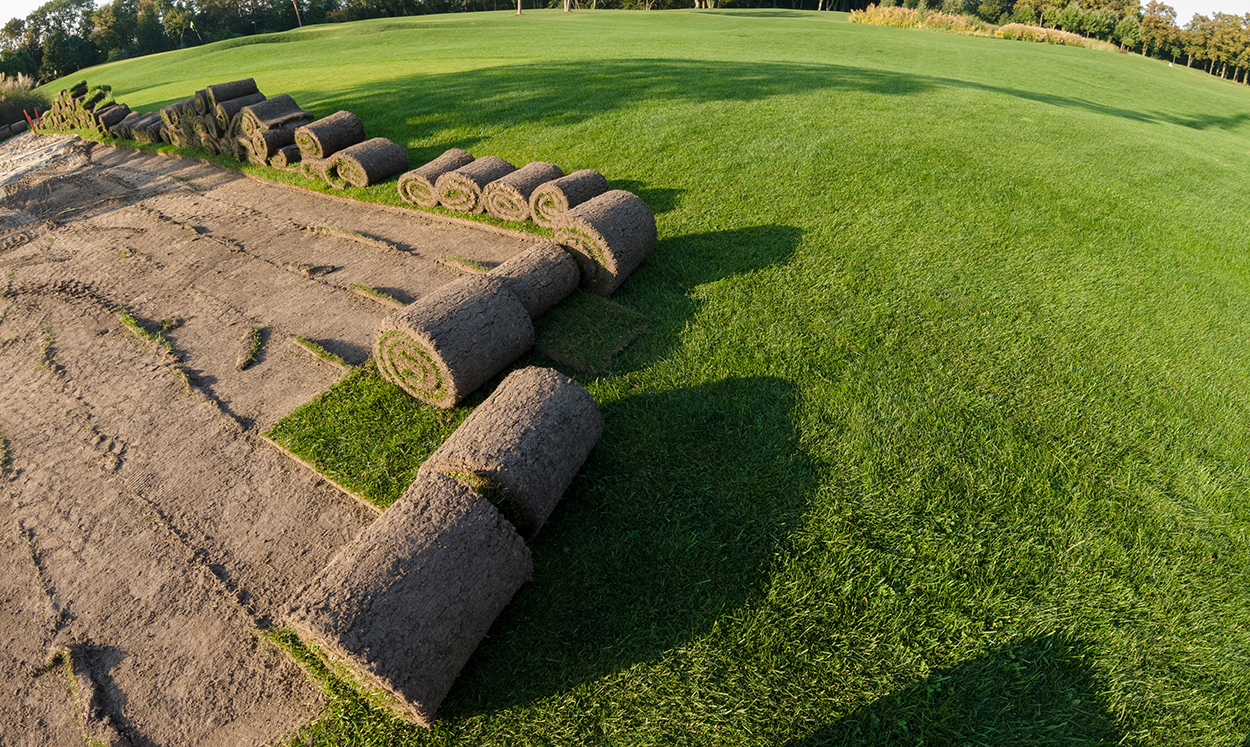
A pallet of fresh sod shows up green and perfect, and golfers figure the hard part is done. From the ground work underneath it to the tight seams, the rolling, and the first two weeks of water, here is why new grass lives or dies long after the last piece goes down.
A pallet of sod rolling off the truck is the most hopeful sight on a golf course. Tight green rolls, neat as carpet, smelling like a fresh field. Every golfer who passes figures that bare spot is fixed by lunch. I used to think that too, right up until my first pallet taught me that sod is not a repair. It is a transplant, and transplants can be refused.
That grass was alive in somebody else's field yesterday. A machine sliced it off its roots, rolled it up with a shaving of dirt, and stacked it to warm up ever since. Stacked sod heats from the inside, the way a compost pile does, and on a warm Florida day a pallet left sitting starts cooking itself from the middle out. So the first rule of sod day is the clock. We lay it the morning it lands, worst ground first. Order it Friday for a Monday job and you have bought yellow soup with grass flavoring.
Nobody sees that the new grass is the easy part. What decides whether it lives is the dirt underneath it, and the dirt under a worn spot is worn for a reason. The bare patch where the cart path ends, the tee exit beaten down to hardpan — that ground is packed tight as a parking lot. Lay green rolls over concrete-hard soil and you have not planted anything. You have upholstered it. So before a piece goes down we strip the dead stuff, loosen the ground, rake it out, and level it honest, because sod copies every bump beneath it. A low spot laid in November is a puddle with a hairpiece by December. The grass will show you every shortcut you took preparing its bed.
The laying itself has a craft that looks like nothing until you have done it wrong. Seams get staggered like bricks in a wall, never lined up in one long zipper down the patch. Pieces get butted tight, edge to edge — never overlapped, because a doubled edge makes a ridge the mower scalps, and never gapped, because a gap lets the sun in to dry the roots. Those brown lines striping a new patch like a quilt? That is a seam map — every line a place two pieces did not quite meet. Around curves and sprinkler heads we cut with a flat knife and fit the pieces like flooring men fit a corner, kneeling on boards so our own boots do not tear the fresh work loose.
Then comes the part that feels backwards: we roll it, and then we drown it. The roller is not for looks. It presses the shaved roots down into real contact with the soil, because a root hanging in an air pocket under a pretty green roll is a root drying to straw in the dark. After the roll, the water goes on deep and immediate, until the piece squishes under your palm. For the next two weeks that patch drinks on a schedule nothing else on the course gets — light, often, never skipped — because its roots reach down about as far as your fingernail. New sod is a patient in a shallow bed, and November is when I would rather do this work than any other month in Ponte Vedra. Our bermuda is slowing down, but the soil is still warm enough to coax roots downward before the cool nights tell everything to nap. Sod laid too late sits there all winter like a rug somebody forgot to pick up, green on top and attached to nothing.
Here is the golfer's part, and it is small but real. For the first few weeks, new sod tears if you twist on it. A cleat turned hard in celebration or disgust — I have seen both over a four-foot putt — can peel a corner up like the lid on a can. If your ball settles on a seam and the lie looks funny, that is grass still deciding whether it lives here. Give it a few weeks of grace and it will give you years of not thinking about it at all.
Because that is the ending when it goes right. A month from now the seams vanish, the roots knit down, and golfers will stand right on the spot swearing it was always grass. The pallet, the clock, the dirt work, the rolling, the two weeks of babying — all of it disappears into green nobody notices. And when it goes wrong, it goes wrong in strips, each one naming the step somebody skipped. Grass forgives a lot. Being laid down and forgotten is not on the list.