 The Fairway Wire
Editorial
If the Pump House Goes Down, the Whole Course Is on a Clock
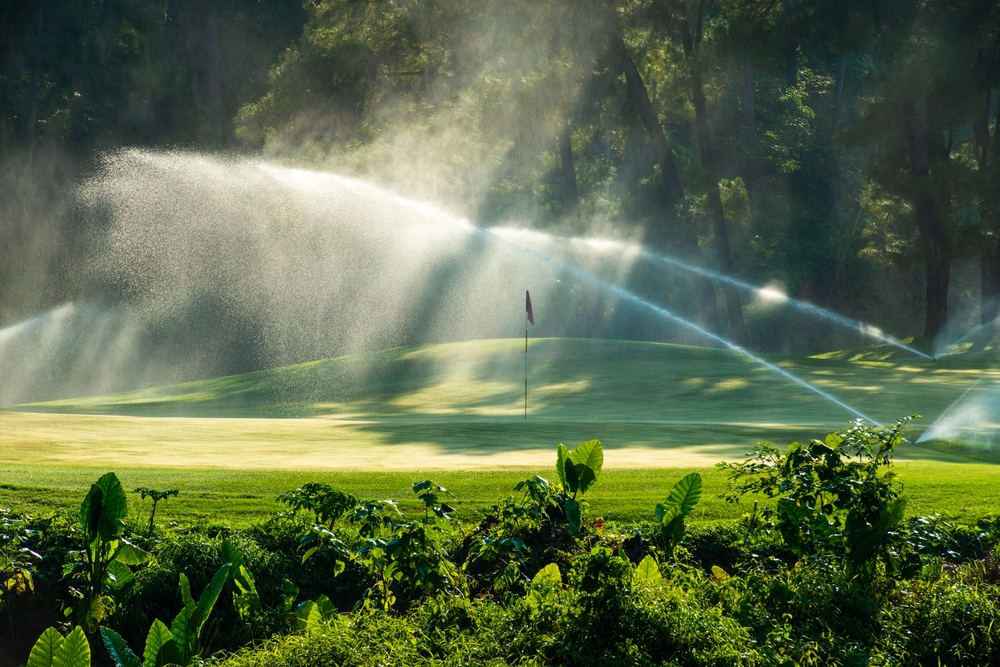
Every golfer drives past the little locked building by the pond and never thinks twice about it. Inside is the pump station that pushes water to hundreds of heads all night — and when it goes down in a Florida summer, greens first becomes more than a saying, it becomes a clock.
There is a little building on most golf courses that golfers drive past without seeing. No sign worth reading, no windows, just a hum behind a door that stays locked. That is the pump house, and I will tell you plain: it matters more than any single mower we own. Mowers cut grass that is already alive. The pump house keeps it alive.
Inside, it is not pretty, and it is not meant to be. Pipes as thick as your leg, motors that have been running since before some of our crew were born, gauges, valves, and a panel of lights that tells you whether the night will go easy or sideways. The pumps pull water from the pond or the well and push it through miles of pipe buried under fairways, tees, and greens — hundreds of sprinkler heads waiting on pressure the way a house waits on a heartbeat. No pressure, no water. No water in a Florida summer, and you are not talking about a bad week. You are talking about a clock.
People think watering is turning on sprinklers. Out here, watering is arithmetic. How much did it rain, how hot will it get, which greens are already on the edge, which fairways can wait a night and which ones cannot. The pump station is where that arithmetic becomes real. It can only push so much water in a night, when nobody is playing, so every run time is a decision. Give too much to the front nine and the back nine goes thirsty.
When it is working right, nobody thinks about it. That is the best compliment it can get. The course wakes up green and the first groups just play. When it is not working right, everybody finds out at once. I have gotten the call before my boots were laced — pressure dropping, a motor tripping off, a strange knock in a pipe that was quiet yesterday. You learn that knock the way you learn a noise in your own truck. Normal has a sound. Trouble has a different one, and it does not wait for office hours.
A pump failure in July is not an inconvenience, it is an emergency with grass for a patient. Bermuda can take heat. It can take traffic. What it cannot take for long is heat without water, especially on greens cut as low as ours, where the roots are shallow and the margin is thin enough to measure in hours on the worst days. So you triage, same as any emergency room. Greens first — always greens first. Then tees. Then the fairways that get the most sun and the most play. The rough can fend for itself; it usually does anyway. You hand-water what the system cannot reach, you drag hoses you hoped not to drag, and you call the one person who knows that station the way our mechanic knows his mowers.
That is the other thing about the pump house: it collects old knowledge. Every station has its quirks — a valve you open slow or it hammers, a motor that runs hot on the hottest nights, a pressure number that looks wrong on the gauge and is exactly right. None of that is in a manual. It lives in the heads of the men who have stood in that building at 2 in the morning listening to it run. Lose that knowledge and you have lost the translation between the machine and the place it waters.
We are careful with water here, and not just because somebody is watching the bill. In Ponte Vedra we live close to the water table and the marsh, close to neighbors who care — rightly — about how much we use. A good pump station, run by somebody paying attention, wastes less. It holds steady pressure so heads throw even patterns instead of geysers and dry rings, and it runs at night when less is lost to sun and wind. Careful is not a slogan for us. It is pressure, timing, and a man checking a gauge nobody else will ever see.
So next time you play a green that held your approach in the middle of a dry spell, you do not have to think about the little locked building by the pond. We would rather you didn't. Just know that last night, while the course was empty and dark, that building was awake — humming, pushing, holding the whole property together one zone at a time. If it ever stops, we will know before you do. And we will be on that clock, working like it matters, because out here, it does.