 The Fairway Wire
Editorial
I Spray the Grass to Make It Grow Slower, and It's the Smartest Thing We Do
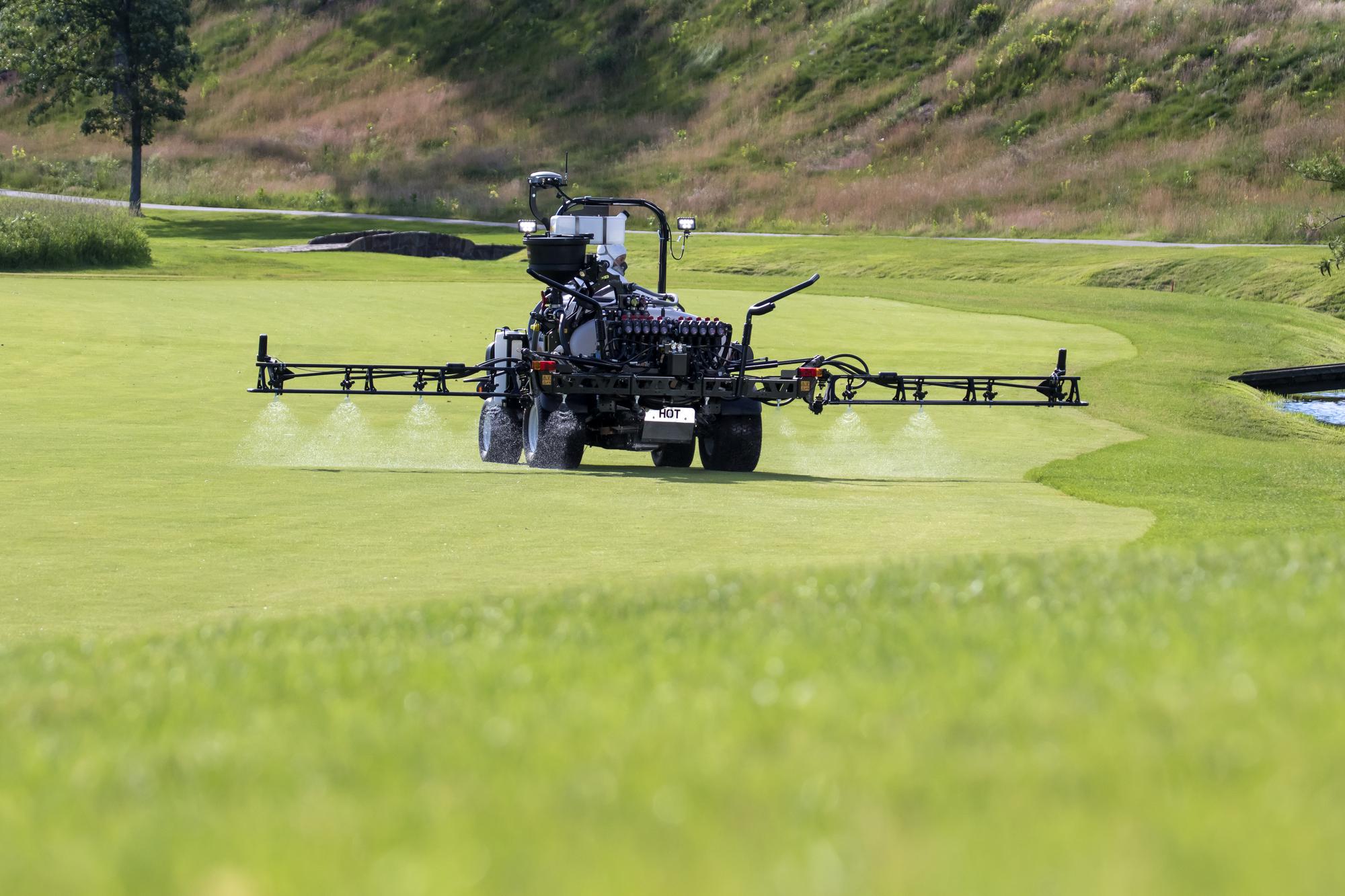
Half the year I am not trying to grow grass at all — I am slowing it down. A growth regulator tells bermuda to quit stretching up and spend its energy on roots and density instead, so the green that rolls true at dawn still rolls true in the last group of the day.
Here is a confession from the spray rig: for a good part of the year, I am not trying to grow grass at all. I am trying to slow it down. Golfers assume our whole job runs one direction — feed it, water it, watch it grow, cut it, repeat. Half my calendar runs the other way. That big sprayer rolling down the fairway at dawn with its booms out is often carrying a growth regulator, which is a polite name for a product that tells a healthy plant, kindly and firmly, to quit stretching.
Left to itself in a Florida summer, bermudagrass has exactly one ambition: up. Heat, rain, and long days hit it like an energy drink, and it throws leaf as fast as we can cut it. That sounds like health — until you try to play golf on it. Grass that surges all day is a different height at two in the afternoon than it was at seven in the morning. The green you read at breakfast is not the green you putt after lunch. Fast growth is not the same thing as good turf. Most days, it is the opposite.
A growth regulator works down where the plant makes its decisions. In plain terms, it dials back the signal that tells the stem to elongate — the plant still feeds itself and lives its life, but it stops spending everything on getting taller. And here is the part that makes it worth the money: the energy does not disappear. It goes somewhere better. The plant sends it sideways into new shoots that thicken the stand, and downward into roots. The leaf that does grow comes in narrower and tighter, and the color deepens. You end up with less grass on top and more plant underneath, which is exactly the trade a golf course wants to make every single time.
On the greens, the payoff is honesty. A regulated green grows so little between morning and afternoon that its speed holds. The roll our crew measures at sunrise is close to the roll you get in the last group of the day, and that fairness is not an accident — it is a spray date somebody kept. Regulators also help us through seedhead season, when bermuda tries to throw up little stalks that make a smooth green bumpy and speckled. Suppress the stretch, and you suppress a good share of those seedheads with it. Your putt runs truer because a plant was talked out of reproducing on company time.
Out on the fairways, the mower baskets tell the story. In an unregulated wet week, a fairway mower comes home hauling baskets packed with wet clippings — and what it cannot haul, it drops in clumps that sit there until somebody blows them apart. Regulated turf gives up half the clippings or less. The cut is cleaner, there is almost nothing left to clean up, and the surface stays firm and tight instead of thatchy and puffed. From the cart it just looks like a good fairway. From my seat, it looks like a plant behaving itself.
None of this is spray-and-forget, and that is where the craft lives. A regulator wears off on the plant's schedule, not ours, and the timing is tracked in growing-degree days, rainfall, and plain observation. Miss the next application and you do not just lose the benefit — you get the rebound. A plant held back for weeks makes up for lost time all at once when the leash comes off, and that surge is shaggier than if you had never touched it. A half-kept program is worse than none.
I will be honest about the skeptic's question, because I asked it myself years ago: why pay for a product whose whole job is less growth, on a course that also buys fertilizer? Because the two are not fighting each other. Fertilizer is groceries. The regulator is table manners. We feed the plant, then we regulate it so it spends that food on roots, density, and endurance instead of a growth spurt we pay a mower to throw away. Deeper roots ride out a dry week better, and fuel, labor, and mower wear all drop when there is less hay to harvest.
So the next time you see the sprayer out at first light, booms wide, do not assume we are feeding the course or fighting a disease. Some mornings we are doing the smartest work on the property: putting the brakes on a plant that would happily outgrow its own golf course, so the surface you play at four in the afternoon is the same one we promised you at dawn.