 The Fairway Wire
Editorial
I Paint the Inside of the Cup White, and It Is Not Decoration
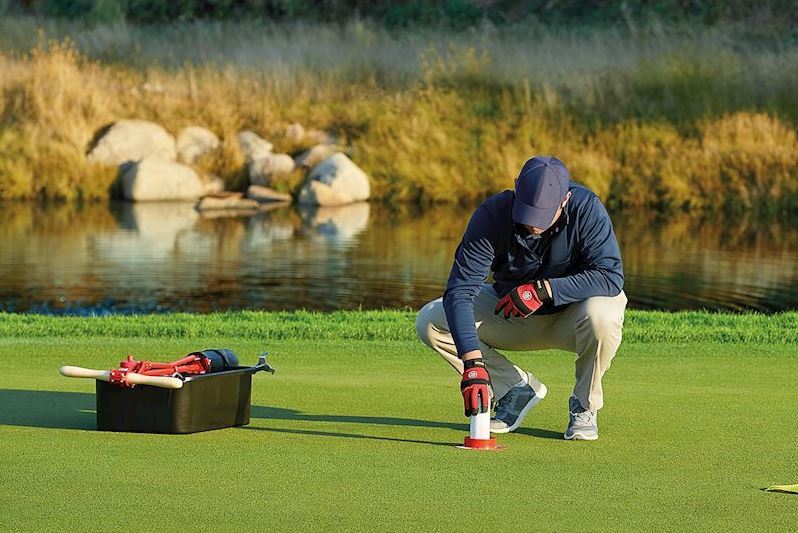
A fresh golf hole gets a hand-painted white ring inside its top inch every morning, and it is not for show. A Ponte Vedra greens keeper explains how a shield, a shaken can, and ten seconds per hole give every putter a target they can actually see.
There is a little white ring inside every fresh hole I cut, right at the top of the cup, and most golfers have seen it a thousand times without ever asking where it came from. It did not grow there. The cup did not come out of the box that way. I painted it, by hand, that morning, with a shield over the green and a can I shake until my arm complains. It takes about ten seconds a hole. It is not decoration, and if I skip it, you will feel the difference from twenty feet away without knowing why.
The job starts right after the new hole is cut — the cup cutter piece in this library covers the cutting itself. Painting is the quiet finish. I carry a round metal shield that sits flat over the fresh hole, its center dropping into the cup. That shield is the whole secret. It protects the green so not one speck of white lands on the putting surface, and it guides the paint where it belongs: the top inch of the soil wall inside the hole, above the cup liner.
Why paint dirt white at all? Because a hole is a dark circle in a green field, and dark on green is harder to pick up than you think, especially in flat morning light or under the heavy gray we get in Ponte Vedra before a sea breeze clears things out. That white ring catches light and gives your eye a clean edge to aim at. A freshly painted hole reads bright and sharp. An unpainted one looks soft, almost fuzzy, like the target is thinking about disappearing. Golf is hard enough with a target you can see plainly.
Tournament golf made the habit famous, because television loves that bright ring. On camera, a painted cup pops. But I do not do it for cameras that are not here. I do it on ordinary Thursdays, because the man putting for a two-dollar skin deserves to see the hole just as clearly as a man putting for a trophy on Sunday. Visibility is part of fair.
The paint itself is nothing fancy, on purpose. It has to sit on damp soil, dry fast, and then get out of the way. By the second group, balls dropping in and hands reaching in start its slow fade, and irrigation that night softens what is left. That is fine. The ring was only meant to last the day, because tomorrow the hole moves to fresh ground and gets a fresh ring. Painting is a daily promise, not a permanent fix, like most honest work on a golf course.
There are ways to do it wrong, and I have seen every one, mostly from my own early mornings. Paint too heavy and it runs in white tears like a birthday cake left in the rain. Paint too light and you have made a gray rumor. Worst is paint where it should never be: a white freckle on the green itself, because somebody lifted the shield too early or sprayed into a gust. That freckle announces a careless hand all day, and I care, because it is my name written in the wrong place.
Wind is the usual villain here on the coast. A calm morning at the shop can hide a sneaky breeze across an open green, and spray paint believes in wind the way a flag does. So I crouch low, press the shield flat, work in short bursts, and turn my body into a windbreak. My knees complain by the back nine — eighteen holes, eighteen crouches, every morning. Nobody has ever thanked the ring painter's knees, and that is how it should be. The work is not the show.
November is kind to this job in Florida. Our greens are overseeded rye over resting bermuda, a fresh cut holds together clean, and the paint grabs that tidy wall and sits bright instead of soaking into crumbly summer ground. Cool, still mornings help — the ring dries before the first group walks up, sharp as a chalk line. Come July, with humidity hanging on everything, I give each hole an extra breath. The season changes the timing. It never changes the standard.
So the next time you line up a long one and the hole looks clear and bright and easy to find, even in flat light, know that somebody crouched over it in the dark with a shield and a shaken can and painted you a target. Ten seconds. One white ring. Not decoration — a courtesy, from the crew that cut the hole to the golfer who has to find it.