 The Fairway Wire
Editorial
I Hose Down Eighty Carts in the Dark, and Every One of Them Tells Me How Its Day Went
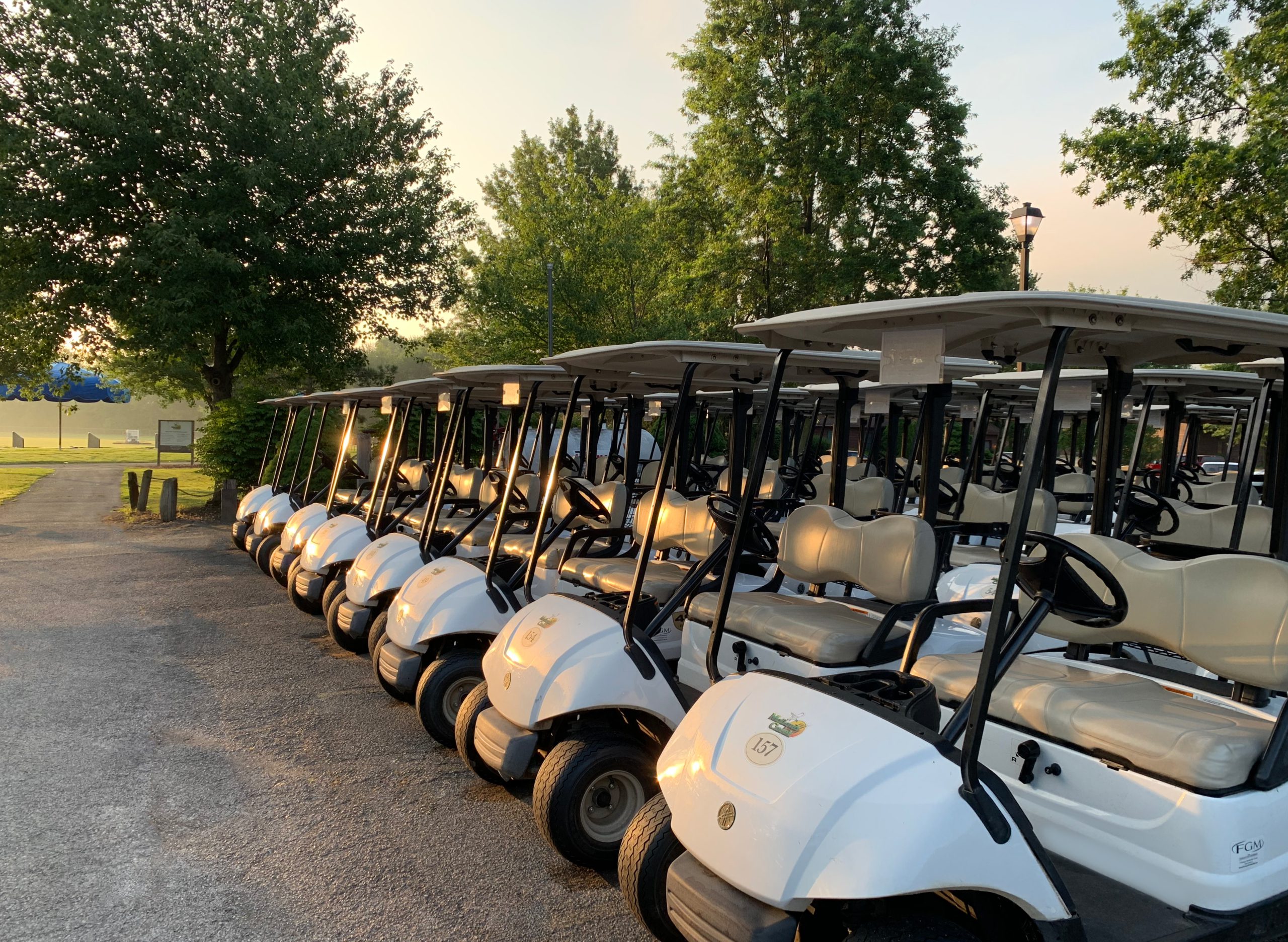
At the end of the day the fleet rolls back muddy, sandy, and full of stories. I wash them, plug them in, and read the day in scorecard pencils, spilled coffee, and one flat tire that limped home.
The last golfers never see the last job of the day. They hand back a key, tell the shop they played terrible, and drive off toward dinner. Then the fleet rolls down to the barn in a long, tired line, and my crew and I get to read the whole day over again, one dirty cart at a time.
People think washing carts is the easy shift. Spray, wipe, plug in, go home. It is not hard the way cutting a cup in overseeded rye is hard, but it is honest detective work. A cart comes back telling the truth even when its driver does not.
Mud is the first witness. A clean cart with two muddy floorboards belonged to a man who stayed on the paths like he was asked to. A cart caked up one side to the roof struts belonged to somebody who went looking for a ball in a place I begged folks to leave alone, and I can usually name the hole. Down here in Ponte Vedra our low ground holds water long after the sky clears, and wet turf remembers every tire that argued with it. I will see that same argument again in the morning as a brown rut, and I will be the one fixing it.
Sand is the second witness. Sand in the seat seams means the bunkers got visited early and often. Sand only on the passenger side means one half of a twosome had a long day and the other half mostly drove and offered opinions. I have been both men, so I wash without judging. Mostly.
Then there is the treasure. Every night the fleet gives something back: a headcover shaped like a gator, a rangefinder with a dead battery, a wedding ring once — that one got a phone call before the cart even got wet — scorecard pencils by the dozen, tees, ball markers, an unopened sleeve of balls that somebody won and forgot, and more spilled coffee than any cup holder was built to forgive. The lost-and-found bin behind the counter is really just the cart barn's nightly harvest, sorted.
The wash itself has a rhythm my crew could do half asleep, and some nights we nearly are. Line them nose to tail. Keys out, trash out, coolers dumped before whatever is in there becomes a science project. Hose the floorboards first, because that is where the day settles. Brush the seats, squeegee the windshields, and check the tires while your hands are already down there. A soft tire found at night is a five-minute fix. A soft tire found at seven in the morning, with a full sheet of golfers staring at it, is a small parade of embarrassment.
That checking is the part nobody thanks you for, and it is the part that matters most. I am looking for the cracked windshield that will spider by Friday, the brake pedal that feels a quarter inch too proud, the charger cord with the nick in it, the steering that pulls left like it has somewhere else to be. A cart is a half-ton machine carrying somebody's grandfather, somebody's kid, and two bags worth more than my first truck. It does not get to be almost right.
By the time the last one is plugged in, the barn hums. Eighty chargers, eighty little lights, all of them drinking for tomorrow. It is a peaceful sound if you have worked outside all day. The course is dark, the ponds are loud with frogs, and the fleet sits clean in rows like it never left. Tomorrow at dawn those same carts will roll out shiny for the first groups, and by dark they will come home muddy and full of stories again.
I do not mind being the man who reads the day last. The morning crew gets the sunrise and the fresh stripes. I get the evidence. And if your cart came back with one flat tire, sand in both seats, and a pencil snapped clean in half, friend, I do not need to see your scorecard. I already know how your round went, and I washed it off without saying a word.