 The Fairway Wire
Editorial
I Hammer Stakes in the Dark So Your Cart Doesn't Kill Grass That Can't Fight Back
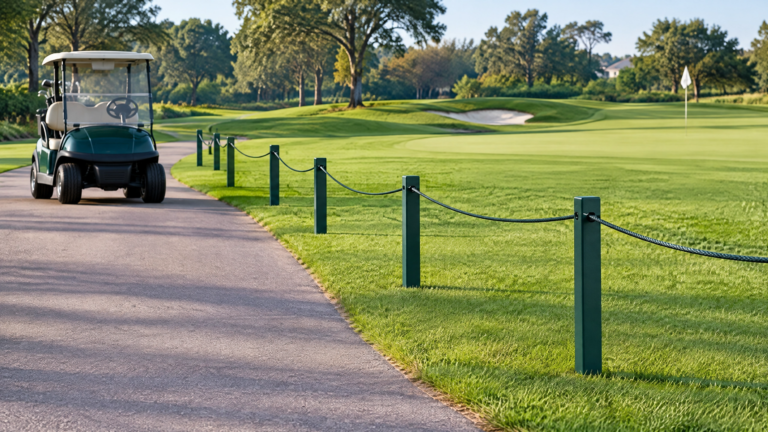
A rope across a fairway in November is not there to annoy you — it is there because the bermuda underneath the winter rye is asleep and cannot repair a cart track until spring. Cliff explains the quiet craft of stakes, sagging rope, and moving the gaps so the wear spreads thin instead of turning into dirt he will be sodding in April.
Before the first tee time, some mornings in late fall, I am out on a fairway with a mallet in one hand, a bundle of green stakes under my arm, and a coil of rope that has been tangled since approximately 1987. Nobody invented a way to untangle that rope. You just carry the knot and work around it. That is the job nobody photographs: roping off the parts of this course that cannot take traffic right now.
A golfer sees a rope and thinks we are being difficult. I understand it. You paid your money, the hole is right there, and the shortest line to your ball runs straight through a little green fence I built at five in the morning. It feels personal. It is not. It is seasonal, and it comes down to one fact about grass in a Florida winter: the bermuda underneath our overseed has gone quiet, and quiet grass cannot repair itself.
In July, drive a cart across a fairway and the grass forgives you by Friday. It is growing so fast it is almost rude. The plant pushes new leaves, the roots throw runners, and your tire tracks are a memory. In late November, that same plant is asleep. The green you are looking at is mostly the winter rye we seeded over it, and rye is a guest — pretty, willing, and shallow-rooted. A cart tire on wet rye over dormant bermuda does not just bend grass. It compacts the soil, shears the young roots, and leaves a brown line that will sit there staring at me until spring, because nothing underneath it is awake enough to fill it back in.
So we rope. The wet low spot on the approach where the water sits after a rain. The worn corner where every cart for three years has cut the same turn off the path. The thin place in front of a green where a hundred carts a day all stop, turn, and dig in their back tires without ever knowing they did it. A rope does not fix any of that. A rope buys the grass time, and in winter, time is the only medicine I have got.
There is a little craft to it, believe it or not. Stakes go in far enough apart that the rope sags friendly instead of strung tight like a tripwire — I am guiding carts, not setting traps. The line has to start before the worn place, not at it, because a golfer already rolling will not back up for my rope; he will drive around the end of it and make a new track six feet over. Old hands know the worst spot is always the end of the rope, where everybody funnels through the same gap. So we move the gaps. The opening that was at the big oak last week is twenty yards down this week. Spread the wear out thin enough and the grass can live with it. Concentrate it and you get a dirt path I will be sodding in April.
My favorite part is watching how people treat the rope, because it tells you everything. Most golfers never think twice — they keep the cart on the path, walk the extra thirty steps, and play on. Then there is the man who studies my rope like a legal document, finds the one low place where it sags, and eases a front tire under it. Sir, I built that with a mallet in the dark. I did not build it to challenge you. The walkers step over it and hold it up for each other like a limbo bar at a wedding, and that I do not mind. Soft spikes do a fraction of what cart tires do. The rope was never aimed at feet. It was aimed at a thousand pounds of cart, clubs, and cooler rolling on tires the width of a pizza cutter.
Come spring, the best morning of my year is pulling those stakes back up. The bermuda is waking up, the worn corners have held, and the course does not need my little green fences anymore. The stakes go back on the rack, the rope goes back in its permanent knot, and nobody who plays that day will know any of it was there.
That is fine. Most of my best work is the kind you are not supposed to notice. But the next time you see a rope across a fairway in November, take the long way around on the path. Somebody hammered that line in before sunrise, and the grass on the other side of it is asleep and counting on you.