 The Fairway Wire
Editorial
I Cut a New Hole Every Morning So Yesterday's Doesn't Become a Crater
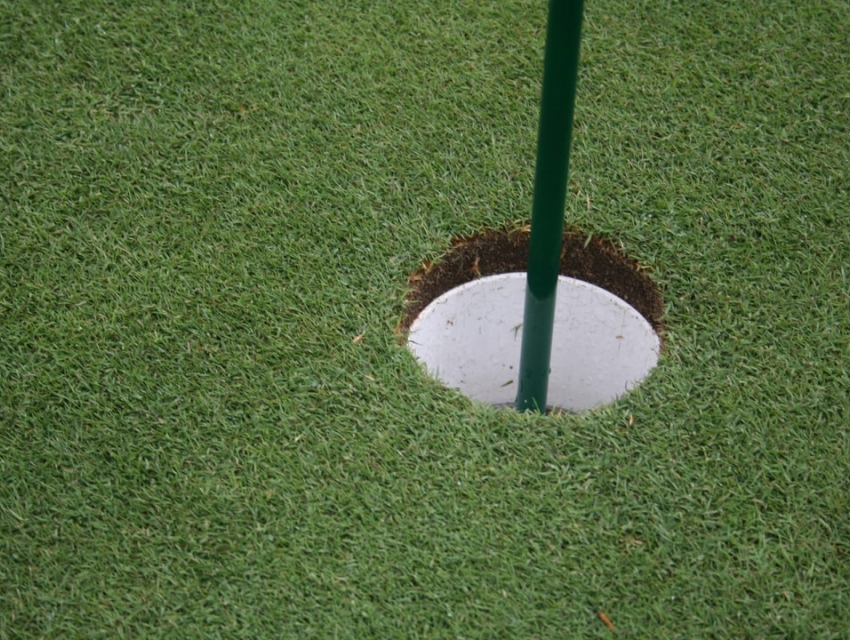
Every flagstick you putt to was cut by hand in the dark that morning. Cliff explains the craft of changing the cup — the vertical cut, the saved plug, the one-inch rule, and the sharp rim — and why a hole left in one place turns into a crater that steals putts.
I Cut a New Hole Every Morning So Yesterday's Doesn't Become a Crater
There is a tool on my cart that looks like a post-hole digger had a baby with a cookie cutter, and it does the most important quiet job on the golf course. Every morning, before most golfers have found their second cup of coffee, I walk onto a green with that hole cutter, a bucket of water, a small trowel, and yesterday's plug in mind, and I cut you a brand-new hole.
Most players never think about it. The flag is just there, like it grew there. It did not. Somebody chose that spot, cut it clean, set the cup exactly one inch below the surface, and repaired the old hole so well you are supposed to never find it. When it is done right, you notice nothing. When it is done wrong, you notice everything — a lipped-out putt, a wobbly rim, a brown ring that stares at you while you are trying to read a break.
Here is why we move it every day. A hole that stays in one place gets beaten to death. Every golfer stands in roughly the same small circle to pull the flag, tap in, and fish the ball out. Every foot pivots there. By noon the turf around the rim is compacted and torn, by the next morning it is a crater with a cup in the middle, and putts start bouncing offline before they ever get a fair chance. Moving the hole is not us being clever. It is us spreading the wear out so the green can heal.
Cutting one looks simple until you try it. You line the cutter up dead vertical — lean it even a little and you have made an oval, and an oval hole will steal putts all day. You push down with your weight, twist, and pull a perfect cylinder of turf and soil. That plug is gold, by the way. It is not trash. It is the patch for yesterday's hole, and it has to drop back into the old spot level, firm, and watered, or it will sink by Thursday and somebody will blame the mower.
Then you set the new cup. The rules say at least an inch below the surface, and I take that seriously, because a cup set too high will reject a good putt, and a cup set too deep will cave in around the edges. You tamp the soil, check it with your fingers, set the liner, and then — this is the part the new guys always skip — you clean the rim with care so the edge stays sharp. A dull, ragged edge makes a slow putt wobble at the exact moment it should drop. Sharp edges are not fussiness. They are fairness.
And no, I am not putting it wherever I feel like putting it. I wrote about picking pin positions before, and that thinking happens first — flat enough to be fair, far enough from yesterday's wear and old plugs, enough room around it that a missed putt does not roll off a shelf. But choosing the spot and cutting the hole are two different crafts. One is judgment. The other is hands. A great location with a sloppy cut still ruins the putt, and a perfect cut in a dumb location ruins the hole. You need both, every morning, on eighteen greens, plus the practice green, usually while it is still dark enough that your headlamp makes the dew sparkle.
My favorite mornings are the ones where nobody ever mentions the holes at all. That means the rims held, the old plugs disappeared, and every putt got decided by the golfer and the green — not by my cutter. Golf is hard enough without the hole itself cheating you. So tomorrow, when you tap in and hear that little rattle in the bottom of the cup, know that sound was set up by hand, in the dark, by a man standing very still and trying very hard to get out of the way of your putt.