 The Fairway Wire
Editorial
Grinding a Stump Is Only Half the Job. The Hole It Leaves Is the Other Half.
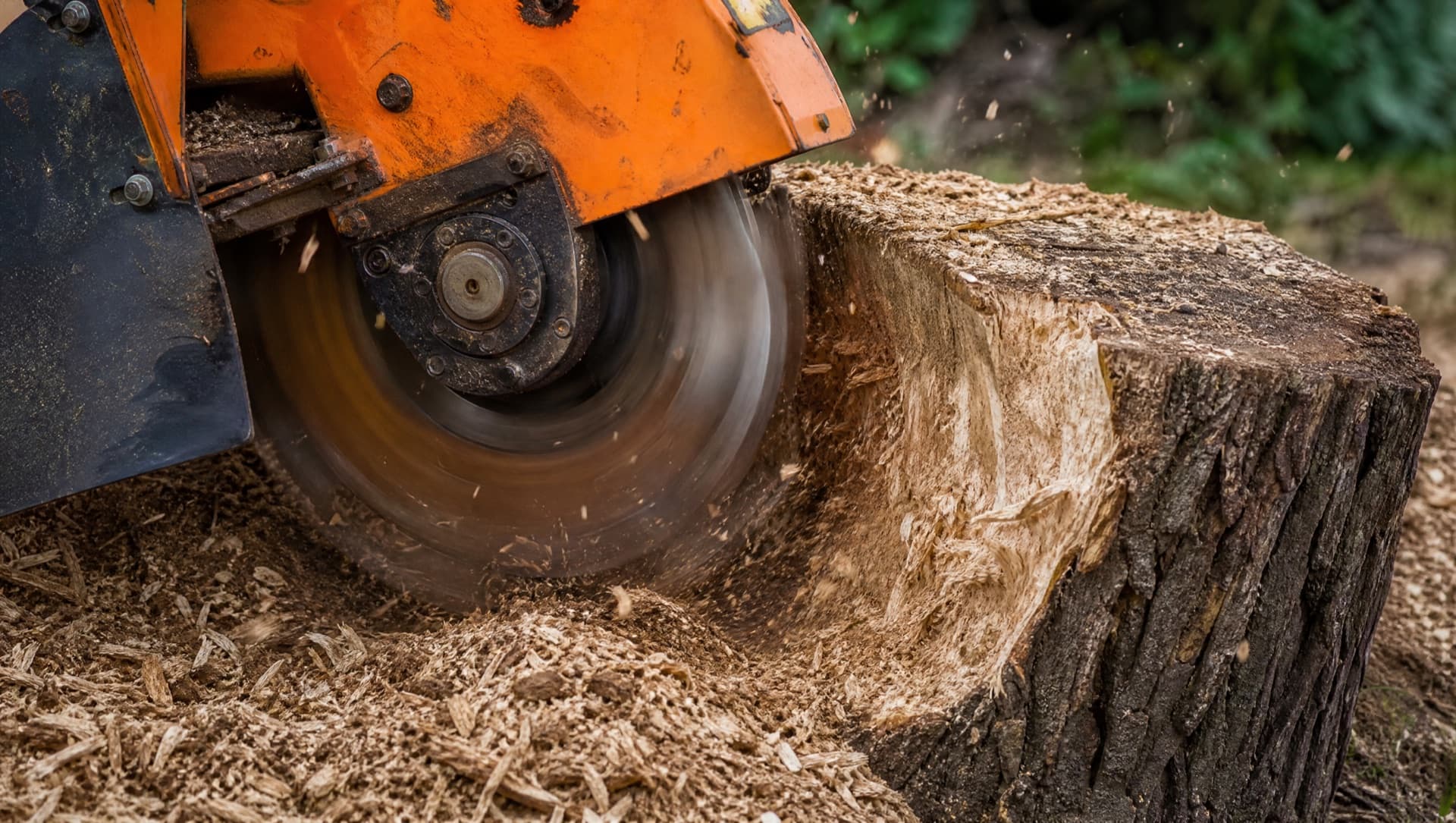
A dead pine comes down in an hour, but its stump can trip mowers and swallow balls for years. I grind it below the grade, haul off the chips, fill the hole with real dirt, and then spend months topping off the spot as it settles — because a tree is not gone until the ground forgets it was there.
A dead pine comes down in about an hour. The saw crew ropes it, cuts it in pieces, feeds the limbs to the chipper, and drives off feeling finished. Then everybody looks at me, because what is left behind is mine: a flat-topped stump sitting six inches proud of the ground, right where a mower wants to travel and right where a ball wants to hide. A tree is not gone when it falls. A tree is gone when the ground forgets it was ever there, and that part takes me the better part of a season.
The stump grinder is the loudest argument I own. It is basically a spinning wheel studded with carbide teeth, swung side to side across the face of the stump, shaving off an inch or two with every pass. You do not force it. You let the teeth eat, listen to the engine, and keep the wheel moving, because dwelling in one spot just polishes wood and dulls expensive teeth. Chips fly in a rooster tail, the machine shudders, and anybody with sense stands well clear, never in line with that wheel. A grinder can find a rock or a long-lost sprinkler fitting and throw it farther than most golfers drive it.
Before I start it, I walk the stump like it owes me money. I flag every irrigation head nearby, because pine roots and sprinkler lines have shared the same dirt for thirty years and the lines always lose. I check for wire and valve boxes hiding in the mulch, dig around the base, and cut the flare roots I can see. Ten slow minutes with a shovel has saved me a flooded fairway more than once.
Depth is the whole argument. Grind too shallow and you have buried a wooden speed bump my mowers will find at full speed in the dark — a reel mower meeting a stump remnant is a sound I hear in my sleep. So I take a pine stump eight inches below grade, sometimes deeper, and chase the big surface roots as far as they run, because a root left under the grass holds the turf up in a ridge all summer, then rots out and leaves a trough. Golfers never see this math. They just know the spot feels wrong under their feet if I got it wrong.
Then comes the part nobody photographs. Grinding a good-sized pine leaves a pile of chips big enough to fill a pickup bed, and the temptation is to rake it smooth and walk away. I haul most of it off. Fresh chips steal nitrogen as they break down, so grass over a chip-filled hole turns pale and hungry no matter what I feed it. Worse, chips settle: a hole filled with them looks level in November and is a six-inch depression by spring, right in time for an ankle to find it at dawn. So out comes the chip mix, in goes real soil, packed in lifts, watered, packed again.
In November, here in Ponte Vedra, that fresh dirt gets a square of Bermuda sod if the spot is big, or a heavy hand of rye seed if it is small, because rye will actually grow for me this month while the Bermuda is slowing down and thinking about sleep. Either way I rope it off, and either way somebody moves the rope and walks straight across it within two days. I have stopped taking that personally. A rope on a golf course is a suggestion the whole world agreed to test.
And still I am not done, because what is left below my grind line rots slow, and the ground above it sinks a spoonful at a time. I keep a mental list of every stump I have ground, and on quiet mornings I drive that list looking for shallow dips. A wheelbarrow of soil, a rake, a handful of seed, ten minutes. Nobody notices, which is the entire point. The day a golfer does notice, it is because the dip finally caught a cart tire or turned a foot.
That is why I smile when somebody says the tree crew took that pine out last week. They took the part that showed. My part is underground, unfinished, and on my list for a year or more — a hole that has to be filled, fed, leveled, and filled again until the fairway runs smooth and honest over a place where a tree stood for forty years. Grinding the stump was the loud half hour. The quiet year after it is the job.