 The Fairway Wire
Editorial
Good Grass Starts Six Inches Under Your Feet
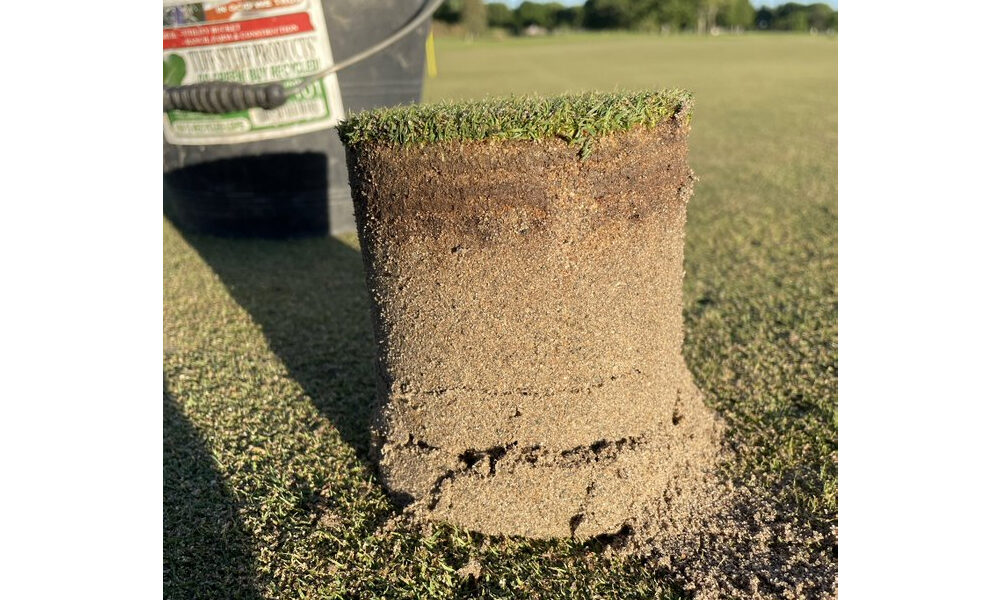
Golfers judge a green by the putt. I judge it by a quiet slice of soil pulled at dawn — thatch, roots, sand and air six inches down tell me whether next month's surface is being built or lost. A spongy feel, a dark black layer, shallow roots: the profile never lies, even when the surface still looks perfect.
Golfers judge a green by what their putter feels. I judge it by what my knife finds six inches down.
Every few weeks I walk out with a little soil profiler — it looks like a narrow shovel married to a ruler — and I pull a slice right out of a green when nobody is watching. I do it early, before the first group, in a spot I can patch clean. Then I stand there in the half-light holding that slice like a piece of cake, reading it layer by layer. That slice will tell me more honest truth about next month's putting surface than any compliment I get in the parking lot today.
The top is easy. Short, tight leaf, the color you want. Right under it is thatch, and thatch is where good intentions go to get complicated. A little bit is a cushion. Too much is a sponge. It holds water up top where disease loves it, keeps roots lazy and shallow, and makes a green feel soft in the morning and tired by afternoon. When a golfer says a green feels spongy, he is usually not wrong. He is just describing thatch without knowing the word.
Below that is where I spend most of my worry. I want to see roots — white, hungry roots reaching down, not brown stubs quitting an inch in. Roots are the plant's paycheck. Deep roots mean the grass can drink when I am not standing there with a hose, can eat what we feed it, and can take a punch from Florida heat and keep standing. Shallow roots mean we are living day to day, and in July in Ponte Vedra, day to day will get you beat.
Keep digging and you get to the mix itself. A good green is built, not born — sand over gravel, a recipe meant to drain fast and hold just enough. Here in Florida sand is not a problem. We have plenty. Compaction is the problem. Every mower pass, every roller, every footstep, every cart that sneaks where it should not go squeezes a little air out of that profile. Grass needs that air as much as it needs water. Squeeze it out long enough and you do not have soil anymore. You have a brick with grass painted on top, and no amount of fertilizer will talk a brick into growing.
That is why half the noisy, ugly work we do exists. Aeration is not us punching holes because the calendar said so. It is us putting air back where traffic stole it. Topdressing sand is not us making a mess for fun. It is us diluting that thatch, smoothing the surface one thin layer at a time, and keeping that profile from turning into a mat. When I pull a clean slice and I can see little columns of fresh sand working their way down through older layers, like stripes in that cake, I know the ugly work is working.
The slice also tells me when to shut up and listen. Black layer down deep — that sour, dark band that smells like a swamp — means water is sitting where it should be moving and air is not getting there at all. Salts creeping in show up as tired edges no mower pattern will fix. A hard layer of old mix from a repair years ago can sit down there like a dinner plate, holding a puddle nobody sees until roots rot above it. The surface lies politely for a while. The profile never does.
I think golfers would play a course different if they had to pull one slice. You would understand why we sometimes cannot give you firm and fast on a week when it has rained four afternoons straight — the gas tank downstairs is already full. You would understand why a green can look perfect in a photograph and still be a month away from real trouble. You would also understand the quiet pride in this job. Nobody applauds a good soil profile. There is no trophy for roots. The reward is a green that is still honest in September because of decisions somebody made looking at dirt in March.
So judge the putt, by all means. That is your job out here. My job starts before the ball ever rolls — six inches under your feet, in a slice of earth most people never see, where good grass is either being built or being lost a little at a time.